

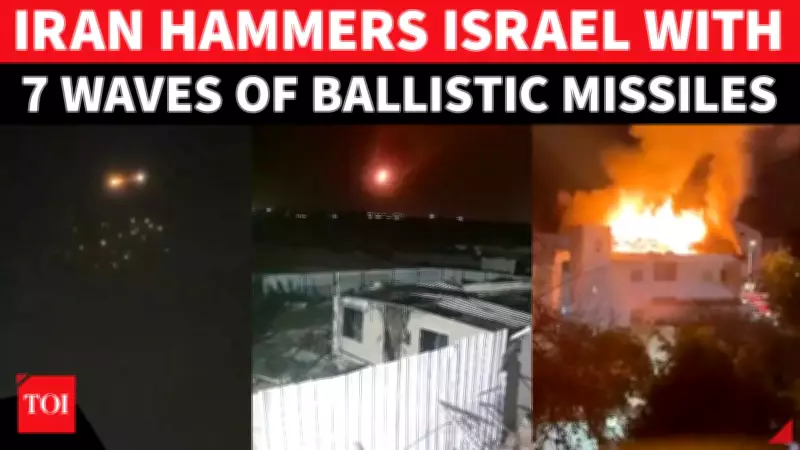
Iran Escalates Conflict with Seventh Missile Barrage Against Israel
Overnight, air raid sirens sent millions of Israeli citizens scrambling for shelter as Iran unleashed another round of ballistic missile attacks, marking the seventh such assault since midnight. The latest escalation in regional tensions saw missiles targeted toward multiple areas, including Tel Aviv, Beersheba, and northern Israel.
Widespread Alerts and Civilian Response
Sirens were activated across extensive portions of the country, particularly affecting southern Israel, the Jerusalem area, and central regions. Residents were forced to seek immediate cover in designated shelters as the alert system warned of incoming threats. The psychological impact on the civilian population was significant, with families spending hours in protective spaces awaiting all-clear signals.
Initial Military Assessment and Defense Performance
According to preliminary assessments from the Israel Defense Forces (IDF), the attack involved a relatively small number of missiles. Military officials reported that most of the projectiles were successfully intercepted by Israel's multi-layered air defense systems or fell harmlessly in open, unpopulated areas. This suggests that despite the alarming scale of the alert, the actual physical threat was contained effectively.

Remarkably, medics and emergency services confirmed no immediate injuries resulting from this latest missile barrage. This outcome highlights both the effectiveness of Israel's civil defense protocols and the precision of its military response capabilities.
Context of Escalating Regional Tensions
This attack represents a continuation of Iran's aggressive posture toward Israel, coming amid a series of provocations and threats from Tehran. The timing and frequency of these missile launches indicate a calculated strategy to test Israeli defenses and demonstrate Iran's military capabilities. The psychological warfare aspect cannot be overlooked, as repeated alerts disrupt normal life and create sustained anxiety among the population.
The IDF's ability to neutralize most threats without casualties underscores the technological advantage Israel maintains in missile defense. However, military analysts warn that continued attacks could eventually overwhelm even the most sophisticated defense systems, making diplomatic resolution increasingly urgent.
Broader Implications for Regional Security
This latest incident occurs against a backdrop of heightened tensions throughout the Middle East, with Iran positioning itself as a primary antagonist to both Israel and Western interests. The repeated missile attacks serve multiple purposes for Tehran: demonstrating military prowess, testing enemy defenses, and sending a clear message of defiance to the international community.
Security experts note that while this particular attack resulted in minimal physical damage, it represents an escalation in frequency and psychological impact. The normalization of such attacks creates a dangerous precedent that could lead to miscalculation and broader conflict if not addressed through diplomatic channels.
As dawn broke over Israel, the immediate crisis had passed, but the underlying tensions remained unresolved. The pattern of Iranian aggression suggests further attacks may be forthcoming, keeping both military planners and civilian populations on high alert. The international community watches closely as this volatile situation continues to develop, with implications extending far beyond the immediate region.






