

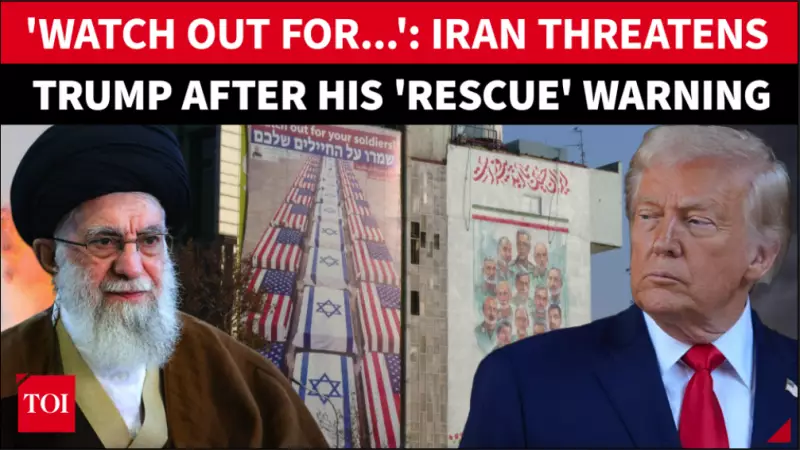
In a significant escalation of rhetoric, Iran has publicly displayed threatening banners and murals across its capital, Tehran, directly warning the United States. The provocative move comes in the wake of renewed threats from former U.S. President Donald Trump and follows military strikes on Iranian nuclear facilities.
Graphic Displays Send a Stark Message
The banners, installed at key locations including near the former Israeli embassy in Tehran, feature stark imagery of coffins draped in the flags of the United States and Israel. The accompanying text delivers a blunt warning to Washington, telling it to "watch out for your soldiers." This visual propaganda marks a new level in the ongoing war of words between the Islamic Republic and its declared adversaries.
Timing Amid Internal Unrest and External Pressure
The unveiling of these "threat banners" on January 5, 2026, is set against a complex backdrop. Internally, Iran is grappling with widening protests. Iranian officials have been quick to accuse foreign powers, namely the U.S. and Israel, of fueling this domestic unrest. Externally, the action is a direct response to recent American and Israeli strikes targeting Iran's nuclear infrastructure and to President Donald Trump's "BIG warning" to the regime.

Iranian authorities have used the occasion to signal that any future retaliation from their side could be "far more severe" than previous actions. This statement is interpreted by analysts as a not-so-veiled threat regarding the regime's military and proxy capabilities in the region.
A Cycle of Threats and Retaliation
This development is the latest in a rapidly intensifying cycle of threats between Washington and Tehran. The Trump administration has adopted an increasingly hawkish stance, promising severe consequences for Iranian actions. Iran's response, in the form of these public murals, is symbolic but pointed, aiming to demonstrate defiance and project strength to both its domestic audience and the international community.
The situation remains volatile, with the public display of threats adding a new layer of psychological dimension to the geopolitical standoff. The world watches closely to see if this war of words will translate into further military confrontation, or if it remains a tool of political posturing.






