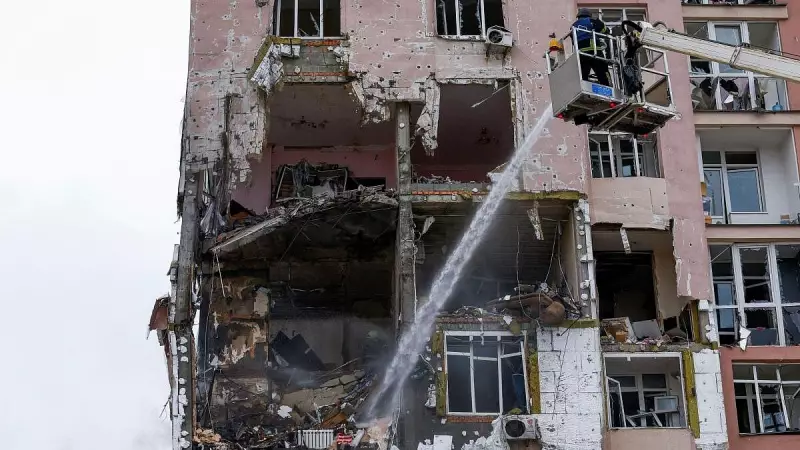
Authorities in Ukraine's capital, Kyiv, were forced to implement emergency power cuts on Thursday after a large-scale Russian attack targeted critical energy facilities. The assault, which involved missiles and drones, caused significant damage to the country's power generation and transmission systems, leading to widespread disruptions.
Massive Overnight Assault on Energy Infrastructure
The attack occurred overnight, with Ukrainian officials reporting a combined assault using various weapons. Ukraine's state-owned power company, Ukrenergo, stated that the strikes damaged facilities in several regions, including those in the central, western, and southern parts of the country. This coordinated attack represents one of the most severe bombardments of Ukraine's energy grid in recent months, exacerbating the already strained system following years of conflict.
In response to the damage, Ukrenergo was compelled to introduce emergency shutdowns for industrial and household consumers in Kyiv. The company emphasized that these measures were necessary to maintain the balance of the energy system and prevent a complete, catastrophic failure that could take much longer to repair. The scale of the damage required immediate and controlled reductions in electricity usage across the capital.

Widespread Damage and Regional Impact
The consequences of the attack extended beyond the capital city. Reports from regional authorities confirmed serious damage to energy infrastructure in multiple areas. For instance, the governor of the Zaporizhzhia region indicated that energy facilities there had been hit. Similarly, the western region of Lviv also reported impacts, showcasing the nationwide scope of Russia's targeting strategy.
Ukrainian air defense forces were active throughout the night, engaging the incoming threats. Military officials reported that they successfully intercepted a significant number of the missiles and drones. However, the sheer volume and sophistication of the attack meant that some projectiles penetrated defenses and reached their intended targets, causing substantial physical damage to key power plants and substations.
Humanitarian and Operational Consequences
The immediate effect of the emergency blackouts was felt by millions of residents in Kyiv. The cuts disrupted daily life, affecting everything from home appliances and lighting to critical services. Businesses and public institutions had to adapt quickly to the power shortages. Furthermore, the attack poses a long-term challenge for Ukraine as it heads into warmer months, where a stable energy supply is crucial.
This incident is part of a sustained Russian campaign to degrade Ukraine's energy infrastructure, a tactic used since the early stages of the full-scale invasion. These systematic strikes aim to weaken the Ukrainian economy, disrupt military production, and undermine civilian morale by creating persistent hardship. The Ukrainian government and energy workers have repeatedly raced to repair damage after each wave of attacks, but the cumulative effect strains resources and resilience.
International reactions have consistently condemned such attacks on civilian energy infrastructure, noting they violate international humanitarian law. The latest assault is likely to renew calls for increased support for Ukraine's air defense capabilities to protect these vital assets. As repair crews assess the full extent of the damage, the people of Kyiv and other affected regions face an uncertain period of recovery and continued resilience in the face of aggression.