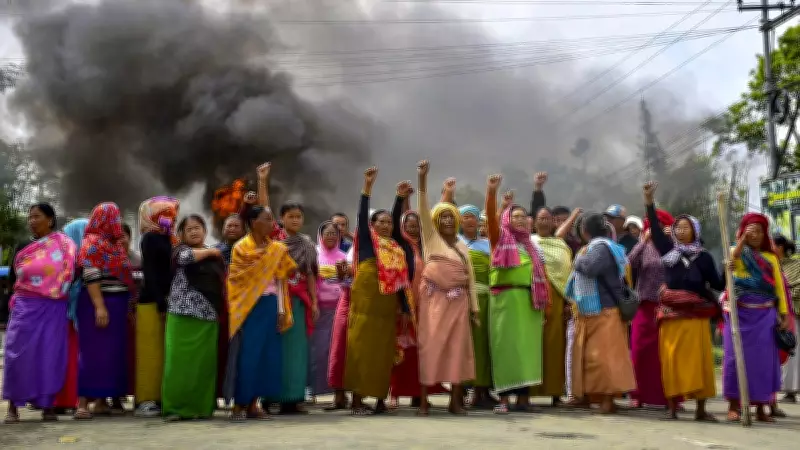
As the Manipur conflict completes three years, a recent bomb blast and fresh protests have reignited anger and agony in the region. The explosion occurred in a crowded market area, injuring several civilians and escalating tensions between ethnic groups. Protesters took to the streets, demanding justice for victims and an end to the violence that has plagued the state since 2022.
Renewed Violence
The blast, which targeted a bus stop in Imphal, was followed by clashes between security forces and demonstrators. At least five people were injured in the explosion, while police used tear gas to disperse crowds. The incident marks one of the most severe escalations in recent months, as the conflict between the Meitei and Kuki communities continues to simmer.
Roots of the Conflict
The ethnic violence erupted in May 2022 after a court order granting Scheduled Tribe status to the Meitei community sparked protests from the Kuki community, who feared loss of land and resources. The ensuing clashes led to over 200 deaths and displaced thousands. Despite multiple peace talks, sporadic violence has persisted.

Government Response
The state government has deployed additional forces and imposed a curfew in affected areas. Chief Minister N. Biren Singh called for calm and assured an investigation into the blast. However, opposition leaders criticized the government for failing to address the root causes of the conflict.
Humanitarian Crisis
Relief organizations report that over 60,000 people remain in relief camps, with limited access to food, healthcare, and education. The prolonged displacement has exacerbated trauma and economic hardship among affected families.
International Concern
Human rights groups have urged the central government to intervene and ensure accountability for human rights violations. The United Nations has also expressed concern over the deteriorating situation and called for dialogue.
As Manipur enters its fourth year of conflict, the path to peace remains uncertain. The recent blast and protests underscore the deep-seated grievances that continue to fuel violence, leaving communities in a state of fear and uncertainty.