Middle East Conflict Escalates Following Assassination of Iran's Supreme Leader
The Middle East has plunged into unprecedented turmoil following the targeted killing of Iran's Supreme Leader, Ali Khamenei, by combined United States and Israeli military forces. This operation represents one of the most significant escalations in regional conflict dynamics in decades, immediately destabilizing the entire Middle Eastern landscape and triggering widespread military confrontations.
Immediate Regional Fallout and Military Engagements
In the immediate aftermath of the assassination, military hostilities have erupted across multiple fronts. Israeli forces have conducted bombing raids against Hezbollah targets in Beirut, while Gulf nations including Bahrain, Dubai, and Doha have reported explosions and vowed to strengthen their defensive postures. Iranian state media has released footage purportedly showing a US F-15 fighter jet engulfed in flames over Kuwait, with pilots ejecting from the aircraft, though these claims remain unverified by independent sources.
The conflict has rapidly expanded beyond bilateral engagements between Iran and the US-Israel alliance. Hezbollah rocket attacks from Lebanon, missile strikes targeting Gulf infrastructure, explosions in commercial hubs like Dubai and Manama, and attacks on shipping vessels in the strategically vital Strait of Hormuz indicate the confrontation has metastasized into a multi-front regional war. Additional incidents include a Saudi oil refinery fire, smoke near the US embassy in Kuwait, and even a drone strike on a UK military base in Cyprus, dramatically widening the theater of operations.

Political Calculations and Regime Resilience
Washington and Tel Aviv appeared to operate under the strategic assumption that removing the apex of Iran's power structure would cause the underlying system to fracture, potentially enabling long-sought regime change after more than four decades of Khamenei's leadership. However, Tehran's response has revealed a far more complex reality.
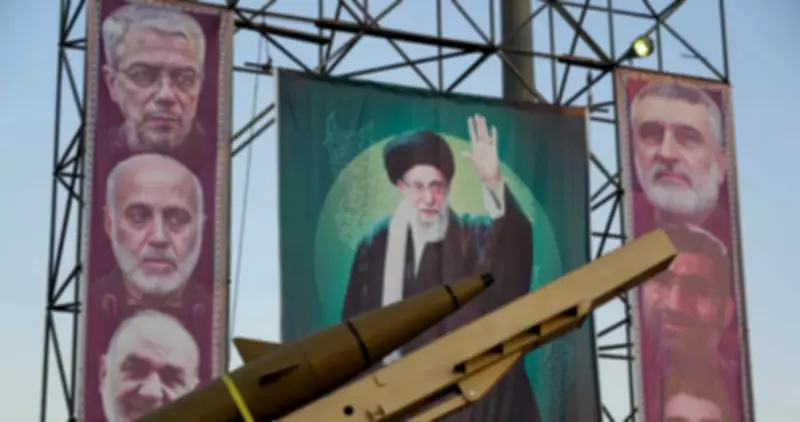
Iran has moved swiftly to demonstrate continuity rather than collapse, activating constitutional succession mechanisms through the Assembly of Experts and appointing Alireza Arafi as interim Supreme Leader. This highlights how the Islamic Republic has evolved over 47 years into a layered system of clerical oversight, security institutions, and ideological enforcement mechanisms specifically designed to withstand external shocks. The regime retains significant tools of coercion and mobilization, including the intact Islamic Revolutionary Guard Corps and regional proxy networks spanning from Hezbollah in Lebanon to Houthi forces in Yemen.
Paradoxically, external assault may complicate rather than hasten regime change. Even weakened domestically, the Islamic Republic can leverage its proxy architecture to raise the costs of war for the United States and Israel through retaliatory actions across Iraq, Syria, and the Red Sea. Such escalation could transform a bilateral confrontation into a regionwide conflict, pressuring Gulf states and global markets while buying the regime valuable time and diplomatic maneuvering space.
Strategic Miscalculations and Widening Conflict
The strategic gamble by Washington and Tel Aviv is beginning to appear increasingly perilous. The confirmed entry of Hezbollah into the conflict, facilitated by Iran's Islamic Revolutionary Guard Corps, risks transforming the confrontation into a prolonged, multi-actor war stretching from Lebanon to the Persian Gulf. Gulf monarchies hosting US military forces now find themselves under direct threat, with critical energy infrastructure targeted and commercial aviation disrupted.
Far from isolating Iran, the strikes have created shared vulnerabilities across the region, driving up oil prices, paralyzing vital trade routes, and amplifying diplomatic pressure for de-escalation. This chaos undermines narratives of swift, decisive action and instead projects instability that could erode allied confidence in US and Israeli strategic leadership.

Politically, the offensive may be backfiring as well. Calls by US President Donald Trump and Israeli Prime Minister Benjamin Netanyahu for Iranians to overthrow their government have coincided with a surge in nationalist rhetoric in Tehran. Iranian leaders have effectively framed the attacks as a broader assault on national sovereignty and the Muslim world, potentially reinforcing internal cohesion during a moment of profound crisis.
Nuclear Risks and International Fallout
Strikes targeting Iran's nuclear infrastructure have introduced an additional layer of danger extending far beyond conventional battlefield concerns. Facilities like the Natanz enrichment plant, where the International Atomic Energy Agency has previously reported uranium enrichment reaching 60% purity, represent non-conventional military targets. Damage to enrichment halls, fuel production units, or storage sites carries significant risk of radiological leakage in a region containing operational nuclear reactors and research facilities.
IAEA chief Rafael Mariano Grossi has issued warnings that further attacks could trigger radiological releases with "serious consequences," potentially necessitating evacuations and sparking cross-border contamination fears. Even if contamination remains contained, perceptions of nuclear insecurity alone could destabilize global markets and heighten public anxiety throughout the Gulf region.
Beyond immediate safety concerns, the diplomatic architecture surrounding Iran's nuclear program faces acute strain. Military escalation sidelines inspection regimes and undermines whatever limited oversight mechanisms remained functional. Should Tehran respond by curtailing cooperation or accelerating enrichment activities, the confrontation could shift from conventional military conflict to an overt nuclear crisis. This development would widen geopolitical divisions, complicate United Nations diplomacy, and sharpen rivalries among major global powers. Rather than neutralizing proliferation risks, the current trajectory may weaken monitoring safeguards and increase the likelihood of a more opaque and dangerous nuclear standoff.
The Middle East now stands at a critical juncture, with what began as a targeted decapitation strike rapidly evolving into a complex regional confrontation with unpredictable consequences for global stability, energy security, and nuclear non-proliferation efforts.