

Middle East Conflict Enters 13th Day, Widening Impact on Global Commodities
As the conflict between the United States, Israel, and Iran continues into its 13th day, escalating attacks are now disrupting global commodity markets far beyond the initial focus on oil and gas. Explosions and sirens across the region reflect a rapidly widening war that has severely rattled critical energy routes and international trade flows, sending shockwaves through supply chains worldwide.
Strait of Hormuz Disruptions Slow Vital Shipments
Since the war began on February 28 with joint US-Israeli strikes on Iran, tanker movement through the strategically crucial Strait of Hormuz has slowed sharply. This narrow waterway normally carries approximately one-fifth of the world's oil and gas shipments, but many vessels are now avoiding the route due to heightened security risks. The disruption is spreading to other essential commodities, including aluminium, fertilisers, ethanol, and helium, threatening global economic stability.
Aluminium Prices Surge as Gulf Supply Halts
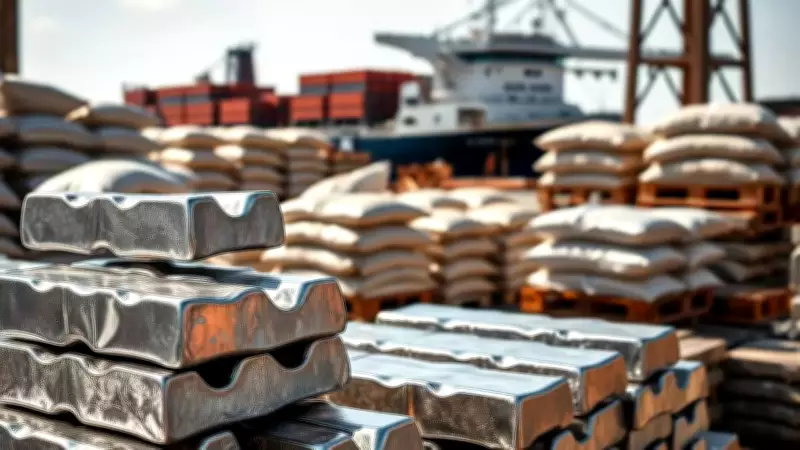
Aluminium prices jumped to their highest level in almost four years on Monday after deliveries from major smelters in Qatar and Bahrain were halted. This has forced buyers to urgently hunt for replacement metal from Asian sources. According to the International Aluminum Institute, producers in the Persian Gulf accounted for about 8% of the world's aluminium supply last year, making this disruption significant for industries reliant on the metal.

Fertiliser Components Trapped in the Gulf
Sulfur, a byproduct of oil and gas refining widely used in fertiliser production and industrial processes, is heavily impacted. Nearly half of the world's sulfur supply is currently trapped on the Persian Gulf side of the Strait of Hormuz, as reported by CRU Group. Additionally, about one-third of globally traded urea, which relies on Middle Eastern natural gas as a feedstock, normally passes through the strait. Urea prices have surged by as much as 35% since the conflict began, exacerbating costs for agricultural sectors.
Ethanol and Sugar Markets Feel the Pressure
In Brazil, the world's largest sugarcane producer, mills face a critical decision: produce sugar or ethanol fuel. With oil prices rising sharply due to the conflict, ethanol prices jumped around 10% on Monday. This price increase could prompt producers to divert more cane toward more profitable fuel production in the upcoming harvest, potentially reducing global sugar supplies and driving up prices.
Helium Production Disrupted After Iranian Strikes
Helium production has been severely affected after Iran struck Ras Laffan Industrial City in Qatar, a key natural gas hub housing the country's helium facilities operated by QatarEnergy. Qatar produces roughly one-third of the world's helium, making it the second-largest supplier after the United States. Production disruptions here could cut off more than a quarter of global helium supply if the Strait of Hormuz remains closed, according to Phil Kornbluth, president of Kornbluth Helium Consulting.
Food Supply Chains Face Delays and Export Bans
The conflict is causing significant delays and rerouting for cargo carrying essential goods like Indian rice, Australian meat, and Indonesian coffee. Retailers such as Lulu Group have begun chartering cargo flights to transport fresh food to mitigate shortages. Iran, the top supplier of fresh fruit and vegetables to the UAE, has banned exports of all food and agricultural products until further notice, as reported by the semi-official Tasnim news agency last week.
Around 400,000 tonnes of Indian basmati rice are currently stranded at ports or at sea due to vessel shortages. Industry experts warn that higher logistics costs and supply-chain disruptions could eventually push up food prices globally if the conflict persists. However, the UAE's Al Khaleej Sugar refinery reports holding enough sugar reserves to meet domestic and regional demand for up to two years.

UAE and Gulf Nations Work to Stabilize Food Supplies
Despite the widespread disruption, authorities in the United Arab Emirates assert that essential supplies remain stable for now. The UAE imports around 80-90% of its food requirements due to limited arable land and water scarcity. The government is actively monitoring prices and reassuring residents that there are sufficient reserves to last several months. An analysis by Altana, a New York-based supply-chain firm, revealed that Saudi Arabia, Iraq, the UAE, Kuwait, Qatar, and Bahrain together imported an estimated $10 billion in cereals, meat, and fresh produce, nearly all of which arrives by sea through the Strait of Hormuz.
The ongoing conflict underscores the fragile interdependence of global commodity markets, with ripple effects likely to intensify if hostilities continue. Stakeholders worldwide are closely watching developments, as further escalation could lead to more severe economic repercussions across multiple sectors.





