

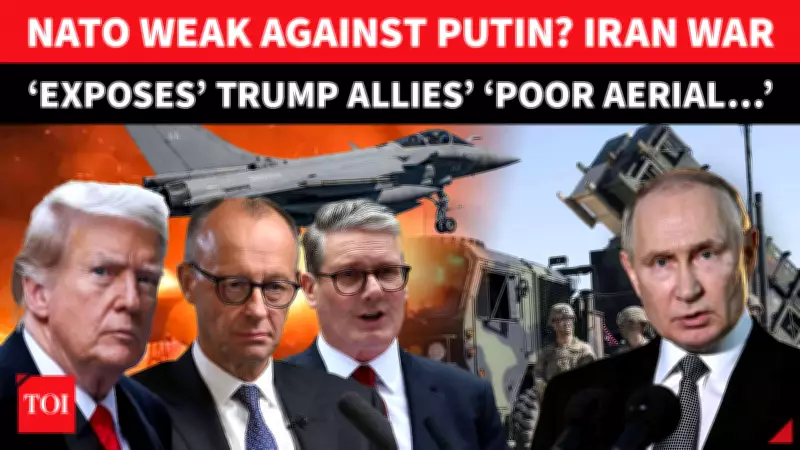
A recent report has raised significant doubts about NATO's preparedness for a potential Russian assault, with military experts analyzing the alliance's war readiness in the wake of the Iran conflict. Although NATO did not directly participate in the Iran war, the conflict has prompted a critical evaluation of the bloc's capabilities. According to a media report, Russia could be ready to challenge NATO within a few years, making the lessons from Iran impossible to ignore.
Key Vulnerabilities Exposed
The Iran conflict laid bare several serious vulnerabilities within NATO. These include dwindling ammunition stockpiles, strained air defense systems, underpowered naval forces, and growing political divisions among member states. The report highlights that these weaknesses could be exploited by a determined adversary like Russia.
Ammunition and Air Defense
One of the most pressing concerns is the depletion of ammunition reserves. Many NATO members have reduced their stockpiles over the years, and the high-intensity conflict in Iran demonstrated how quickly these supplies can be exhausted. Similarly, air defense systems, which are crucial for protecting against aerial threats, have been stretched thin, raising questions about their effectiveness in a large-scale conflict.

Naval and Political Challenges
Naval forces within the alliance have also been identified as underpowered, with aging fleets and limited capabilities. Additionally, political divisions among NATO members have hampered decision-making and coordination, weakening the alliance's overall cohesion. These internal rifts could prove detrimental in a crisis requiring swift and unified action.
Strengthening Ties with Ukraine
In response to these challenges, NATO is strengthening its ties with Ukraine and reassessing its military posture. The alliance has been working to enhance interoperability and share intelligence with Kyiv, which has been a key partner in countering Russian aggression. This cooperation is seen as a critical step in deterring further Russian expansion.
A Wake-Up Call
The Iran conflict may ultimately serve as a wake-up call for NATO, forcing the alliance to confront a critical question: not whether it is watching global threats, but whether it is truly ready to face them. The report underscores the need for immediate action to address these vulnerabilities, including increased defense spending, modernization of equipment, and stronger political unity.
Conclusion
As the security landscape evolves, NATO must adapt to remain credible. The lessons from Iran are clear: without significant reforms, the alliance risks being unprepared for a future confrontation with Russia. The time to act is now, before it is too late.






