

The Narcotics Control Bureau (NCB) is investigating whether Syrian national Alabras Ahmad, arrested after India's first major Captagon seizure under Operation Ragepill, had connections to the Assad-era drug manufacturing network in Syria before allegedly shifting his base to India and establishing a production unit in Dehradun, according to officials. This probe has gained significance because Syria, under former president Bashar al-Assad, had become the world's largest hub for Captagon production and trafficking. Several international investigations have linked this trade to regime-backed networks and military-linked protection systems during the civil war.
After Assad's fall in late 2024, Syrian authorities discovered and dismantled several Captagon facilities, while analysts suggested that old networks could fragment and seek new production and transit locations. A central agency official told TOI, "The probe angles include whether he was a participant in Captagon manufacturing operations in Syria or someone who fled after the Assad regime collapsed and later shifted his base to India to continue the drug trade."
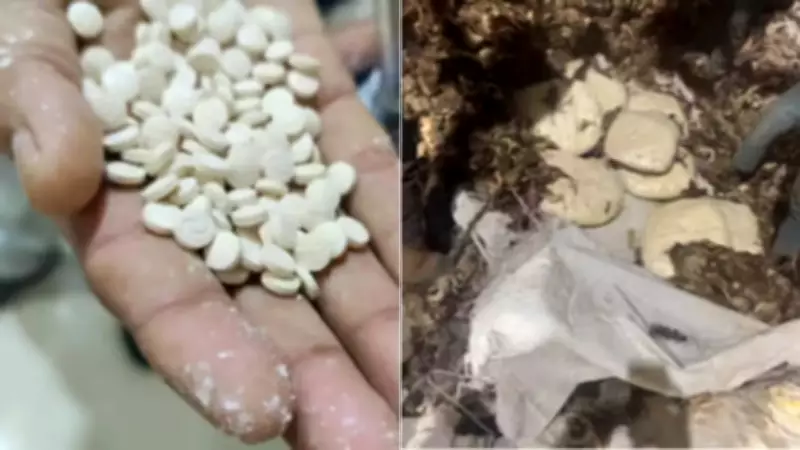
NCB launched 'Operation Ragepill' after intelligence inputs indicated that India was being used as a transit point for Captagon, an amphetamine-type stimulant widely trafficked from West Asia to Gulf markets. The operation, revealed by Union Home Minister Amit Shah on May 16, led to Ahmad's arrest from Delhi and the seizure of 227.7 kg of Captagon tablets and powder worth approximately Rs 182 crore.

Officials stated that Ahmad entered India on a tourist visa on November 15, 2024, which expired on January 12, 2025. However, he overstayed and allegedly arranged manufacturing after renting a pharmaceutical facility in Dehradun. The factory owner, Sanjay Kumar, was detained by NCB on May 17 after it was discovered that the unit had allegedly been used to produce Captagon using tablet-making machinery and chemical inputs.
NCB officials said the Dehradun unit was allegedly hired at Rs 50,000 per day by an international cartel to manufacture the drug. Investigators are examining financial trails, communications, supply chains for precursor chemicals, machinery procurement, and possible links between Ahmad's India operations and Captagon handlers abroad. NCB zonal director in Uttarakhand, Dev Anand, confirmed that the drug was manufactured by Ahmad in Dehradun. "Following the revelation, we have increased our vigil to probe other pharma units as well to check if any other facility is involved in a similar crime. As far as this case is concerned, it is being probed by NCB Delhi unit. We are offering all assistance to them," Anand said.
Captagon, originally a brand name for fenethylline, is commonly used for illicit amphetamine-type pills produced and trafficked through organized networks. In West Asia, the trade became a multibillion-dollar illegal economy during Syria's war years. Officials said Ahmad's arrest has raised concerns that criminal networks disrupted in Syria could try to use legitimate-looking pharmaceutical infrastructure in other countries for manufacturing or transit. NCB's focus, officials added, is to identify Ahmad's handlers, the intended destination, and whether any other Indian facility has been approached by the cartel.






