

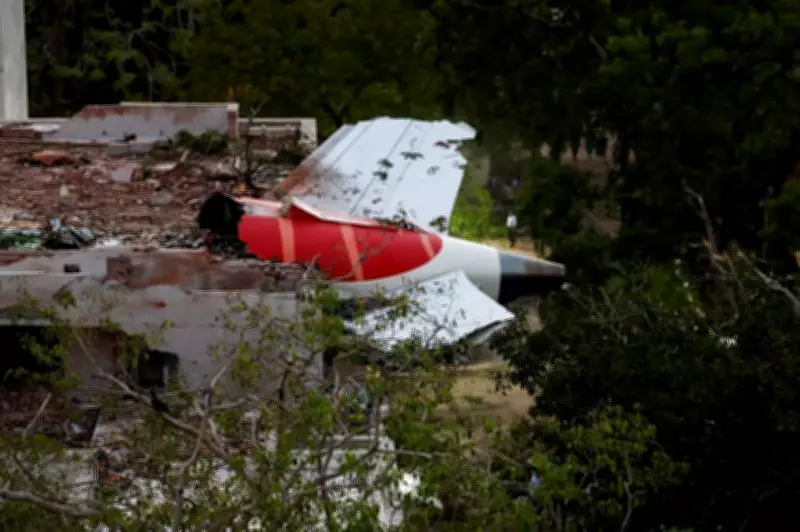
The Federation of Indian Pilots (FIP) has alleged that investigators did not give sufficient weight to the statement of the sole survivor of the Air India flight 171 crash, particularly regarding the flickering of lights inside the aircraft. FIP president CS Randhawa stated that this observation could have been crucial evidence in probing an electrical failure angle.
FIP's Allegations Against Investigators
Speaking to PTI, Randhawa claimed that the FIP has repeatedly raised concerns about the probe with the Civil Aviation Ministry, the Aircraft Accident Investigation Bureau (AAIB), and the Directorate General of Civil Aviation (DGCA) over the past year, but received no response. The allegations came on the same day the AAIB issued an interim statement on the crash of Air India's AI171, which killed 260 people on June 12, 2025.
Interim Statement from AAIB
The AAIB released an interim statement on the progress of the investigation, stating that the final report will be published after all investigative activities, international reviews, and consultations are completed. The board noted that the investigation team has conducted an extensive examination of technical, operational, organizational, and human factors related to the accident. The AAIB reaffirmed its commitment to a thorough, independent, objective, and evidence-based investigation.

Details of the Crash
The Air India Boeing 787-8 Dreamliner, registration VT-ANB, crashed shortly after takeoff from Ahmedabad en route to London Gatwick on June 12, 2025. The accident killed 241 people on board and 19 on the ground. Only one passenger, Vishwas Kumar Ramesh, survived, while all 12 crew members perished. The crash occurred during the initial climb phase.
In a preliminary report released on July 12, 2025, the AAIB indicated that fuel supply to both engines was cut off within one second, causing confusion in the cockpit shortly after takeoff.
FIP's Evidence and Concerns
Randhawa stated that the FIP provided technical evidence from Boeing and Honeywell to support their arguments, but no action was taken. He emphasized that the fuel control switches were not moved, suggesting an electrical problem led to the malfunction. He pointed out that electrical disturbances may not generate warnings, and certain transmitted codes have not been made public.
The FIP president questioned why the gear was never raised, as indicated by the altimeter, and why the cockpit voice recorder transcript has not been released. He highlighted that the lone survivor observed flickering lights in the cabin after takeoff, which could corroborate electrical malfunctions. He noted that cabin lights are typically switched off during takeoff, making this observation significant.
History of Electrical Issues
Randhawa alleged that the Boeing 787-8 has a history of electrical problems, including issues with lithium batteries, fires, and burnout in the P-100 panel. He expressed no faith in the investigating team, stating that the FIP has communicated this to the AAIB and the Prime Minister. He criticized the one-year duration of the probe for a crash that lasted only 32 seconds, contrasting it with longer investigations for flights lasting several hours.
He also claimed that the five-member AAIB investigation team was not qualified under Annexure 13 of the International Civil Aviation Organization (ICAO), challenging their statutory requirements for investigating such a severe crash.






