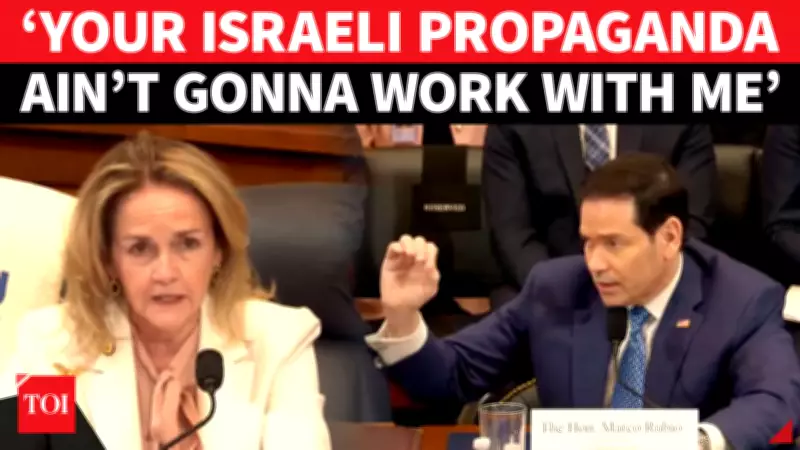
A heated confrontation erupted during a House Foreign Affairs Committee hearing on Tuesday as Secretary of State Marco Rubio and Representative Madeleine Dean engaged in a shouting match over the United States' policy towards Israel and the humanitarian crisis in Gaza.
Dean's Sharp Criticism
Representative Dean, a Democrat from Pennsylvania, did not mince words, describing the situation in Gaza as 'a completely failed system.' She directly grilled Secretary Rubio over the lack of accountability for the Israel Defense Forces (IDF), failures in aid distribution, and who bears responsibility for the ongoing devastation.
'Shut up and answer the question,' Dean was heard shouting as Rubio attempted to respond, highlighting the intense emotions in the room.

Clash Over Accountability
The exchange escalated as Dean pressed Rubio on whether the US would hold Israel accountable for reported human rights violations. Rubio defended the administration's approach, emphasizing the need for a balanced policy that ensures Israel's security while addressing humanitarian concerns. However, Dean dismissed his responses as evasive, insisting on a clear stance against what she termed 'genocidal policies.'
Other committee members intervened to restore order, but the clash underscored deep divisions within the US government over the handling of the Gaza conflict.
Broader Implications
The hearing comes amid rising international pressure on the US to reassess its military and diplomatic support for Israel. Critics argue that American weapons and political backing have enabled the continued assault on Gaza, while supporters maintain that Israel has a right to defend itself against Hamas.
The shouting match between Rubio and Dean reflects a growing bipartisan rift in Congress, with progressive Democrats increasingly calling for conditions on aid to Israel. The Biden administration has so far resisted such measures, urging a two-state solution as the path to lasting peace.
As the hearing concluded without a resolution, the emotional outburst served as a stark reminder of the deep-seated disagreements over one of the most contentious foreign policy issues of the day.