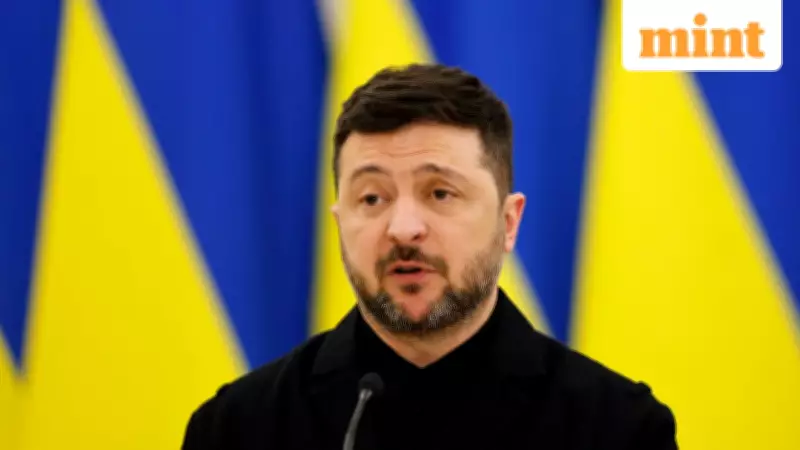
Ukrainian President Volodymyr Zelenskyy revealed on Tuesday that Russia unleashed a devastating overnight assault involving approximately 450 long-range drones and 70 diverse missiles against Ukrainian territory. This massive bombardment occurred just one day before crucial US-mediated negotiations between Russia and Ukraine were scheduled to commence in Abu Dhabi, United Arab Emirates.
Targeting Critical Infrastructure During Extreme Cold
The coordinated strikes spanned at least five Ukrainian regions and specifically targeted electrical infrastructure, continuing Moscow's established strategy of depriving civilians of electricity, warmth, and water during what has become the harshest winter in recent memory. In Kyiv, temperatures plummeted to minus 20 degrees Celsius (minus 4 Fahrenheit) overnight and remained at minus 16 C (minus 3 F) throughout Tuesday.
"Taking advantage of the coldest days of winter to terrorise people is more important to Russia than diplomacy," President Zelenskyy stated emphatically, highlighting the timing of the attacks.

Humanitarian Impact and Damage Assessment
According to Associated Press reports citing officials, at least 10 individuals sustained injuries during the assault. Ukraine's primary private energy firm, DTEK, confirmed that the midnight raid struck its thermal power stations, marking the ninth significant offensive against energy infrastructure since October.
In Kyiv specifically, officials reported that five residents were injured in attacks that damaged and ignited multiple structures including:
- Apartment complexes
- A pre-school facility
- A refuelling station across different sectors of the city
Kyiv Mayor Vitali Klitschko disclosed that by dawn, 1,170 residential buildings in the capital lacked heating, undermining frantic restoration efforts that had successfully restored power to all but 80 apartment buildings before the latest attack.
Cultural Heritage Also Targeted
The bombardment extended beyond civilian infrastructure to cultural landmarks. Ukrainian Culture Minister Tetiana Berezhna confirmed that the Hall of Fame at the National Museum of the History of Ukraine in the Second World War sustained damage. This significant cultural institution is located near the iconic Motherland Monument in Kyiv.
Diplomatic Context and International Response
The Abu Dhabi summit, scheduled for Wednesday and Thursday, represents the latest diplomatic effort to end the full-scale war that began on 24 February 2022. While officials have characterized recent discussions between Moscow and Kyiv representatives as productive, after twelve months of struggle, the Trump administration continues pursuing breakthroughs regarding critical disputes including:
- The status of Ukrainian territories currently held by Russia's military
- A comprehensive peace agreement
Zelenskyy made an urgent appeal to international partners for additional air defence systems and to exert "maximum pressure" on Russia to end its invasion. Meanwhile, NATO Secretary-General Mark Rutte paid an official visit to Kyiv on Tuesday to reinforce support for Ukraine's military efforts.
Contrasting Narratives and Recent Developments
Last week, a Kremlin representative stated that Russia agreed to suspend strikes on Kyiv for seven days, until 1 February, due to the extreme cold conditions. This decision reportedly followed a direct appeal from US President Donald Trump to Russian President Vladimir Putin.
The timing of this massive assault raises significant questions about Russia's commitment to diplomatic processes, particularly as it directly precedes what could be pivotal negotiations in Abu Dhabi. The attack demonstrates Moscow's continued willingness to escalate military actions even as diplomatic channels remain open.
The international community now watches closely as Ukraine faces simultaneous challenges: defending against sophisticated aerial attacks, maintaining critical infrastructure during extreme winter conditions, and preparing for negotiations that could shape the future of the conflict.