

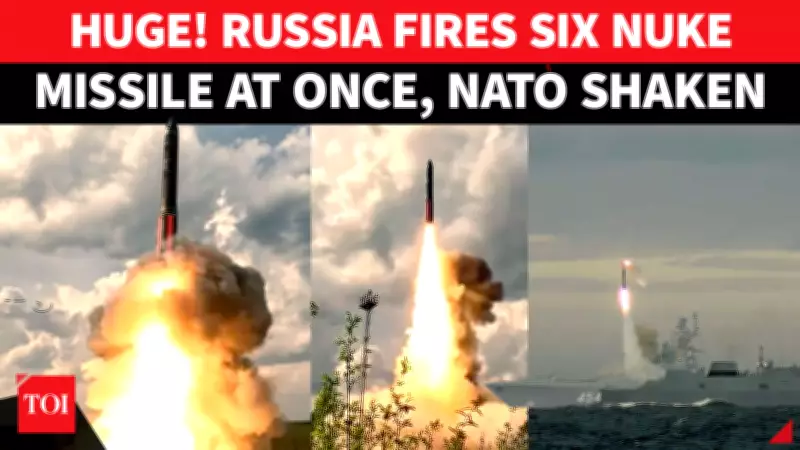
Russia and Belarus carried out one of their largest joint nuclear force drills in recent years, showcasing a massive display of strategic firepower amid rising tensions with the West. According to reports, Russia launched six separate types of nuclear-capable missiles during the exercise, underscoring its military capabilities.
Details of the Drill
The missile launches occurred during the second phase of the exercises and included a wide range of delivery systems. These included ground-launched and submarine-launched intercontinental-range ballistic missiles, air-launched cruise and ballistic missiles, ship-launched hypersonic cruise missiles, and ground-launched short-range tactical ballistic missiles. The drills were conducted in coordination with Belarusian forces, highlighting the close military alliance between the two nations.
Strategic Implications
The exercise comes as the conflict in Ukraine continues, with Russian forces reportedly using the Oreshnik missile system to strike Kyiv. The display of nuclear capability is seen as a warning to NATO and Western nations, signaling Russia's readiness to defend its interests. Analysts note that such drills are intended to demonstrate operational readiness and deter potential adversaries.

The joint exercise involved multiple branches of the Russian military, including the Strategic Rocket Forces, the Navy, and the Aerospace Forces. Belarusian units also participated, integrating their command and control systems with Russian counterparts. This level of cooperation reflects the deepening defense integration between the two countries.
International Reactions
The drill has drawn criticism from Western leaders, who view it as an unnecessary escalation. NATO has condemned the exercise, calling it provocative and destabilizing. Meanwhile, Russian officials have defended the drills as routine and defensive in nature, emphasizing that they are conducted in accordance with international agreements.
The timing of the exercise is significant, occurring amid heightened tensions over Ukraine and ongoing diplomatic efforts to de-escalate the conflict. Some experts warn that such shows of force could increase the risk of miscalculation or accidental escalation.






