

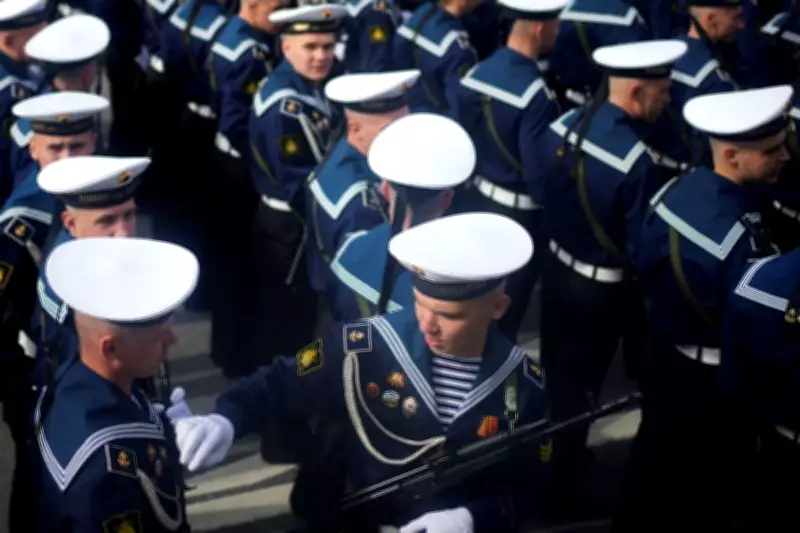
Russia held a scaled-back World War II victory parade in Moscow on Thursday, as worries about the ongoing war in Ukraine deepen. The annual event, which commemorates the Soviet Union's defeat of Nazi Germany in 1945, typically features thousands of troops, tanks, and military hardware. However, this year's parade was significantly reduced in size and scope, reflecting the increasing strain of the conflict in Ukraine on Russia's military resources.
Reduced Display of Military Might
The parade, held in Red Square, included only a fraction of the usual number of soldiers and military vehicles. According to Russian officials, around 8,000 troops participated, compared to over 12,000 in previous years. The number of tanks and other armored vehicles was also drastically cut, with only a few dozen on display, a sharp contrast to the hundreds seen in past parades. The Russian Air Force did not perform its traditional flyover, citing weather conditions, though analysts suggest it may be due to the need to preserve aircraft for operations in Ukraine.
Symbolism and Context
The Victory Day parade is a deeply symbolic event for Russia, celebrating the country's role in defeating Nazism. However, this year's subdued celebration comes as Russia faces significant military setbacks and mounting casualties in Ukraine. The war, now in its second year, has stretched Russia's armed forces thin, leading to reduced participation in the parade. Many of the troops and equipment that would normally be on display are instead deployed in Ukraine.

Russian President Vladimir Putin attended the parade and delivered a speech, reiterating his narrative that Russia is fighting against a threat from the West. He praised the soldiers fighting in Ukraine, drawing parallels between their efforts and those of Soviet soldiers in World War II. However, his remarks were met with mixed reactions, as the war continues to cause widespread suffering and economic hardship in Russia.
International Reactions
The scaled-back parade did not go unnoticed by the international community. Western leaders condemned the event as a propaganda display, accusing Putin of exploiting the memory of World War II to justify his aggression in Ukraine. Ukrainian officials dismissed the parade as a hollow gesture, pointing out that Russia's military actions in Ukraine have led to thousands of civilian deaths and widespread destruction.
Meanwhile, some Russian citizens expressed disappointment at the reduced scale of the parade, viewing it as a sign of the country's declining military strength. Others, however, remained supportive of the government's narrative, seeing the parade as a necessary show of patriotism during a difficult time.
Historical Significance
World War II, known in Russia as the Great Patriotic War, remains a cornerstone of national identity. The victory over Nazi Germany is celebrated with great fervor, and the annual parade is one of the most important state events. This year's reduced scale underscores the challenges Russia faces as it continues to wage war in Ukraine, a conflict that has already lasted longer than many expected.
Analysts note that the decision to scale back the parade may also be a practical one, aimed at conserving resources for the war effort. However, it also sends a signal to the Russian public that the country is under strain. The parade's diminished size could potentially affect public morale, as it is a visible indicator of the war's toll on the military.
Conclusion
Russia's scaled-back World War II victory parade serves as a stark reminder of the ongoing conflict in Ukraine and its impact on the country. While the government sought to maintain a show of unity and strength, the reduced display of military might highlighted the challenges facing the Russian armed forces. As the war continues, it remains to be seen how this will affect public support for the conflict and Russia's international standing.






