

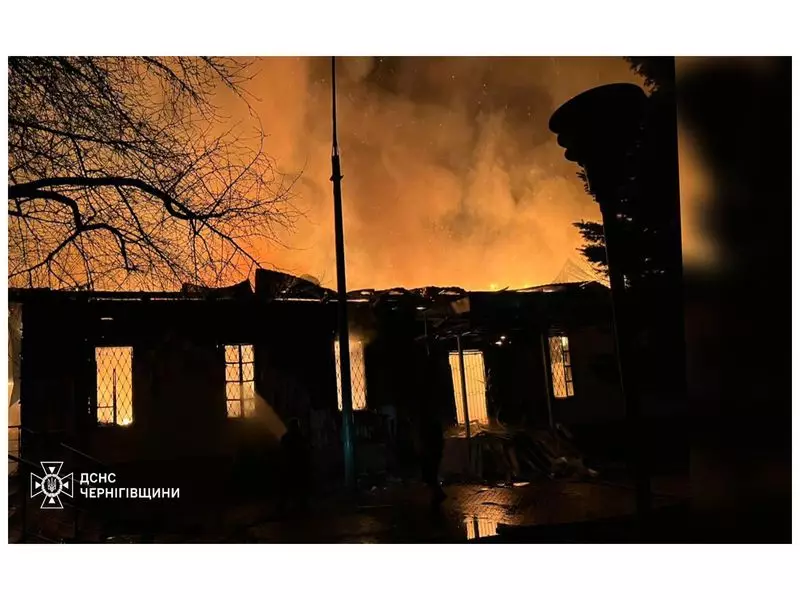
In a significant escalation of aerial hostilities, Russian air defence systems successfully intercepted and destroyed a wave of eight Ukrainian drones over a tense four-hour period. The Russian Ministry of Defence confirmed the incidents, which targeted several regions deep within Russian territory, including areas around the capital.
Details of the Coordinated Drone Assault
The Russian defence ministry stated that the drone attacks occurred between 11:00 PM on May 3 and 3:00 AM on May 4. This coordinated aerial assault demonstrates Ukraine's increasing capability and willingness to strike targets far from the front lines of the ongoing war. The intercepted unmanned aerial vehicles (UAVs) were aimed at multiple locations, showcasing a broad operational scope.
According to official reports from Moscow, the air defence units were activated in several key regions. Two drones were destroyed over the Moscow region, a highly sensitive area given its status as the nation's political heart. Furthermore, three more UAVs were shot down over the Belgorod region, which borders Ukraine and has frequently been a hotspot in the conflict. The remaining drones were neutralised over the Bryansk and Kursk regions, also situated near the Ukrainian border.

Immediate Aftermath and Official Statements
Following the incidents, Russian authorities moved swiftly to assess the situation and provide public assurances. The defence ministry's brief announcement confirmed the successful interceptions but did not immediately detail any resulting casualties or material damage on the ground. The primary focus was on highlighting the effectiveness of the country's air defence network in thwarting the attack.
Local officials in the affected regions provided additional context. The governor of the Belgorod region, Vyacheslav Gladkov, reported on the aftermath in his jurisdiction. He stated that debris from one of the downed drones caused damage to private homes and several cars in a village within the region. Fortunately, preliminary reports indicated no serious injuries to civilians, a point likely emphasised to maintain public calm.
Broader Context and Escalating Conflict Dynamics
This multi-drone incident is not an isolated event but part of a disturbing pattern of escalating strikes on Russian soil. In recent months, both sides have increasingly utilised drone technology to target infrastructure, military installations, and symbolic locations far beyond the traditional battlefield in eastern Ukraine. These attacks represent a strategic shift, aiming to disrupt logistics, instill psychological unease, and demonstrate reach.
The ability of Ukrainian forces to launch such sustained drone raids into Russian airspace, including near Moscow, signals a significant evolution in the conflict's technological and tactical dimensions. Conversely, Russia's continued claims of high interception rates aim to project an image of strong defensive readiness and control over its sovereign territory.
This latest exchange underscores the protracted and volatile nature of the Russia-Ukraine war, now well into its third year. With neither side showing signs of backing down, the use of long-range drones and cross-border strikes is likely to intensify, posing continuous risks of further escalation and miscalculation. The international community watches closely as these developments add new layers of complexity to an already devastating war.






