

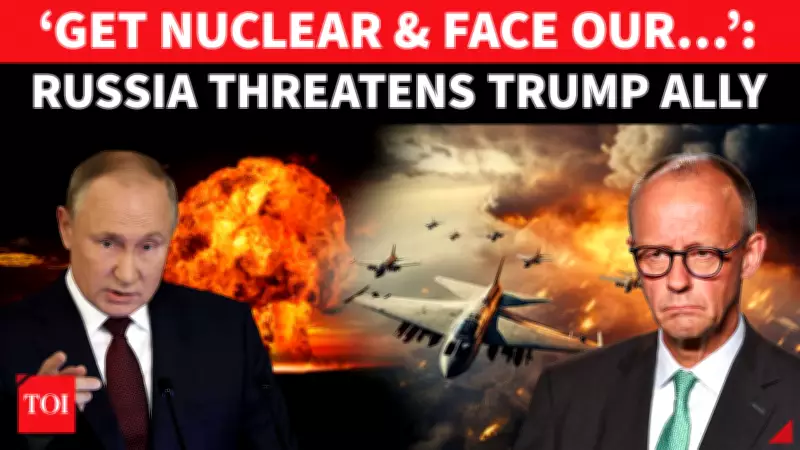
The 'peace dividend' is officially over as Moscow has issued a stark nuclear ultimatum to Germany. Russia has warned that any move by Berlin toward nuclear armament, even under a European framework, will be met with immediate 'retaliatory options' from Russia's strategic arsenal. This development comes as Chancellor Friedrich Merz pumps billions into military infrastructure and prepares Germany to host 800,000 NATO troops.
Medvedev's Warning
Dmitry Medvedev, a senior Russian official, has labeled Germany's military buildup a direct path to nuclear escalation. He described the moves as an 'act of war' and emphasized that Russia would respond decisively to any nuclear armament initiatives. Medvedev's comments signal a significant shift in Russia's posture, moving from diplomatic warnings to explicit nuclear threats.
Europe's Logistical Bridgehead
The question now arises: Is Europe's logistical 'bridgehead' becoming Russia's primary nuclear target? Germany's role as a host for NATO forces and its increasing military expenditure have placed it at the center of tensions. Moscow views these developments as a direct threat to its national security, potentially justifying preemptive measures.

Germany's Response
Chancellor Friedrich Merz has not directly responded to Russia's ultimatum but continues to push forward with military investments. The German government argues that its actions are defensive and necessary for European security. However, Russia's nuclear rhetoric raises the stakes, creating a volatile standoff that could escalate into a broader conflict.
International Reactions
The international community has reacted with concern. NATO allies have expressed solidarity with Germany, while calling for de-escalation. The United Nations has urged both sides to engage in dialogue to prevent a catastrophic confrontation. Meanwhile, experts warn that the situation could spiral out of control if Russia follows through on its threats.
As tensions mount, the world watches closely. The 'peace dividend' that followed the Cold War appears to be a distant memory, replaced by a new era of nuclear brinkmanship. The coming weeks will be critical in determining whether diplomacy can prevail or if Europe faces its most serious security crisis in decades.






