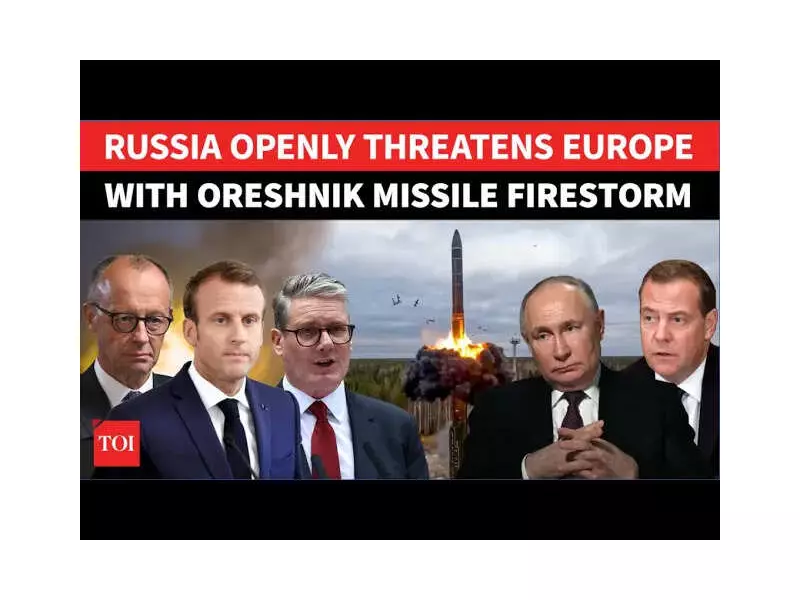
A severe warning from Moscow has dramatically heightened fears of a direct military confrontation between Russia and European powers. The threat was issued following announcements from Britain and France regarding plans to deploy a multinational military force to Ukraine after a potential ceasefire.
Medvedev's Blistering Social Media Attack
Former Russian President and key ally of Vladimir Putin, Dmitry Medvedev, launched a fierce verbal assault targeting France and its allies. In a post on the social media platform X on January 11, 2026, Medvedev accused European leaders of recklessly pushing the continent towards a major war. He categorically rejected any possibility of NATO or European troop presence on Ukrainian soil, framing it as an unacceptable provocation.
His message concluded with a stark and ominous challenge, underscored by a video showing multiple explosions—a clear visual threat of the potential consequences. This rhetoric represents one of the most direct threats of wider conflict from a senior Russian official in recent times.

Official Backing from Russian Foreign Ministry
The threat was not limited to social media posturing. Russia's Foreign Ministry formally echoed Medvedev's warning, delivering a grave message to the West. The ministry stated that any Western military forces or related infrastructure established in Ukraine would be considered legitimate combat targets by the Russian armed forces.
This official statement transforms the warning from political rhetoric into a declared military policy, raising the stakes at a critically tense moment in international diplomacy. The move is seen as a direct response to French President Emmanuel Macron's continued support for Ukraine.
Escalating Tensions at a Critical Juncture
The threats from Moscow have injected a new level of danger into the Ukraine crisis. The plan for a multinational force, led by European nations, was likely intended as a stabilizing measure post-ceasefire. However, Russia's interpretation is diametrically opposite, viewing it as a strategic encroachment and an act of aggression.
This development threatens to derail fragile diplomatic efforts and sets a dangerous precedent for direct NATO-Russia confrontation. The international community is now watching closely to see if European capitals will recalibrate their strategy in the face of Moscow's uncompromising and hostile stance.