

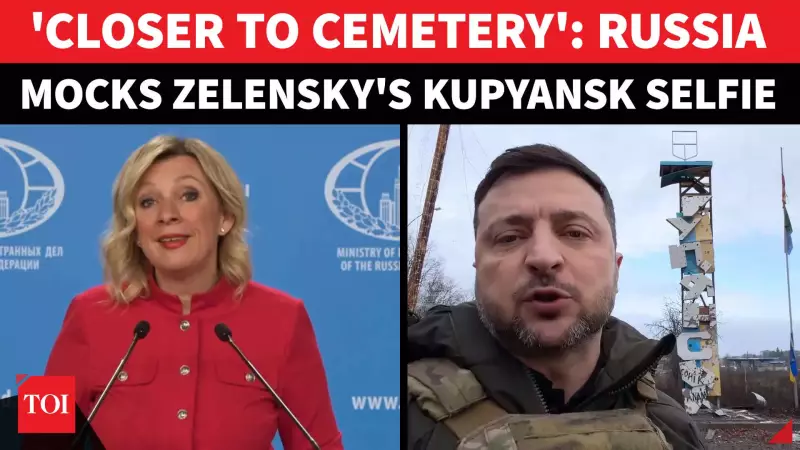
Ukrainian President Volodymyr Zelensky's recent visit to the frontline near Kupyansk has triggered a sharp new verbal assault from Moscow, escalating the ongoing information war between the two nations.
Russia's Scathing Critique of the Frontline Visit
On December 19, 2025, Russian Foreign Ministry spokesperson Maria Zakharova launched a fierce attack during a press briefing. She dismissed images from President Zelensky's trip as a carefully staged publicity stunt. Zakharova accused the Kyiv leadership of endangering lives purely for optical gains, asserting that the area in question remains under Russian military control.
The criticism took a deeply personal and sarcastic turn. Zakharova mocked the location of the Ukrainian leader's photographs, claiming it was "closer to a cemetery than to Kupyansk itself." This remark was widely seen as a dark jab intended to undermine the morale-boosting intent of Zelensky's visit to his troops.

The Context: Escalating Rhetoric and Battlefield Pressure
This exchange is not an isolated incident. It occurs against a backdrop of intensifying battlefield pressures and a relentless dispute over narrative control in the Russia-Ukraine war. Both sides are actively engaged in information warfare, aiming to shape global public perception and domestic morale.
Zelensky's frontline visits have been a consistent feature of his leadership since the full-scale invasion began, serving to demonstrate solidarity with armed forces and project resilience. Moscow, however, consistently seeks to frame these actions as theatrical and desperate attempts to manipulate media coverage.
Implications for the Ongoing Conflict
The swift and vitriolic response from the Kremlin highlights the high stakes of perception management in this conflict. Controlling the narrative is nearly as critical as controlling territory. By labelling the visit a "photo-op," Russia aims to devalue a potent symbol of Ukrainian defiance and presidential courage.
This incident underscores how every public action by leaders is instantly weaponized in the modern information war. The war of words between Moscow and Kyiv shows no signs of abating, paralleling the continued military confrontations on the ground. The focus on Kupyansk, a key hotspot in the conflict, also signals the ongoing strategic importance of the region.






