

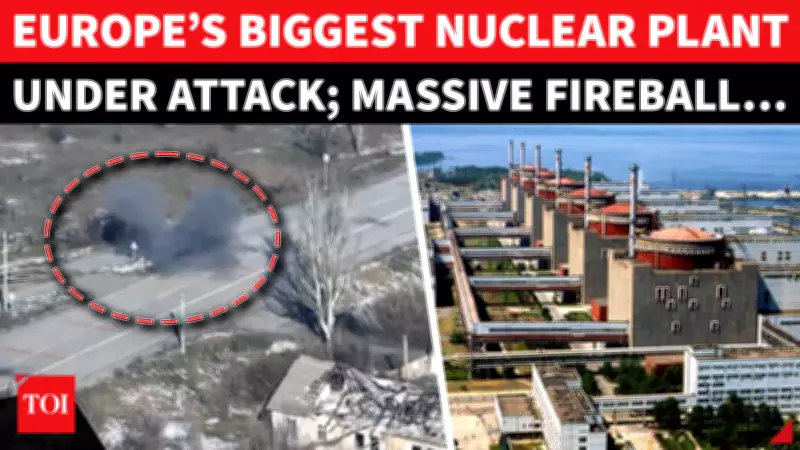
A terrifying new line has just been crossed at Europe's largest nuclear plant. Rosatom Chief Alexey Likhachev has confirmed that a Ukrainian drone directly struck a core turbine generation building connected to a reactor at the Zaporizhzhia Nuclear Power Plant. The attack, executed using an un-jammable fiber-optic FPV drone, left a hole in the structure's wall, proving it was a direct, intentional strike. Although the reactors are currently in cold shutdown and no radiation leaked, officials warn that the world is now one step closer to a nuclear catastrophe.
Details of the Incident
The drone strike targeted a critical part of the plant's infrastructure. According to Likhachev, the fiber-optic drone was immune to jamming, indicating a sophisticated operation. The impact created a visible breach in the turbine building, which is directly linked to a reactor unit. Despite the damage, plant operators confirmed that all safety systems functioned as designed, and there was no release of radioactive material.
Implications for Nuclear Safety
This incident marks a significant escalation in the conflict surrounding the Zaporizhzhia plant. International nuclear safety experts have long warned that any direct attack on nuclear facilities could trigger a disaster. While the cold shutdown status reduces immediate risk, the structural damage raises concerns about future vulnerabilities. The International Atomic Energy Agency (IAEA) has called for restraint and access to assess the damage.

Reactions from Russia and Ukraine
Russian officials have condemned the strike as a reckless act of terrorism, urging the international community to pressure Ukraine to cease such attacks. Ukraine has not officially commented on the specific incident but has previously accused Russia of using the plant as a military base. The United Nations has expressed alarm, emphasizing the need to protect nuclear sites from military operations.
Broader Context of the Conflict
The Zaporizhzhia Nuclear Power Plant has been under Russian control since early in the war. It has repeatedly been a flashpoint, with both sides accusing each other of endangering nuclear safety. This latest drone strike represents a dangerous precedent, as it is the first confirmed direct hit on a reactor-adjacent building. Energy experts note that while cold shutdown reactors are safer, the plant still contains spent fuel pools that require constant cooling.
Potential Consequences
If a reactor were to be damaged while in operation, the result could be a catastrophic release of radiation, similar to Chernobyl or Fukushima. The cold shutdown status reduces but does not eliminate risks. Continued attacks could damage critical cooling systems or power supplies, leading to a meltdown. The international community has called for a demilitarized zone around the plant, but no agreement has been reached.
In summary, the drone strike at the Zaporizhzhia Nuclear Power Plant underscores the fragile state of nuclear safety in active conflict zones. With no radiation leak so far, the immediate danger has passed, but the incident serves as a stark reminder that the margin for error is shrinking. The world watches as the situation develops, hoping that diplomacy can prevent a nuclear catastrophe.






