

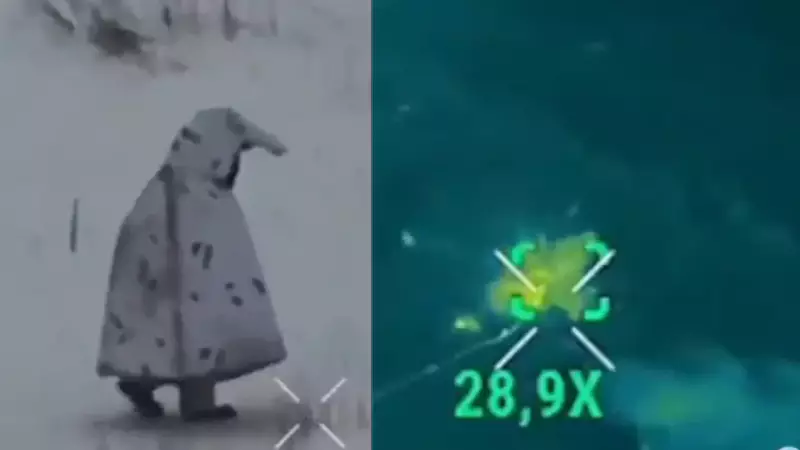
Russian Soldier in Bizarre Penguin Camouflage Eliminated by Ukrainian Drone
A Russian soldier attempting to evade detection on the snowy Ukrainian battlefield met a fatal end while dressed in a peculiar penguin-like costume. The troop utilized a white thermal-blocking cape designed to render him invisible to drone sensors, but the unconventional tactic proved ineffective against Ukrainian surveillance technology.
Failed Camouflage Attempt on Snowy Terrain
The hooded cloak gave the soldier an appearance reminiscent of an emperor penguin, with his feet visibly protruding as he traversed the frosty field. Footage captured by a Ukrainian drone clearly shows the solitary soldier moving across the landscape before the unmanned aerial vehicle locks onto its target and detonates. The specialized cloak offered absolutely no protection against the explosive impact, demonstrating the limitations of such camouflage methods in modern warfare.
Russian forces have reportedly employed these so-called "invisibility cloaks" in attempts to avoid detection by Ukraine's thermal-sensing drones, which have become increasingly sophisticated throughout the ongoing conflict. The penguin incident represents a particularly vivid example of the desperate measures being taken on the front lines.

Reports of Severe Discipline Within Russian Ranks
This unusual battlefield episode emerges alongside disturbing reports of harsh disciplinary measures being implemented by Russian commanders. Chilling footage has surfaced showing soldiers accused of desertion or refusing orders being taped to trees in freezing temperatures as punishment.
In one particularly brutal instance, a soldier stripped down to his underwear was forced to consume snow by a superior officer. One of the restrained men can be heard pleading: "It won't happen again. I'm sorry, please." The officer responds with harsh language emphasizing the need for work rather than avoidance of duty.
This method of punishment appears to be a recurring tactic among commanders in Putin's forces, according to multiple reports. The combination of unconventional battlefield tactics and severe internal discipline paints a complex picture of the challenges facing Russian troops in Ukraine.
Security Agreement Progress and Continued Hostilities
Meanwhile, Ukrainian President Volodymyr Zelenskyy announced that an American plan to guarantee Ukraine's security is "100 per cent" ready for signing. Zelenskyy indicated he is awaiting confirmation of the time and place for the formal signing ceremony, after which the agreement will proceed to both the US Congress and Ukrainian Parliament for ratification.
Despite diplomatic efforts, no immediate breakthrough resulted from recent trilateral talks held in Abu Dhabi between Russian and Ukrainian negotiators, with mediation provided by US officials. The Kremlin characterized the discussions as occurring in a "constructive spirit" but acknowledged that significant work remains necessary to achieve meaningful progress.
Shortly following these diplomatic exchanges, Moscow launched a heavy overnight assault targeting critical infrastructure across Ukraine. The attack focused on central heating systems and electricity grids, leaving millions without power during freezing winter conditions. President Zelenskyy reported that the assault involved more than 370 drones and 21 missiles, resulting in at least one confirmed fatality and widespread disruption to civilian life.
The juxtaposition of these developments—from bizarre battlefield incidents and internal disciplinary measures to diplomatic negotiations and continued military strikes—highlights the multifaceted nature of the ongoing conflict between Russia and Ukraine.






