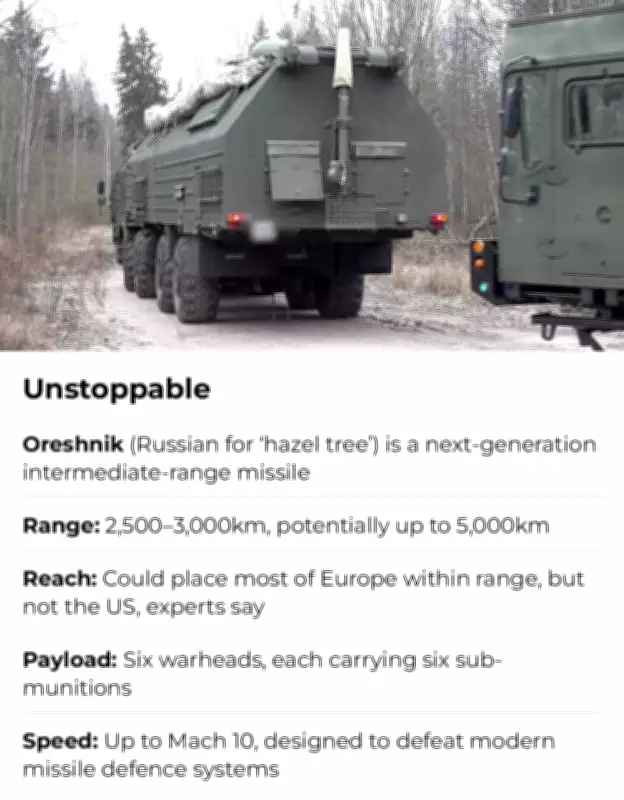
Hours before Russia's massive bombardment of Ukraine on May 24, Kyiv received intelligence from the US and European allies about a deadly weapon Moscow was preparing to deploy, according to President Volodymyr Zelensky. The warnings may have helped Ukraine brace for the attack and limit casualties, even though the country remained largely defenseless when a Russian Oreshnik hypersonic ballistic missile struck south of Kyiv.
Unstoppable Speed and Lethality
The Oreshnik missile, traveling at an astonishing 13,000 kilometers per hour, is nearly impossible to intercept with current Ukrainian air defense systems. Equipped with six independently targetable warheads, it can strike multiple targets simultaneously, overwhelming any defensive measures. Hypersonic missiles like the Oreshnik maneuver at extreme speeds, making them unpredictable and highly effective against even advanced missile defense systems.
Intelligence Warnings and Limited Protection
President Zelensky acknowledged that the advanced warning from allies allowed Ukraine to prepare for the attack, potentially saving lives. However, he emphasized that the country remains vulnerable to such high-speed, multi-warhead weapons. The Oreshnik's capabilities highlight the growing technological gap between Russian offensive weapons and Ukrainian defensive capabilities, despite ongoing Western military aid.

Global Implications
The deployment of the Oreshnik missile marks a significant escalation in the conflict, raising concerns among international observers about the future of warfare. Hypersonic weapons are difficult to track and counter, posing challenges not only for Ukraine but for global security. As Russia continues to develop and deploy such advanced systems, the need for innovative defense solutions becomes increasingly urgent.
Conclusion
While the intelligence warnings provided some respite, Ukraine's inability to stop the Oreshnik missile underscores the asymmetric nature of the conflict. The international community must accelerate efforts to bolster Ukraine's air defense capabilities and address the broader threat posed by hypersonic weapons.