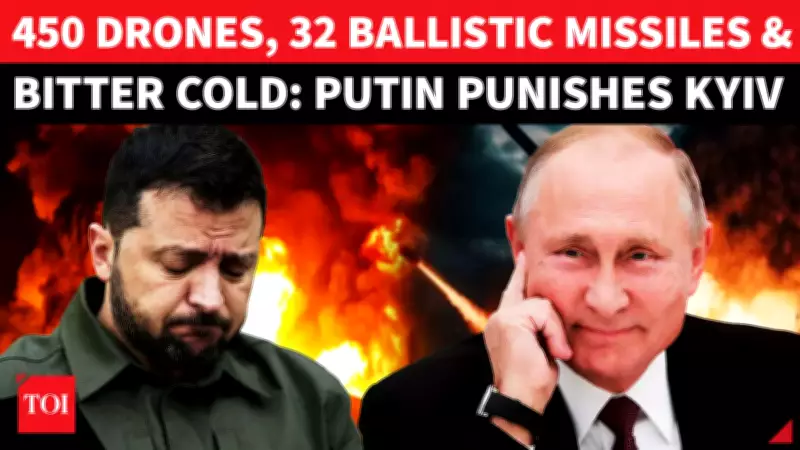
Russia Unleashes Devastating Winter Assault on Ukraine During NATO Chief's Visit
In a chilling escalation of hostilities, Ukraine endured its most severe aerial bombardment of 2026 as Russia launched a massive coordinated attack during the coldest nights of winter. The assault involved approximately 450 long-range drones and more than 70 missiles, including a record-breaking 32 ballistic missiles, targeting critical energy infrastructure across multiple regions.
Strategic Timing Amid Diplomatic Moves
The devastating attack came at a particularly sensitive moment in international diplomacy. NATO's Secretary General was visiting Kyiv when the missiles began raining down, creating a stark backdrop to discussions about Western support for Ukraine. Furthermore, the assault occurred just days before U.S.-brokered peace talks were scheduled to resume in Abu Dhabi, raising questions about Moscow's commitment to diplomatic solutions.
Widespread Destruction and Humanitarian Crisis
The Russian offensive caused extensive damage across multiple Ukrainian cities:

- Kyiv, Kharkiv, and Odesa experienced powerful explosions that ripped through residential areas
- Thousands of homes were left without heating, electricity, or water in sub-zero temperatures
- Ukraine's largest private energy provider confirmed this was the heaviest strike on the electricity network in 2026
- Civilians reported shattered apartments, frozen stairwells, and children struggling to stay warm
Iconic Monument Damaged in Symbolic Blow
In a particularly symbolic strike, the attack damaged Kyiv's iconic Motherland Monument, a towering World War II memorial that has become a national symbol of Ukrainian resistance. Ukrainian officials immediately condemned the damage, accusing Moscow of deliberately targeting cultural landmarks and attempting to freeze civilians into submission through energy infrastructure attacks.
Winter Weaponized in Ongoing Conflict
The timing of the assault during the coldest period of winter represents a strategic escalation, with analysts noting that Russia appears to be weaponizing winter conditions against the Ukrainian population. By targeting energy infrastructure when temperatures are at their lowest, the attacks maximize civilian suffering and strain Ukraine's emergency response capabilities.
As diplomatic efforts hang by a thread and NATO leadership witnesses the devastation firsthand, the war shows no signs of slowing. The massive scale of this attack, combined with its strategic timing during both a high-profile diplomatic visit and peace talk preparations, suggests Russia is sending a clear message about its military capabilities and willingness to escalate despite international diplomatic initiatives.