

Global Conflict Escalates: Economist Sachs Warns of Wider War and Economic Fallout
It has been over a month since the initial missile and bomb strikes targeted Iran, and the physical scars of this conflict now extend far beyond the immediate region, reaching as distant as the island of Cyprus in Europe. The world remains fixated on the increasingly tense Strait of Hormuz, a critical chokepoint for global oil shipments. Despite being geographically removed from the epicenter, nations worldwide are already grappling with the economic consequences as the free flow of oil through vital economic arteries faces severe disruption.
Expert Analysis Points to Leadership Failures
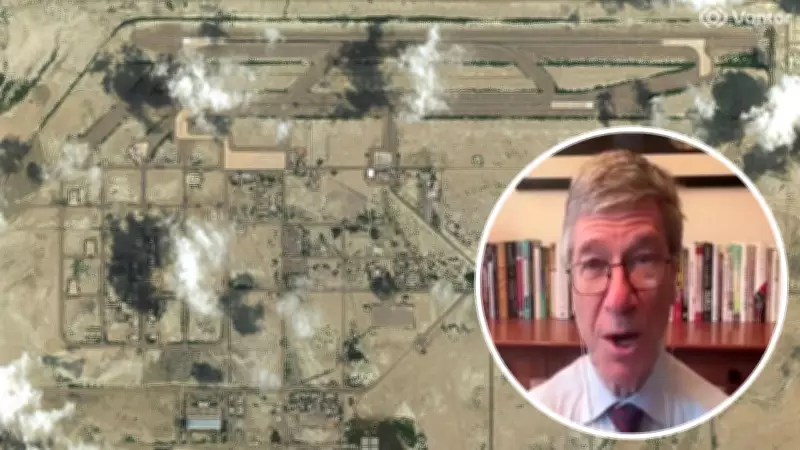
In an exclusive interview with The Times of India, renowned economist and public policy analyst Professor Jeffrey Sachs of Columbia University provided a stark assessment of the ongoing crisis. Professor Sachs directly accuses US President Donald Trump and Israeli Prime Minister Benjamin Netanyahu of initiating this conflict against the explicit counsel of military and intelligence experts.
"Inside the executive branch, we hear numerous accounts that the joint chiefs of staff attempted to advise the president against this course of action. This was not a strategically sound decision. It is also probable that the CIA offered similar warnings, though this remains unconfirmed as such discussions are typically classified," Sachs revealed during the conversation.

The leading economist further criticized the current administration's approach, highlighting a dangerous absence of traditional governmental checks and balances. "President Trump is operating without the customary oversight. Congress has become virtually irrelevant in this process. If you were to shut it down entirely, the impact on these critical decisions would be negligible," he asserted, painting a picture of unilateral decision-making.
Escalation Risks and Geopolitical Motivations
Professor Sachs expressed grave concern that the current situation significantly increases the likelihood of military miscalculations and a protracted conflict. "We are steadily drifting toward an expanded war. I believe the situation is escalating, not coming under any meaningful control," he warned, suggesting the conflict could easily spiral beyond current boundaries.
From a broader geopolitical perspective, Sachs frames this war as part of a larger struggle for regional influence and global dominance. He suggests that the United States, with Israel as a key ally, is actively seeking to maintain hegemonic control over West Asia. "The fundamental US motivation is a desire for worldwide control. This includes dominating the Middle East, often utilizing Israel to conduct operations that serve American interests," Sachs explained, highlighting what he perceives as proxy dynamics at play.
Imminent Economic and Security Threats
The economist issued a dire warning about the vulnerability of global energy infrastructure, noting that targeted attacks could cripple oil supplies worldwide. Such disruptions would inevitably drive fuel prices to unprecedented levels, triggering widespread economic instability across all continents.
"We are standing on the precipice of a global energy supply catastrophe. Oil prices could easily surge to $130, $140, or even $150 per barrel," Sachs predicted, outlining a scenario that would devastate economies already struggling with inflation.
Perhaps most alarmingly, Sachs warned that mounting international pressure might compel Iran to abandon its longstanding restraint on nuclear weapons development. "There would be substantial domestic support within Iran for pursuing nuclear capabilities. They possess the technical capacity and have consciously refrained for twenty-five years, but this conflict could fundamentally alter that calculus," he stated, suggesting a potential nuclear proliferation crisis.

Call for Coordinated Global Intervention
Professor Sachs emphasized the urgent necessity for coordinated international diplomacy to de-escalate the conflict and prevent further catastrophe. He specifically highlighted the potential crucial role of global leaders like Indian Prime Minister Narendra Modi, Chinese President Xi Jinping, and Russian President Vladimir Putin in brokering a truce.
"I firmly believe that if Prime Minister Modi, President Putin, and President Xi collectively and seriously urged Mr. Trump to halt this aggression, it would create a meaningful diplomatic impact," Sachs proposed. He elaborated that "Prime Minister Modi would not need to act unilaterally. He could collaborate with President Xi and President Putin. The BRICS alliance possesses the collective influence to intervene, and indeed, the BRICS nations should take this responsibility."
Without such decisive multilateral efforts from world leaders, Sachs concludes that the conflict will likely continue unabated, inevitably expanding into a broader regional war with devastating global repercussions for security, economy, and international stability.





