Deep in China's remote desert, a massive military construction project is under way that experts believe is aimed at ensuring the country can still launch a nuclear response even if its nuclear facilities are attacked first by the United States, reported news agency Reuters.
China already possesses missiles capable of reaching anywhere in the US. However, newly reviewed satellite images show Beijing is significantly strengthening the infrastructure that supports its nuclear missile force.
Details of the Construction
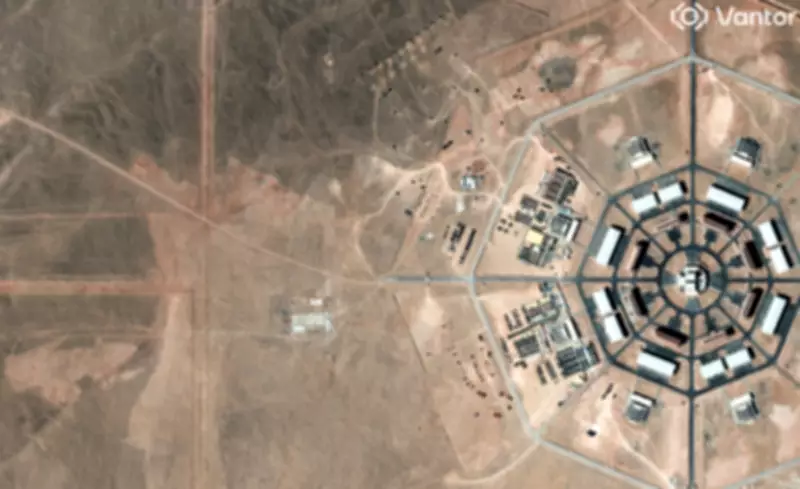
According to images examined by Reuters, China has built more than 80 launch pads along with three large octagon-shaped facilities near the Hami nuclear missile silo field in the country's north-west. The launch pads could be used by mobile missile launchers and air-defence systems, while the larger facilities may support communications, electronic warfare and military command functions, according to security analysts who reviewed the imagery.

Experts say the scale of the construction suggests China is creating a far more resilient network for its land-based nuclear forces. The goal appears to be ensuring that China's nuclear arsenal remains operational even if some facilities are destroyed in a first strike.
Expert Analysis
“We can see this infrastructure is being built on a grand scale, covering thousands of square kilometers of desert beyond the silo fields,” said Alexander Neill, an adjunct fellow at Hawaii’s Pacific Forum think tank. Depending on the precise capabilities, he said, “we’re looking at a very considerable enhancement and diversification of China’s strategic nuclear deterrent.”
US defence secretary Pete Hegseth on Saturday said countries across the Indo-Pacific have growing concerns about China's expanding military capabilities, warning that Beijing's military build-up is causing unease across the region. Speaking at Asia's premier defence summit in Singapore, Hegseth said regional nations were closely watching China's increasing military activities both within the Indo-Pacific and beyond.
“When we look across the region today, there is rightful alarm regarding China's historic military build-up and the expansion of its military activities in the region and beyond,” Hegseth told delegates. At the same time, he stressed that Washington was not seeking to escalate tensions with Beijing and remained committed to maintaining stability in the region. He added that the United States did not seek “needless confrontation in the region”.
Comparison with Other Nuclear Powers
Security experts say the scale of the protective infrastructure being built around China's nuclear missile sites is unusual when compared with other major nuclear powers. The United States and Russia possess far larger nuclear arsenals than China, with significantly more warheads and deployed weapons. However, they generally rely on large numbers of missile silos, strong fortifications and the remote location of their facilities to discourage an enemy attack, rather than building extensive missile-defence networks around them.
Analyst Hans Kristensen said the developments in China's north-western desert appear different in both scale and ambition. “I’ve never seen anything quite like it,” Kristensen told Reuters. “It’s an extraordinary effort.”
China's Nuclear Doctrine
China has long maintained that its nuclear strategy is based on deterrence rather than aggression. Its official position is that it would only use nuclear weapons in retaliation after being attacked first. To support that policy, China needs to ensure that enough of its nuclear force survives any enemy strike. Although the People's Liberation Army can launch nuclear weapons from submarines and aircraft, missile silos in Xinjiang and neighbouring Gansu province remain the backbone of its nuclear arsenal.
China's nuclear expansion has attracted growing international attention as President Xi Jinping continues a broad military modernisation programme. Western governments have repeatedly expressed concern about what they describe as a lack of transparency regarding China's nuclear plans and future intentions.

A central part of China's nuclear doctrine is its "no first use" policy, under which Beijing says it will not initiate a nuclear conflict. However, some Western diplomats and security experts argue that China could still use the threat of nuclear force to discourage foreign involvement in a future conflict over Taiwan. Tensions over Taiwan remain one of the biggest flashpoints in relations between Beijing and Washington. China considers Taiwan part of its territory, while Taiwan's government rejects those claims.
Earlier this month, Xi warned US President Donald Trump that mishandling differences over Taiwan could push the two countries towards what he described as a "dangerous place." China's defence ministry did not respond to questions about the satellite findings. The Pentagon also declined to comment on intelligence-related matters.
Infrastructure Details
The newly identified infrastructure is centred around two octagon-shaped military facilities in eastern Xinjiang, built during the past six years. One lies around 140 kilometres from the Hami missile silo field, while the other is roughly 230 kilometres away. Satellite images show that the sites contain accommodation buildings and space for large military vehicles.
While the existence of these octagonal facilities had been reported previously, Reuters said the wider network of launch pads connected to them, as well as recent military activity around one site, had not been publicly detailed before. Analysts believe the facilities could support mobile missile operations, electronic warfare capabilities and command functions linked to China's expanding nuclear force.