

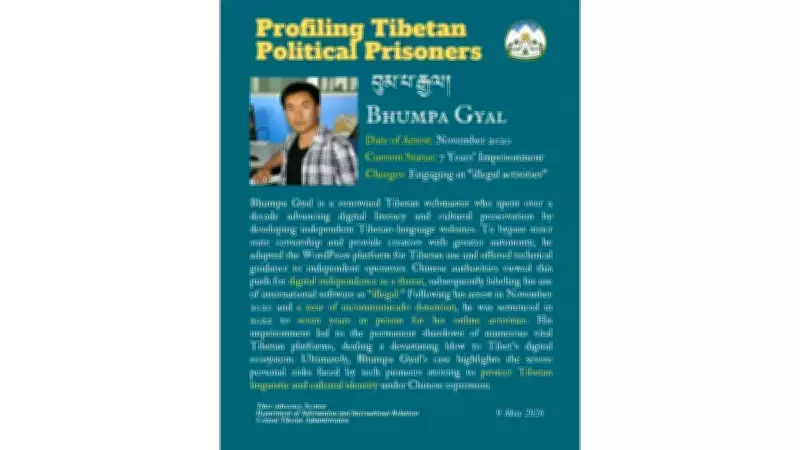
The Central Tibetan Administration (CTA), through its Tibet Advocacy Section, has brought attention to the case of Tibetan political prisoner Bhumpa Gyal. Bhumpa Gyal, a Tibetan webmaster, was arrested in November 2020 and subsequently sentenced in 2022 to seven years in prison on charges of "illegal activities," as reported by the CTA.
For over a decade, Gyal worked on promoting digital literacy and preserving Tibetan culture by developing and supporting independent Tibetan-language websites. According to the CTA, his efforts included adapting the WordPress platform for Tibetan use and assisting independent creators in building digital platforms with greater autonomy, despite strict censorship.
Chinese authorities reportedly considered his work on digital independence and his use of international software tools as unlawful, viewing his technical contributions as a threat. After his arrest, he was held in incommunicado detention for a year before being sentenced, the CTA reported.

The imprisonment has had a wider impact on the Tibetan digital space, including the shutdown of several key platforms that supported language preservation and cultural expression. Advocacy groups cite the case as an example of the risks faced by individuals working in technology and cultural preservation under restrictive conditions.
Tibetans have long faced allegations of repression under Chinese governance, particularly in areas of political expression, cultural preservation, and religious practice. Human rights organisations, including the CTA, have reported cases of arbitrary detention, surveillance, and harsh treatment of individuals involved in cultural or political activism.
Former detainees and monitors have described conditions that include incommunicado detention, restricted legal access, and reported physical and psychological abuse. Critics argue that such practices aim to suppress dissent and limit Tibetan cultural autonomy, especially in digital linguistic spaces.
Chinese authorities maintain that legal actions are taken under national security and anti-separatism laws. The situation continues to draw concern regarding human rights protections and freedom of expression in Tibetan regions.






