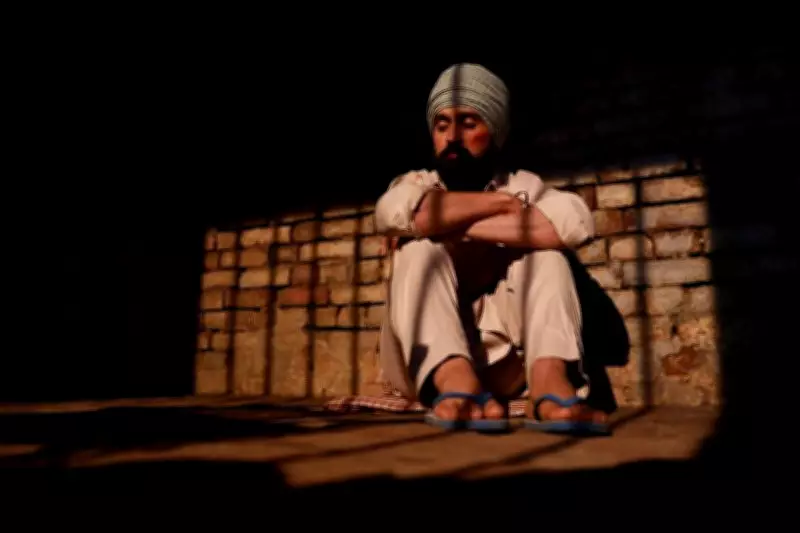
Punjab's Catharsis: A Call for Collective Grieving
Over the past few weeks, life in Punjab has mirrored two artistic works that grapple with historical trauma. The first is Imtiaz Ali's 1947 Partition film Main Vaapas Aaunga, which revisits the forced migration of people uprooted from their homes, forever labeled as refugees. They live in imitation colonies like Model Town on the outskirts of Delhi, reminiscent of the Model Town left behind in Lahore, and send their children to schools like Lyallpur Senior Secondary Girls School in Jalandhar, named after a town—Lyallpur—that no longer exists (now Faisalabad). Memory, as the article notes, cannot be unseen or unheard; even secondhand remembrance can trigger nightmares. Friends in Chandigarh avoid taking their parents to see the film, fearing it might reawaken past trauma.
The Legacy of Trauma in Punjab
Punjab is no stranger to trauma. Rajmohan Gandhi's book Revenge and Reconciliation highlights how these motifs have echoed across centuries in the region. Historically, invaders from Alexander in 326 BC to various intruders and militants have passed through Punjab, leaving a legacy of both omission and commission. The state remains the only one in India often preceded by the article "the," reflecting its unique identity. Today, monsoon rivers are in spate: the Chenab, though now flowing only through Jammu and Pakistan Punjab, roars uncontrollably, illustrating that geography does not yield to politics—even after events like Op Sindoor.
The Impact of 'Satluj' and the Ban
Similarly, the movie Satluj has gripped Punjab. Village committees screen it on large sets near gurdwaras or open grounds, defying the Centre's ban. Even the Delhi Sikh Gurdwara Management Committee organizes screenings in the capital. With elections six months away, political parties tread carefully, aware that missteps could be swept away by the tide of emotion. Colleagues at The Tribune note that "everyone knows everything" about those years, but the question remains: what exactly does that mean? The ban suggests it may be too soon to confront the horrors, unlike Main Vaapas Aaunga, which waited 80 years. Yet, as the article points out, Diljit Dosanjh, the film's star, lives in America, not in the Punjabi village.

Fear of Division and One-Sided Narratives
The fear is that Punjab will be riven again, with people taking sides. Critics argue that Satluj is "too one-sided," focusing only on human rights activist Jaswant Singh Khalra's perspective, without showing how terrorists killed innocent Hindus and Sikhs, how the police force suffered, or how Pakistan fueled the fire. The movie quotes Khalra claiming 25,000 innocent people were killed. However, security analyst Ajai Sahni, writing in The Tribune in 2019, provided different figures: between 1981 and 1995, 11,696 civilians and 1,746 security force personnel (including 1,415 Punjab Police) were killed by terrorists, while police killed 8,090 terrorists—totaling 21,532 deaths.
Social Media Contestations
Social media is rife with contestations. BJP leader Ravneet Singh Bittu's X handle features black-and-white videos of clean-shaven dead men—none masked. The article questions why these videos are being surfaced now and how they bypass strict censors. Bittu told journalist Shivani Bhakoo that the BJP has not banned the movie, though he may not have seen the Information & Broadcasting Ministry's order.

The Path to Healing
An editorial in The Tribune called for letting Satluj flow, arguing that collective trauma can only be cathartic if more writers, filmmakers, and media discuss what happened, how, and why. But collective catharsis demands collective grieving—not finger-pointing or blame. Neither Congress, Akali Dal, nor BJP (when in alliance with Akali Dal) have done much in their years in power to address this. It took 80 years and the passing of a generation for Main Vaapas Aaunga to be watchable, and it remains a tear-jerker. It has been 112 years since Punjab sent half a million men to fight for the British in World War I; tomorrow, The Tribune will report how 9,909 of them, forgotten, have finally been recognized. About 30 years since the end of terrorism in Punjab, the article concludes it is time to take the first steps—not to forget or deny the dark past, but to remember and heal.