

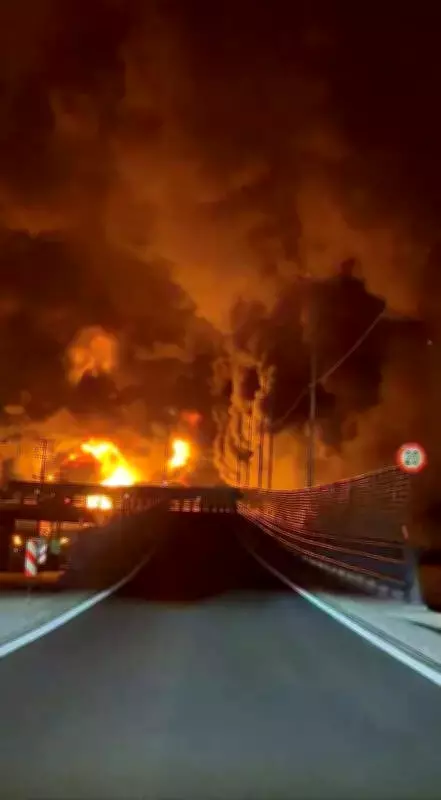
Toxic Black Rain Descends on Tehran Following Israeli Strikes on Oil Facilities
The Iranian capital of Tehran and its surrounding metropolitan areas have been engulfed by thick black clouds and are experiencing what residents describe as a "toxic rain of oil" falling as black droplets. This environmental and public health crisis unfolded after Israeli military forces targeted the Shahran and Shahr-e-Rey oil depots in Tehran late on Saturday night.
Residents Describe Horror of Waking to Darkness and Suffocation
Iranian citizens living in India have shared harrowing accounts from their family members back home, describing conditions of near-total darkness and severe respiratory distress. "Waking up on Sunday morning felt like a moment of pure horror," said Abgine Khaki, an Iranian residing in India, who communicated with family in central Tehran via the state-controlled messaging app Bale. "Even at 10 a.m., it was so dark it seemed like night. People are having severe difficulties breathing even inside their houses. We feel completely helpless. Children, the elderly, our pets—everyone is suffocating."
Khaki emphasized the direct environmental harm and universal danger, stating, "Think about the patients in hospitals who are already vulnerable. Think about the daily wage laborers who have no choice but to step outside for work."

Intensity of Strikes Surpasses Expectations, Government Imposes Restrictions
The Israeli strikes on Tehran's oil infrastructure were reportedly so intense that multiple sources indicate they exceeded what even the Trump administration had anticipated. An advisor to the former U.S. president noted that "he didn't like the idea" of targeting such facilities due to the potential consequences.
Another Iranian citizen staying in Mumbai reported that the government has advised residents to wear protective masks. He managed to speak briefly with his father after considerable difficulty. "There is an overpowering oil stench permeating the air," he explained. "But more concerning than the air quality itself are the toxic black rain droplets that are causing significant damage to surfaces and health."
After a pause, he added that grocery prices have surged following the attacks on the oil depots. "The government has also imposed a strict cap of just 5 liters of fuel per vehicle per day due to the massive losses from the strikes. We desperately hope the situation is contained soon. Ordinary Iranian citizens are suffering the most from this crisis," he concluded.
Medical Experts Warn of Severe Health Consequences
Medical professionals have issued urgent warnings about the health impacts of the acid rain and pollution. People with pre-existing conditions are particularly vulnerable, while others may develop new skin, eye, and pulmonary disorders.
"In these conditions, we can expect development or exacerbation of chronic obstructive pulmonary disease (COPD) and asthma, along with potential cases of acute respiratory distress syndrome," explained Dr. Anurag Agrawal, head of the pulmonary medicine department at Government Doon Medical College Hospital in Dehradun. "Proper precautions are essential: stay indoors whenever possible, wear protective goggles and masks, and cover your face with a wet cloth to filter particles."
Communication Blackout Compounds the Crisis
Mohammed Kashmiri, an Iranian who has lived in Delhi for over five years, highlighted how a persistent communication blackout has worsened the situation for Tehran residents. "Internet and phone lines are largely down," Kashmiri reported. "One of the few remaining communication channels is Bale, which is heavily monitored by the government with no end-to-end encryption, meaning users have zero privacy. People have no alternatives. On top of these restrictions, the almost nonexistent internet speed makes it incredibly difficult to connect with loved ones back home."
This communication breakdown has created additional dangers, as people are unable to receive emergency alerts or coordinate assistance effectively.

Community Resilience Emerges Amidst Adversity
Despite the dire circumstances, Iranians are demonstrating remarkable resilience. Khaki noted that community solidarity is emerging as people regularly check on neighbors and even strangers to offer assistance. "Iranians know how to survive under pressure," she said. "We remain confident that this difficult chapter in our nation's history will eventually pass."
The combination of environmental contamination, health hazards, economic strain, and communication barriers presents a multifaceted crisis for Tehran's residents as they navigate the aftermath of the oil depot strikes.





