

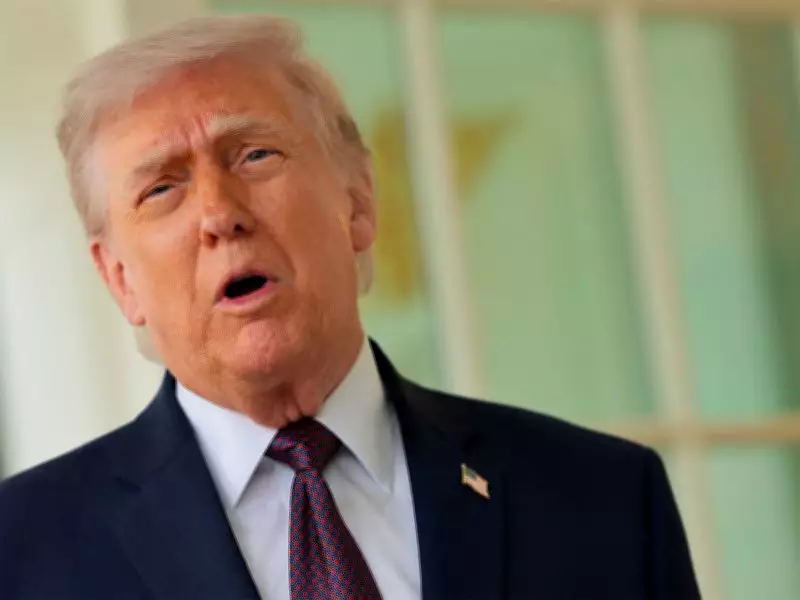
The fragile ceasefire between the United States and Iran appears to be on life support after President Donald Trump dismissed Tehran's latest proposal as a "piece of garbage." The harsh rebuke came during a press conference at the White House, where Trump reiterated his administration's hardline stance on Iran's nuclear program and regional activities.
Trump's Reaction
Speaking to reporters, Trump did not mince words when asked about the Iranian proposal. "Their latest offer is a piece of garbage, frankly. It's not serious, and they know it," Trump said. He accused Iran of trying to buy time while continuing to violate the terms of the existing ceasefire. The president emphasized that the United States would not accept anything less than a complete dismantling of Iran's nuclear infrastructure.
Iran's Proposal Details
Iran's proposal, delivered through Swiss intermediaries, reportedly included a phased reduction of uranium enrichment in exchange for the lifting of some economic sanctions. However, U.S. officials dismissed the offer as insufficient, noting that it failed to address key concerns such as ballistic missile development and support for proxy groups in the Middle East.

The timing of the rejection is critical, as the current ceasefire—brokered by Qatar and Oman in April—is set to expire in two weeks. Diplomatic sources indicate that both sides have been engaging in backchannel talks, but progress has been minimal.
Escalating Rhetoric
Trump's comments mark a significant escalation in rhetoric, following weeks of relative quiet on the diplomatic front. The president has long advocated for a maximum pressure campaign against Iran, which includes crippling sanctions and threats of military action. Critics argue that such an approach undermines diplomatic efforts and increases the risk of conflict.
Iranian Foreign Minister Javad Zarif responded on Twitter, calling Trump's remarks "unhelpful" and accusing the United States of "sabotaging peace." Zarif reiterated Iran's willingness to negotiate but warned that Tehran would not bow to "bullying tactics."
International Reactions
The European Union, which has been mediating indirect talks between the two sides, expressed concern over the deteriorating situation. A spokesperson for the EU foreign policy chief said, "We urge both parties to exercise restraint and engage in good-faith negotiations. The window for diplomacy is narrowing."
Russia and China also called for calm, with Beijing urging Washington to "show flexibility" and Moscow warning against any military escalation. The United Nations Secretary-General Antonio Guterres appealed for an extension of the ceasefire, stating that "the alternative is too dire to contemplate."
What's at Stake
The potential collapse of the ceasefire could have far-reaching consequences. Analysts warn that a renewed conflict would destabilize the already volatile Middle East, disrupt global oil supplies, and exacerbate humanitarian crises in Yemen, Syria, and Iraq. The International Atomic Energy Agency (IAEA) has reported that Iran's uranium stockpile continues to grow, inching closer to weapons-grade levels.
Domestically, Trump faces mounting pressure from both hawks and doves within his administration. Secretary of State Mike Pompeo has reportedly advocated for a tougher line, while Defense Secretary Mark Esper has cautioned against military action, emphasizing the need for a diplomatic off-ramp.
As the deadline approaches, the world watches anxiously to see whether the ceasefire can be salvaged or whether the two nations are headed for another confrontation. For now, Trump's blunt dismissal of Iran's proposal suggests that the path to peace remains fraught with obstacles.






