

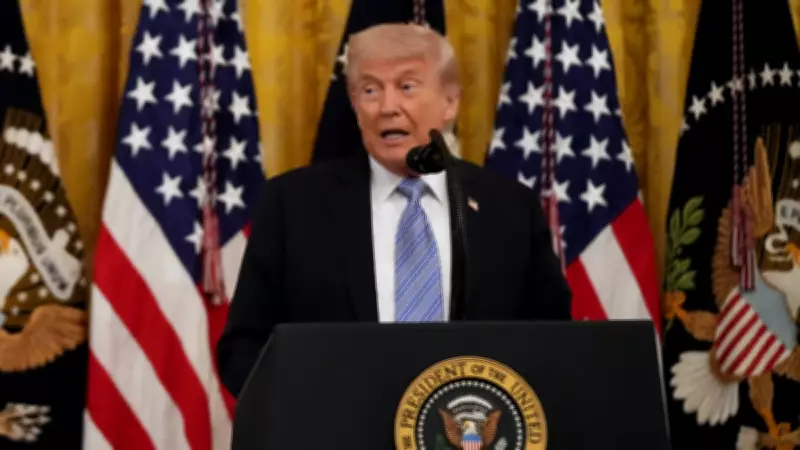
US President Donald Trump announced on Wednesday that he had called off a planned military strike on Iran at the request of Gulf allies. However, he warned that the United States remains prepared for a full-scale assault if Tehran does not negotiate a new nuclear deal.
Decision to Stand Down
Speaking to reporters at the White House, Trump said he had ordered the military to be ready to strike three targets in Iran on Tuesday evening but decided to stand down after consulting with allies in the Gulf region. The allies reportedly urged restraint, fearing that an attack could escalate into a broader conflict destabilizing the Middle East.
"We were cocked and loaded to attack three different sites," Trump said. "But I decided to call it off after talking to some people in the Gulf. They said, 'Please don't do it.' They were very concerned about the repercussions."

US Warning to Iran
Despite calling off the attack, Trump reiterated his administration's hardline stance on Iran's nuclear program. He warned that the US military is fully prepared to launch a massive assault if Iran does not come to the negotiating table.
"We have the most powerful military in the world, and we are ready to use it if necessary," Trump said. "I hope Iran will see the wisdom of making a deal. If not, they will face consequences like never before."
The president did not specify what triggered the planned attack but hinted that it was in response to recent provocations by Iran, including the downing of a US drone and alleged attacks on oil tankers in the Gulf of Oman.
International Reactions
The decision to call off the strike drew mixed reactions from the international community. Allies in the Gulf expressed relief, while some US lawmakers criticized the administration for what they called a "reckless approach" to foreign policy.
Iranian officials have not yet commented on Trump's latest remarks. However, the country's Foreign Minister Mohammad Javad Zarif earlier stated that Iran is not seeking war but will defend itself against any aggression.
Background of Tensions
US-Iran tensions have escalated sharply in recent weeks, with the US deploying additional military assets to the Middle East, including an aircraft carrier strike group and B-52 bombers. The Trump administration has also imposed crippling economic sanctions on Iran, aiming to cut off its oil exports and pressure the regime into renegotiating the 2015 nuclear deal.
Iran, in turn, has threatened to resume uranium enrichment beyond the limits set by the deal and has warned that it could close the Strait of Hormuz, a vital oil shipping route.
What's Next?
Trump's latest comments suggest that the US is keeping military options on the table while pursuing diplomatic channels. The president said he is open to talks with Iran without preconditions, a stance he has maintained throughout his presidency.
Meanwhile, Gulf allies are reportedly working behind the scenes to de-escalate the situation and encourage dialogue between Washington and Tehran. The coming days will be crucial in determining whether the two countries can avoid a full-blown conflict.






