

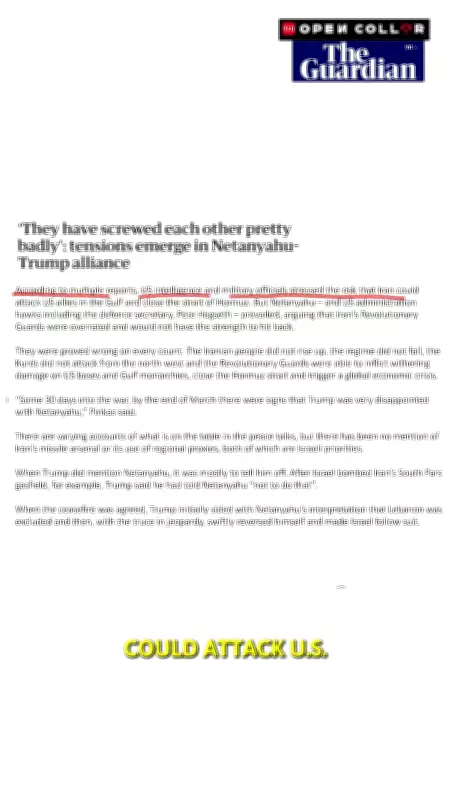
In a recent episode of OPEN COLLAR, Major Gaurav Arya delves into the escalating tensions between Donald Trump and Benjamin Netanyahu over the Iran conflict. The discussion sheds light on how U.S. officials allegedly underestimated Iran’s military prowess, leading to a series of missile, drone, and strike operations across the Middle East. The episode further examines the global oil crisis, noting that soaring oil prices are disproportionately affecting the United States. Iran’s strategic calculation of the economic impact of the conflict is also explored, with the Strait of Hormuz emerging as a critical pressure point for Washington and its allies.
Underestimated Military Capabilities
The analysis begins by highlighting the intelligence failures that led to the underestimation of Iran's military capabilities. U.S. officials reportedly did not anticipate the scale and sophistication of Iran's drone and missile operations. These operations have not only targeted strategic assets in the region but have also demonstrated Iran's ability to project power far beyond its borders. The episode emphasizes that this miscalculation has emboldened Iran and complicated the geopolitical landscape.
Economic Fallout and Oil Prices
A key focus of the episode is the economic repercussions of the conflict. The global oil market has been severely impacted, with prices surging to levels that are hurting the American economy the most. Iran, aware of the U.S. dependence on stable oil prices, has leveraged this vulnerability. The episode explains how Iran calculated that prolonged instability would strain the U.S. economy, potentially influencing domestic politics and foreign policy decisions. The ripple effects are felt worldwide, as countries grapple with inflation and energy security concerns.

The Strait of Hormuz: A Geopolitical Flashpoint
The Strait of Hormuz is identified as the biggest pressure point in this conflict. As a chokepoint for global oil shipments, any disruption here can have catastrophic consequences for the global economy. The episode details how Iran has used the threat of closing the strait as a bargaining chip, forcing the U.S. and its allies to tread carefully. Despite military superiority, the U.S. finds itself in a precarious position, as a direct confrontation could trigger a broader regional war and further destabilize oil markets.
Implications for U.S. Foreign Policy
Major Gaurav Arya concludes by reflecting on the broader implications for U.S. foreign policy under Trump. The Iran gamble, intended to assert American dominance, has instead exposed vulnerabilities and strained alliances. The episode suggests that a reassessment of strategy is necessary, one that accounts for the complex interplay of military, economic, and diplomatic factors. As tensions continue to simmer, the world watches to see if Washington can navigate this crisis without escalating into a full-blown conflict.






