

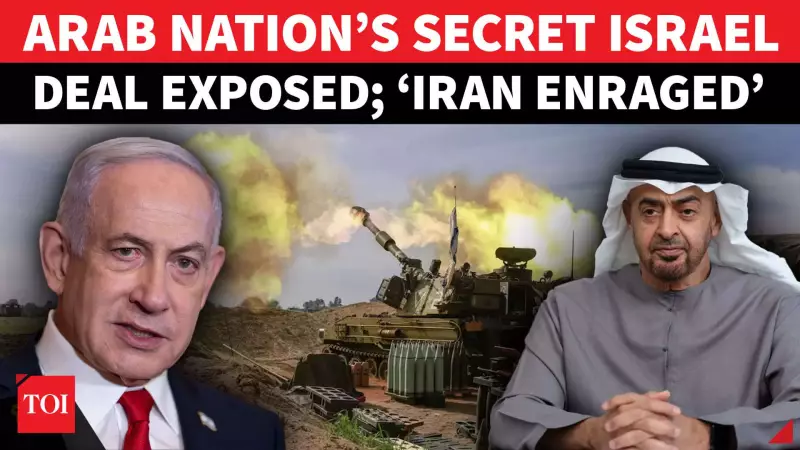
In a revelation that has peeled back a layer of diplomatic secrecy, the United Arab Emirates has been officially named as the previously undisclosed buyer in a colossal $2.3 billion arms agreement with Israel. The deal, formalised with the prominent Israeli defence contractor Elbit Systems, is set to unfold over an extensive eight-year delivery period, cementing a significant and deepening military partnership between the two nations.
The Details of the Major Defence Contract
The core of this development is a $2.3 billion contract signed directly between the UAE government and Elbit Systems, a leading Israeli defence technology firm. While the specific types of weaponry and systems involved have not been publicly itemised, the sheer scale of the financial commitment underscores a strategic shift. Deliveries related to this pact are scheduled to be executed over the next eight years, indicating a long-term, structured partnership rather than a one-off transaction.
Deepening Ties and Immediate Backlash
This agreement powerfully highlights the rapidly evolving and strengthening military cooperation between Israel and the UAE, a relationship normalised under the 2020 Abraham Accords. However, the timing and nature of the deal have ignited a firestorm of criticism and concern on the global stage.

Foremost among the critics are human rights organisations, which have voiced profound alarm. Their concerns are sharply focused on the ongoing conflict in Gaza, questioning the implications of transferring advanced weaponry to a region embroiled in war. The deal has also drawn fierce condemnation from regional powers. Iran, a longstanding adversary of Israel, has reacted with fury, viewing the strengthened alliance as a direct threat to its geopolitical interests. Similarly, Palestinian authorities and supporters have expressed outrage, interpreting the military pact as a betrayal of the Palestinian cause and a move that further emboldens Israel amidst the hostilities.
Global Repercussions and Strategic Implications
The uncovering of the UAE's role in this deal acts as a catalyst for broader international discourse. It forces a re-evaluation of alliances in the volatile Middle East, revealing the practical, on-the-ground military dimensions of the Abraham Accords that extend far beyond diplomatic normalisation. The strong reactions from Iran and Palestine signal potential for increased regional tensions, complicating already fragile diplomatic efforts.
For India, which maintains crucial strategic relationships with both the UAE and Israel, this development presents a complex diplomatic landscape to navigate. The deal underscores the shifting sands of power and partnership in a region critical to India's energy security and diaspora interests. The long-term ramifications of this eight-year military partnership will likely influence arms markets, regional security paradigms, and the geopolitical calculations of major global players for years to come.






