

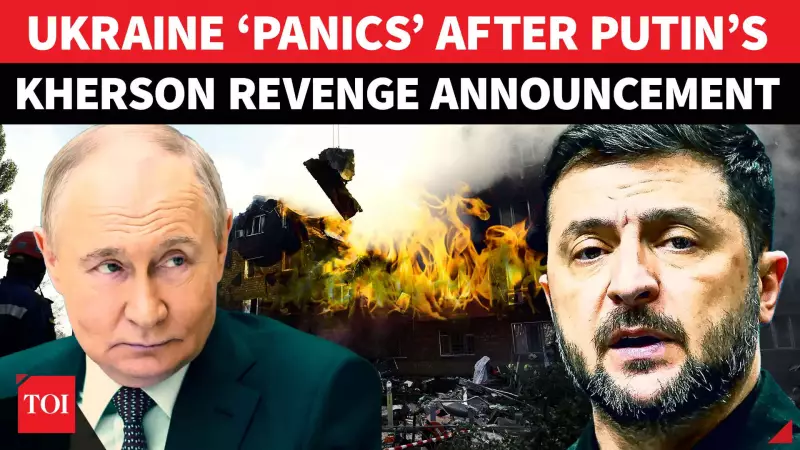
Kyiv finds itself on a heightened state of alert following a stark warning from Russian President Vladimir Putin, amidst a fierce dispute over a deadly New Year's drone strike in the occupied Kherson region. The incident, occurring on January 2, 2026, has poured fuel on the flames of the nearly four-year-long conflict, with both sides trading accusations and presenting starkly different narratives of the event.
Conflicting Narratives Over Kherson Attack
The core of the dispute lies in the target of the attack. Russian authorities have accused Ukrainian forces of launching a drone strike that resulted in civilian casualties at a hotel and a café in the occupied territory. Moscow has framed the incident as a direct attack on non-combatants.
However, the Ukrainian military has forcefully pushed back against these claims. Officials in Kyiv maintain that their forces targeted exclusively military objectives in the operation. They have labelled the Russian allegations of civilian deaths as a deliberate campaign of disinformation, aimed at shaping international opinion and justifying further aggression.

Tensions Spike Amid Diplomatic Fragility
This exchange of blame has significantly intensified the already severe tensions on the ground. The war, which has dragged on for years, sees no immediate end in sight, with the issue of territorial control remaining the most contentious and intractable point of conflict. The disputed strike comes at a particularly sensitive time, as renewed but fragile diplomatic efforts and international pressure seek to find a path to peace.
President Putin's subsequent warning, interpreted as a threat of revenge for the Kherson incident, has put the Ukrainian capital and its armed forces on edge. The Ukrainian army has reportedly 'sounded an alert', anticipating potential retaliatory actions from Russian forces in response to the contested drone operation.
Broader Context of a Protracted War
The event underscores the volatile and unpredictable nature of the ongoing war. With both sides deeply entrenched in their positions and controlling the flow of information from the front lines, verifying independent facts remains a major challenge. Each incident, like the one in Kherson, is immediately weaponized in the information war, complicating international mediation and peace talks.
The situation highlights how quickly localized clashes can escalate rhetoric and military posture, threatening to derail delicate diplomatic initiatives. The world watches as the conflict enters another year, with the people of Ukraine living under the constant shadow of aerial threats and the spectre of further violence.






