

US Airman Evades Capture in Hostile Iranian Mountains After Aircraft Downing
A wounded US airman, stranded deep inside hostile Iranian territory after his F-15E Strike Eagle was shot down, survived for more than a day by relying on rigorous training, difficult terrain, and sheer discipline, according to detailed reports from CNN. The weapons systems officer evaded Iranian search teams that were closing in on his position, hiding in mountain crevices and constantly moving to avoid detection.
Survival Against All Odds in Rugged Terrain
With limited equipment—including only a pistol, a communication device, and a tracking beacon—the airman navigated steep, rugged landscapes. At one critical point, he climbed to a ridgeline approximately 7,000 feet above sea level to improve his chances of both survival and rescue. US officials told CNN that the airman followed established survival protocols designed for such high-risk situations: avoid detection, maintain communication where possible, and reach terrain that offers both concealment and visibility.
Alone and injured, he managed to stay ahead of Iranian forces who were actively hunting him. Local reports indicated that civilians had even joined the search efforts after authorities announced rewards for information, adding to the pressure and danger of his situation.

The Ordeal Begins Amid Intensifying Conflict
The pilot's ordeal started after his aircraft was downed amid escalating conflict between the United States and Iran. This marked the first such crash inside Iranian territory since the war began. From the moment he hit the ground, a complex and high-stakes rescue effort was immediately set in motion.
Senior US military leadership tracked his movements in real time, monitoring threats and waiting for a narrow window to launch an extraction. Officials noted that the airman was never entirely "off the grid," as his beacon allowed US forces to maintain constant surveillance even as Iranian units moved closer to his location.
President Donald Trump described the situation as increasingly urgent, stating that the officer was "being hunted down... getting closer and closer by the hour." Despite his injuries, the airman continued to evade capture, buying crucial time for rescuers to plan and execute a safe extraction.
Daring Rescue Operation Under Fire and Deception
The eventual rescue operation was characterized as one of the most complex in recent US military history. Hundreds of personnel were involved, including special operations forces and intelligence teams. A deception campaign led by the Central Intelligence Agency was employed to mislead Iranian forces about the extraction plan.
Dozens of US aircraft were deployed to secure the airspace, with bombing runs conducted to clear potential threats near the extraction zone. Commandos then moved into the mountainous region, located the stranded officer, stabilized his injuries, and successfully evacuated him.
Complications and Contradictions in the Mission
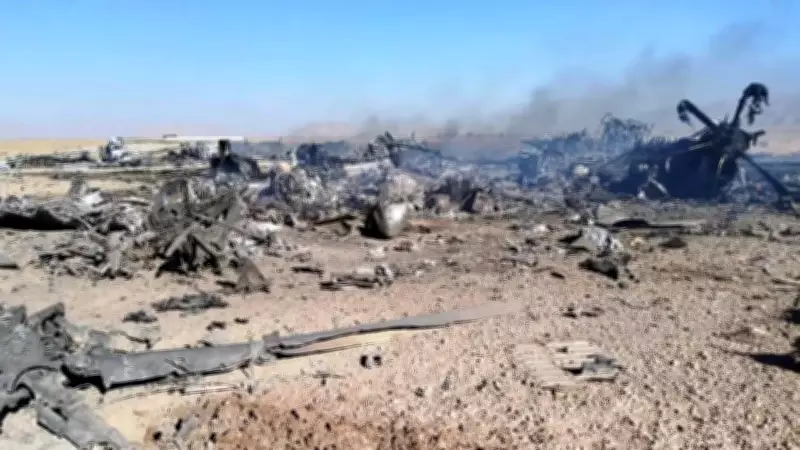
The mission, however, was not without complications. US officials acknowledged that two special operations aircraft suffered technical issues and were destroyed on the ground to prevent them from falling into Iranian hands. In contrast, Iranian authorities claimed they had shot down multiple US aircraft and declared the rescue attempt a failure—a claim directly contradicted by Washington.
Despite these risks and challenges, the operation concluded without any American casualties. Trump confirmed that the officer was "safe and sound," adding that another crew member from the downed jet had been rescued a day earlier, highlighting the broader success of the military efforts in the region.






