

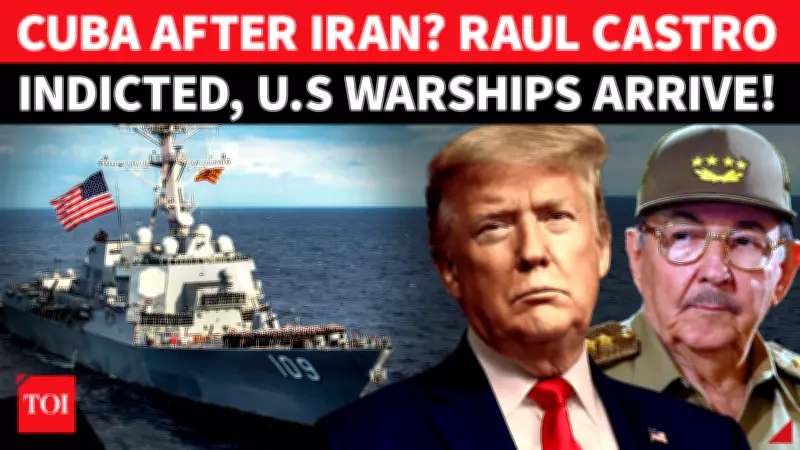
In a dramatic escalation of tensions between the United States and Cuba, the Trump administration has indicted former Cuban President Raúl Castro in connection with the 1996 shootdown of two civilian aircraft. The incident, which occurred nearly three decades ago, resulted in the deaths of four men, including three American citizens. Almost simultaneously, the U.S. military announced the arrival of the USS Nimitz Carrier Strike Group into the Caribbean Sea.
The Indictment of Raúl Castro
The U.S. Department of Justice, under the direction of Attorney General Pam Bondi, has formally charged Raúl Castro with multiple counts related to the downing of the civilian planes. The indictment alleges that Castro, who served as Cuba's defense minister at the time and later as president, personally authorized the attack on the aircraft operated by the humanitarian group Brothers to the Rescue. The group had been conducting flights to search for Cuban rafters and drop leaflets, and the planes were shot down by Cuban fighter jets over international waters.
Legal and Political Implications
This unprecedented legal action against a former head of state raises significant questions about international law and diplomatic relations. Critics argue that the indictment is politically motivated, timed to coincide with the deployment of the carrier strike group. Supporters, however, contend that it is a long-overdue step toward justice for the victims and their families. The charges come as the Trump administration continues to pursue a hardline policy against Cuba, reversing the détente initiated by the Obama administration.

The USS Nimitz Deployment
The USS Nimitz, one of the U.S. Navy's most powerful aircraft carriers, has entered the Caribbean Sea accompanied by its strike group, including guided-missile cruisers and destroyers. The Pentagon stated that the deployment is a routine movement, but the timing alongside the indictment suggests a coordinated show of force. The carrier group's presence significantly enhances U.S. military capability in the region, capable of launching airstrikes or enforcing a blockade if necessary.
Historical Context: The 1996 Shootdown
On February 24, 1996, Cuban fighter jets shot down two Cessna 337 aircraft belonging to Brothers to the Rescue, a Miami-based exile group. The planes were on a mission to search for Cuban migrants attempting to flee the island. The Cuban government claimed the aircraft violated its airspace, but the U.S. maintained they were over international waters. The incident led to a sharp deterioration in U.S.-Cuba relations and prompted the Clinton administration to tighten the embargo.
What This Means for U.S.-Cuba Relations
The combination of the indictment and the military deployment marks the most aggressive stance by Washington toward Havana in decades. Observers speculate that the Trump administration may be preparing for a larger confrontation, possibly including military action or a renewed effort to destabilize the Cuban government. However, others view it as a strategic maneuver to rally domestic support ahead of elections. The Cuban government has denounced the indictment as a politically motivated act and has called for international condemnation.
As tensions escalate, the international community watches closely. The United Nations and several allied nations have urged restraint, warning against any actions that could lead to armed conflict. Meanwhile, the families of the victims of the 1996 shootdown await justice, hoping that the indictment will finally hold those responsible accountable.






