

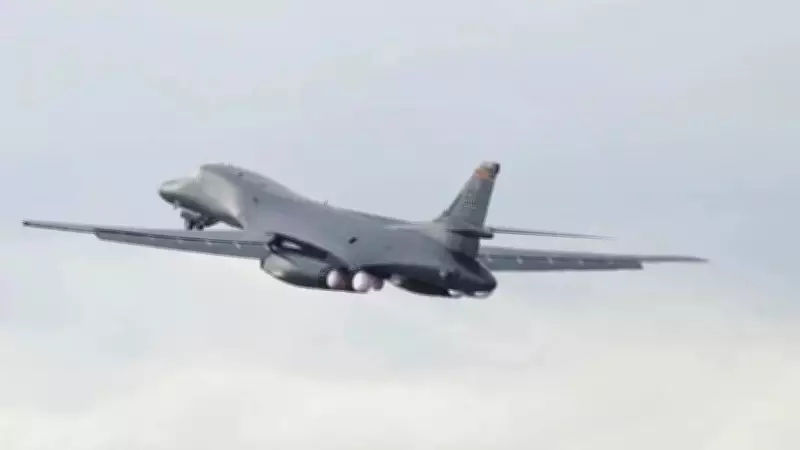
US Launches 'Most Intense' Airstrikes on Iran from UK Base as War Escalates
In a significant escalation of the ongoing conflict, US B-1 bombers took off from a British airbase on Tuesday, executing what Washington described as the "most intense" wave of airstrikes yet on Iran. This military action followed a declaration by US Secretary of War Pete Hegseth, who had earlier stated that the campaign would reach "its most ferocious day" since the war began. The sorties were launched shortly after Hegseth's announcement, targeting Iranian military and missile sites with sustained operations.
Strikes Shake Tehran and Heighten Global Tensions
The airstrikes overnight shook parts of Tehran, with residents reporting extended bombardments and widespread electricity outages. One resident described the ground trembling for nearly half an hour around midnight due to nearby strikes, while another expressed fears of not surviving the night. These attacks represent some of the heaviest since the conflict initiated, intensifying the military pressure on Tehran as Iranian leaders vow to continue fighting without backing down.
Iran's parliamentary speaker, Mohammad Bagher Qalibaf, dismissed any talk of a ceasefire, reinforcing the regime's defiant stance. Meanwhile, senior security official Ali Larijani issued a sharp warning to US President Donald Trump on social media platform X, stating, "Iran doesn't fear your empty threats. Even those bigger than you couldn't eliminate Iran. Be careful not to get eliminated yourself." This snarky remark underscores the deepening animosity between the two nations.

UK Base Involvement and Political Divisions
The use of a UK base for these strikes followed initial hesitation from London over Washington's request to operate from British territory. Prime Minister Keir Starmer later clarified that the facilities could be utilized for strikes specifically linked to Iran's missile program, but not for other targets in the broader conflict. This conditional approval highlights the diplomatic complexities and alliances at play in the war.
On the Israeli front, Prime Minister Benjamin Netanyahu declared that the broader objective of the war is the overthrow of Iran's government, asserting, "we are breaking their bones." This statement aligns with the intensified military efforts by the US and Israel to pressure Tehran.
Despite the escalating attacks, political divisions persist in Washington regarding the war's direction. Democratic Senator Mark Kelly criticized the Trump administration, stating, "Clearly, they do not have a strategic goal. They didn't have a plan. They have no timeline. And because of that, they have no exit strategy." This lack of clarity adds to the uncertainty surrounding the conflict's future.
Global Economic Concerns and Oil Market Risks
The fighting has also heightened global economic concerns, particularly regarding oil supply. The International Energy Agency convened an emergency meeting of its 30 member states in Paris to assess risks and consider releasing emergency reserves. The agency warned that the Middle East situation is creating "significant and growing risks" for the oil market, potentially impacting global energy stability.
As the conflict continues to unfold, the world watches closely, with the potential for further escalations and broader implications for international relations and economic security. The combination of intense military actions, defiant political statements, and economic vulnerabilities paints a complex picture of a war with no immediate end in sight.






