

LIVE NOW: US-Iran War News Live Updates: US strikes Iranian military site, downs drones; Iran targets passing ships attempting to cross Hormuz.
Tensions around the Strait of Hormuz escalated sharply on Thursday after Iranian media reported multiple maritime confrontations involving US and Iranian forces, fresh sanctions by Washington, and renewed threats linked to fragile negotiations aimed at ending the months-long Iran conflict.
Iran's semi-official Tasnim news agency reported that four vessels attempting to cross the Strait of Hormuz and enter the Persian Gulf were forced to turn back after allegedly failing to coordinate with Iranian authorities. According to an informed military source cited by Tasnim, Iranian naval forces initially issued warnings before firing warning shots when the vessels ignored instructions.

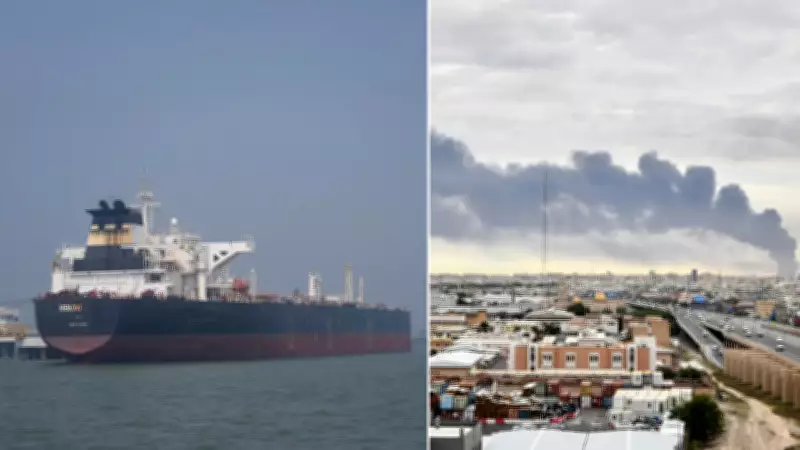
In another development, Tasnim claimed that the Iranian Revolutionary Guard Corps navy fired on a US tanker that allegedly attempted to transit the strategic waterway with its radar system switched off. Iranian media further reported that US forces responded by firing at a scorched area near Bandar Abbas, with explosions reportedly heard in the port city. Iranian authorities said there were no casualties or property damage.
The incidents came shortly after the United States Treasury Department added Iran's Persian Gulf Strait Authority to its sanctions list. The body had been created by Tehran to manage transit requests through the Strait of Hormuz, one of the world's most critical oil and gas chokepoints. The Trump administration said the move formed part of wider efforts to increase economic pressure on Iran during ongoing peace negotiations.
At a cabinet meeting, US President Donald Trump reiterated that the Strait of Hormuz would remain open to everybody, describing it as international waters. Trump also stressed that the United States would only agree to a great deal with Tehran and warned that Washington could finish the job if negotiations failed.
The latest developments underline the increasingly fragile state of the diplomatic process despite signals from both sides that they remain open to negotiations. The conflict, which began with US-Israeli strikes on Iran in late February, has already disrupted global energy markets and heightened fears of a broader regional war involving Lebanon and the Persian Gulf.
Meanwhile, Israel intensified operations in southern Lebanon, issuing fresh evacuation orders for residents south of the Zahrani River and warning of possible military action against Hezbollah targets. In Gaza, casualties continued to rise following fresh Israeli strikes.
Global markets remain highly sensitive to any disruption in the Strait of Hormuz, through which nearly one-fifth of the world's oil supply normally passes. Oil prices rose again after reports of new military exchanges near the waterway, while concerns over inflation and global energy supplies continue to weigh on investors and governments worldwide.
Key Developments
- Iranian media claimed four vessels were forced to turn back after warning shots near the Strait of Hormuz.
- US imposed sanctions on Iran's Persian Gulf Strait Authority.
- Tasnim reported an exchange of fire between Iranian and US forces near Bandar Abbas.
- Donald Trump insisted the Strait of Hormuz would remain open and warned Iran over negotiations.
- Israel issued new evacuation orders in southern Lebanon amid intensified operations against Hezbollah.
THE TIMES OF INDIA | May 28, 2026, 08:22:27 IST
08:21 (IST) May 28: Iran war: Oil markets on edge as Hormuz tensions, fresh strikes raise fears of wider conflict
Global energy markets remain on high alert after renewed military tensions around the Strait of Hormuz and fresh US strikes in southern Iran raised fears of a broader regional conflict that could disrupt critical oil supplies. Benchmark crude prices rebounded after reports emerged of naval confrontations near Hormuz, including claims by Iranian media that four vessels attempting to enter the Persian Gulf were forced to retreat after warning shots from Iranian naval forces.

Additional concerns surfaced after US officials confirmed strikes targeting Iranian drone infrastructure near Bandar Abbas following what Washington described as threats posed by Iranian one-way attack drones operating around the strategic waterway. The Strait of Hormuz is one of the world's most important maritime energy corridors, carrying nearly 20 per cent of global oil shipments. Analysts warn that any sustained disruption could drive fuel prices sharply higher, worsen inflation pressures, and increase risks for the global economy.
Diplomatic efforts to secure a formal ceasefire between the United States and Iran remain ongoing, but disagreements over sanctions relief, uranium enrichment, and control of the Strait of Hormuz continue to complicate negotiations.
08:21 (IST) May 28: US Iran war: Israel orders new evacuations in southern Lebanon as Hezbollah tensions intensify
The Israeli military has issued fresh evacuation orders across parts of southern Lebanon, signalling a possible expansion of operations against Hezbollah amid escalating regional tensions linked to the Iran conflict. Residents in areas south of the Zahrani River, including parts of Tyre district, were instructed to immediately move north after the Israeli military claimed buildings in the region were located near Hezbollah infrastructure.
Israeli authorities warned civilians that remaining in the designated areas would place them in danger as operations intensify along the border region. The latest warnings came after Israeli Prime Minister Benjamin Netanyahu vowed earlier this week to crush Hezbollah, while senior Israeli military officials said operations against the Iran-backed group were being intensified.
Iran has repeatedly insisted that any ceasefire agreement negotiated with the United States must also include an end to Israeli military operations in Lebanon. However, no breakthrough has yet been announced on that issue, leaving the northern front highly volatile despite ongoing diplomatic discussions.
08:21 (IST) May 28: Iran war: Trump says Iran negotiating on fumes, warns US may finish the job if talks fail
US President Donald Trump has warned that Washington could escalate military action against Iran if ongoing negotiations fail to produce what he described as a satisfactory agreement to end the conflict. Speaking during a cabinet meeting at the White House, Trump said Iran was negotiating on fumes and insisted that Tehran was under mounting economic and military pressure. He added that the United States was not prepared to accept a weak settlement merely to secure a quick diplomatic breakthrough.
I would like to have a great deal, Trump said. If it is not a great deal, we are not going to make it. Trump also reiterated that the Strait of Hormuz is going to be open to everybody, dismissing suggestions that Iran or regional powers could exert exclusive control over the key maritime route.
The remarks come as US officials continue to pursue a potential deal that could involve Iran giving up parts of its highly enriched uranium stockpile in exchange for sanctions relief. However, several contentious issues remain unresolved, including Tehran's authority over Hormuz and the future of regional proxy conflicts involving Hezbollah and Lebanon.
08:20 (IST) May 28: US Iran war: Iran claims exchange of fire with US forces near Bandar Abbas after tanker confrontation
Iranian media has reported an alleged exchange of fire between Iranian Revolutionary Guard naval units and US forces near Bandar Abbas, further heightening tensions in the Persian Gulf as negotiations over a ceasefire remain uncertain. According to Islamic Revolutionary Guard Corps-linked Tasnim news agency, Iranian naval forces opened fire on a US tanker that allegedly attempted to cross the Strait of Hormuz with its radar system switched off. The report claimed the vessel ignored Iranian maritime instructions, prompting a confrontation.
Tasnim further alleged that US forces responded by firing at an area near Bandar Abbas, with loud explosions reportedly heard in the southern Iranian port city. Iranian authorities claimed the incident caused no casualties or major property damage. The reports emerged hours after US officials confirmed fresh defensive strikes targeting Iranian drone launch infrastructure near Bandar Abbas. American officials said US Central Command intercepted four Iranian one-way attack drones and struck a launch control station believed to be preparing another drone attack near the Strait of Hormuz.
08:20 (IST) May 28: Iran war news: US sanctions Iran Strait authority, naval tensions rise near Hormuz amid fresh standoff
The United States has imposed fresh sanctions on Iran's Persian Gulf Strait Authority, the body responsible for overseeing vessel transit requests through the Strait of Hormuz, escalating pressure on Tehran as fragile negotiations continue over ending the months-long conflict. The latest sanctions, announced by the US Treasury Department, come amid rising military tensions near the strategic waterway after Iranian media claimed naval forces confronted multiple vessels attempting to enter the Persian Gulf without authorisation.
Iran's semi-official Tasnim news agency reported that four vessels ignored initial warnings from Iranian naval units before warning shots were fired, forcing the ships to turn back. The agency cited an informed military source but did not identify the vessels involved. The Strait of Hormuz remains one of the world's most critical energy chokepoints, handling nearly one-fifth of global oil flows. Concerns over disruption in the region have already triggered volatility in energy markets and raised fears of broader regional escalation.
US President Donald Trump said the strait would remain open to everybody, insisting it constitutes international waters despite Iran's increasingly assertive posture in the area.
Tensions in the Middle East intensified on Thursday after Iranian media reported fresh confrontations in and around the Strait of Hormuz, including warning shots fired at vessels and an alleged exchange of fire between US and Iranian forces near Bandar Abbas. Iran's Tasnim news agency claimed four vessels attempting to enter the Persian Gulf without coordination were forced to retreat after Iranian naval warnings. The agency also alleged that Iranian Revolutionary Guard forces fired on a US tanker accused of switching off its radar system while crossing the Strait of Hormuz, prompting a reported US response.
The developments came as the United States added Iran's Persian Gulf Strait Authority to its sanctions list as part of President Donald Trump's pressure campaign on Tehran during ongoing negotiations aimed at ending the conflict. Trump declared that the Strait of Hormuz would remain open to all nations and warned that the US would only accept a deal that satisfied American interests. Meanwhile, Israel intensified military pressure in southern Lebanon with fresh evacuation orders linked to operations against Hezbollah. The escalating tensions continue to fuel fears of wider regional instability and further disruption to global energy markets.





