

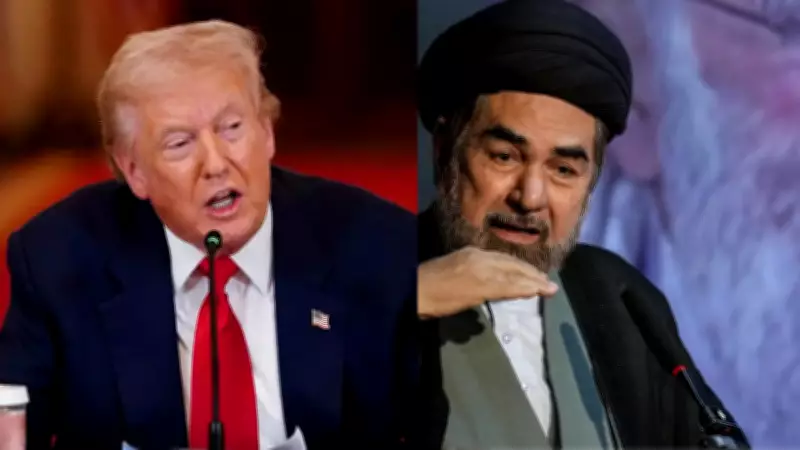
US-Iran Conflict Transforms Into Endurance Battle on Day Eleven
On the eleventh day of the escalating military confrontation between the United States and Iran, a significant divergence is becoming increasingly apparent between the tangible damage inflicted on battlefields and the ultimate political outcomes that may emerge from this volatile situation. President Donald Trump continues to assert that the ongoing campaign has delivered devastating military losses to Iran and could potentially conclude "very soon." Meanwhile, Tehran is sending clear signals that it has absolutely no intention of folding under pressure and remains committed to continuing the fight for as long as necessary to achieve its objectives.
The Strategic Shift: From Military Dominance to Pain Tolerance
This combination of American claims regarding rapid progress and Iranian vows of persistent resistance is fundamentally transforming the nature of the conflict into what analysts describe as a rigorous test of endurance rather than a short, decisive war with clear military outcomes. According to reports from Reuters, Iran's strategic approach has now become centered on outlasting both Washington and Israel through carefully calculated attrition, sustained missile pressure, and targeted energy disruption across global markets.
President Trump, in contrast, has made concerted efforts to calm both financial markets and domestic political nerves by repeatedly suggesting that the military engagement is approaching completion. This strategic divergence highlights how the conflict is increasingly appearing less like a classic contest of battlefield dominance and more like a sophisticated competition over tolerance for sustained pain and economic disruption.

Political Vulnerabilities and Economic Realities
Iran's fundamental calculation, as detailed by Reuters analysis, rests on the premise that it does not necessarily need to achieve outright military victory. Instead, the Iranian leadership believes it only needs to endure the conflict, maintain sufficient missile capabilities and command structure integrity, and systematically make the economic and political price of continued warfare intolerable for the Trump administration and its domestic political base.
This strategic approach matters profoundly because President Trump's political vulnerability appears more immediately obvious than Iran's military weakness in the current geopolitical landscape. According to reports from the Wall Street Journal, several of Trump's key advisers are privately urging the president to develop a comprehensive exit strategy amid growing concerns about spiking global oil prices, potential inflationary fallout, and the significant risk of political backlash before the crucial November midterm elections.
A recent Reuters/Ipsos poll revealed that only twenty-nine percent of Americans currently approve of the ongoing war effort, while sixty-seven percent expect gasoline prices to rise substantially in the coming months. Stephen Moore, an outside economic adviser to President Trump, told the Wall Street Journal: "When the price of gas and oil rise, so does everything else. Given that affordability was already a significant issue for many American households, this situation leads to real economic and political challenges."
The TACO Factor and Market Reactions
This economic reality forms the core of what analysts describe as the "TACO" angle hanging over this military confrontation. The phrase, shorthand for "Trump Always Chickens Out," has been utilized by critics to describe what they perceive as Trump's established pattern of making maximalist threats followed by tactical retreats or rhetorical repositioning when market volatility or political pressure intensifies significantly.
While this war represents a fundamentally different scenario from tariff fights or campaign-trail bluffs, with far higher geopolitical stakes, the market reaction is testing the same presidential instincts. Global oil prices spiked dramatically above one hundred dollars per barrel before plunging sharply after President Trump signaled that the war could potentially end earlier than many analysts had anticipated. Financial investors clearly interpreted these statements as a concerted effort to calm volatile markets rather than merely intimidate Tehran.

Rhetorical Shifts and Strategic Adjustments
President Trump appears increasingly likely to seek a face-saving diplomatic off-ramp first, not because he lacks substantial military leverage, but because he faces more immediate political reasons to declare victory early and move forward. The clearest indication of this strategic shift emerges from his own evolving language and public statements.
Last week, the president spoke in absolutist terms, demanding Iran's "unconditional surrender" as a non-negotiable condition. By Monday, his tone had shifted noticeably toward what resembles mission-complete messaging. According to the Wall Street Journal, Trump emphasized that the military operation had largely achieved its primary objectives and seemed more interested in securing a quick conclusion than pressing aggressively for regime change in Tehran.
This represents more than a minor rhetorical adjustment. It strongly suggests that the White House is already actively searching for a political narrative that can support measured de-escalation without appearing weak or indecisive on the global stage. The market backdrop further strengthens this interpretation, with Trump announcing he would waive certain oil-related sanctions to reduce prices and floating support for tanker escorts through the strategically vital Strait of Hormuz.
Iran's Strategic Position and Endurance Calculus
Iran, by stark contrast, may possess fewer immediate incentives to blink quickly or seek compromise. The Revolutionary Guards remain firmly in control of military operations, have successfully elevated Mojtaba Khamenei as supreme leader, and are systematically framing the war as an existential struggle for national survival. This ideological positioning makes diplomatic compromise considerably more difficult but paradoxically makes strategic endurance easier to justify internally.
For Tehran's leadership, mere survival itself can be effectively marketed domestically as a form of victory against overwhelming odds. Reuters analysis presented this reality starkly: even a badly damaged Iran could still credibly claim strategic success if it manages to outlast one of the most powerful military coalitions ever assembled on earth.
The Wall Street Journal reinforced this critical point, reporting that despite punishing military strikes, Iran's leadership structure remains fundamentally functional, security forces maintain visible presence in major cities, and there exist no clear indicators of imminent regime collapse. One diplomat cited by the publication stated that the regime's apparent strategic goal is to hold on tenaciously while the consequences of prolonged warfare accumulate and gradually pressure President Trump to move toward diplomatic resolution.
The Asymmetry of Power and Patience
President Trump may maintain what military analysts describe as escalation dominance, but Iran appears to believe it possesses what might be termed patience dominance in this particular confrontation. This fundamental asymmetry is driving the evolving dynamics of the war. While the United States can undoubtedly hit harder, faster, and more broadly across multiple domains, Iran cannot realistically match American and Israeli power in conventional military terms.
However, Tehran's leadership appears convinced it can effectively exploit what it perceives as the weak link in the Western democratic system: electoral politics, consumer price sensitivity, and financial market panic. Reuters reports indicate that Iran's military planners anticipated a potential confrontation and prepared a sophisticated layered response strategy. The primary aim is not necessarily battlefield reversal but systematic attrition through sustained missile fire, calculated energy disruption, and carefully managed global unease designed to split the international coalition or shorten its collective resolve.
Key Audiences and Political Calculations
In this strategic context, the key audience for Iran's sophisticated approach may not be Israeli generals or Pentagon planners but rather suburban American voters closely monitoring gasoline prices at their local stations. President Trump appears to understand this political reality profoundly, which explains why his public comments now swing strategically between triumphalist rhetoric and economic reassurance. He aims to project military strength without owning responsibility for a prolonged, costly war.
Fawaz Gerges, a prominent Middle East scholar from the London School of Economics, told Reuters: "The big question emerging from this conflict is who blinks first in this all-out war—Donald Trump or Iran's determined leadership?" Iran may absorb extraordinary punishment and still not blink in the conventional diplomatic sense. President Trump, meanwhile, may not need to "blink" openly but can instead redefine strategic objectives, declare the military mission successfully accomplished, point to degraded Iranian capabilities, and pivot toward deterrence.
Critical Indicators and Future Developments
Analysts recommend watching three critical indicators moving forward. First, global oil prices remain paramount—if prices resume climbing and gasoline costs follow upward, political pressure on President Trump will intensify rapidly. Second, Trump's evolving rhetoric provides crucial signals—the more frequently he discusses being "ahead of schedule" or the war nearing completion, the more likely he is preparing political ground for an exit strategy. Third, Iran's missile launch tempo and domestic cohesion offer important insights—if Tehran can maintain meaningful firing rates and avoid visible political fractures, it strengthens its strategic endurance position considerably.
The Bottom Line Assessment
The emerging consensus suggests Iran appears less likely to capitulate outright despite military disadvantages. President Trump appears more likely to strategically redefine success and move first toward a diplomatic off-ramp, particularly if energy shock effects start biting harder within the American domestic economy. In pure military terms, Tehran remains considerably weaker. However, in this specific test of political stamina and economic endurance, President Trump may find himself under greater immediate pressure to seek resolution—even if he carefully packages that decision as strategic victory rather than retreat.





