US-Israeli Attack Kills Iran's Supreme Leader, Sparks Regional Warfare
A devastating joint military operation conducted by the United States and Israel has resulted in the death of Iran's Supreme Leader, Ayatollah Ali Khamenei. This pivotal event has triggered a series of retaliatory strikes across the Middle East, dramatically escalating regional tensions and raising profound fears of a broader, more destructive conflict.
Military Escalation and Immediate Aftermath
The attack, which targeted Khamenei's compound in Tehran on Saturday, was part of a large-scale offensive. Israeli strikes subsequently hit targets in Tehran, while Iran responded by launching drones and missiles toward Israel and various sites around the Gulf. In a significant development, Gulf states have publicly pledged to defend themselves against any further Iranian attacks. A missile barrage in Jerusalem resulted in seven people being injured, highlighting the immediate human cost of the hostilities.
US President Donald Trump confirmed the operation in a video statement on Sunday, describing it as "one of the most complex, most overwhelming military offensives the world has ever seen." He asserted that the campaign, dubbed Operation Epic Fury, would continue until "all of our objectives" are fully achieved. Trump later commented on Khamenei's death, stating, "I got him before he got me. They tried twice, I got him first."

Hezbollah Enters the Fray as Ceasefire Collapses
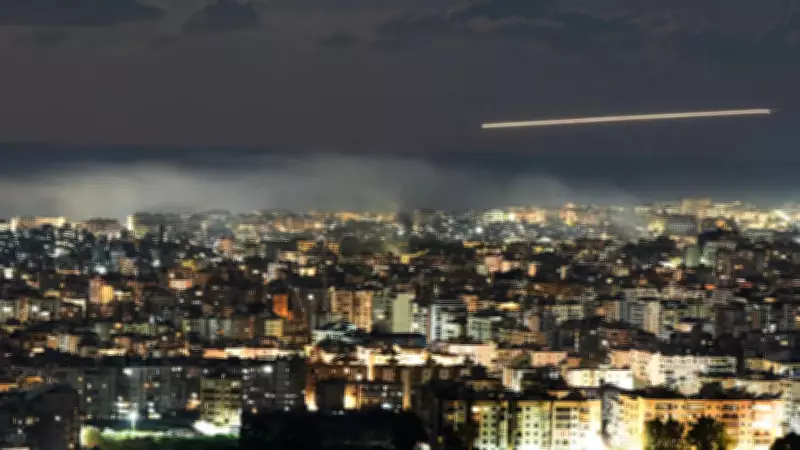
The violence has rapidly spread beyond the initial theater. On Monday, air raid sirens sounded in northern Israel shortly after midnight. Hours later, explosions struck the outskirts of Beirut, Lebanon's capital, marking a severe breach of a ceasefire that had largely held since November 2024. The Israeli military stated it began targeting Hezbollah positions after projectiles were launched into Israel. In response, Israel issued evacuation orders for approximately 53 towns and villages in southern Lebanon, prompting hundreds of thousands of residents to flee their homes overnight.
Hezbollah claimed responsibility for the attacks, stating it was responding to repeated Israeli strikes and seeking to avenge the killing of Ayatollah Ali Khamenei. Israel has accused Hezbollah of operating directly on behalf of the Iranian regime. This exchange represents the first major violation of the formal truce between Israel and Lebanon that had ended hostilities with Hezbollah.
Global Economic and Travel Fallout
The escalating conflict has sent shockwaves through global financial markets. Indian equity benchmarks fell sharply at the opening bell on Monday, with the Nifty50 slipping below 24,900 and the BSE Sensex dropping over 1,000 points. Analysts warned that sectors sensitive to crude oil prices, such as oil marketing companies, paints, tyres, aviation, and chemicals, could face significant margin pressure due to higher input costs. Conversely, upstream oil producers and defence stocks may see improved prospects.
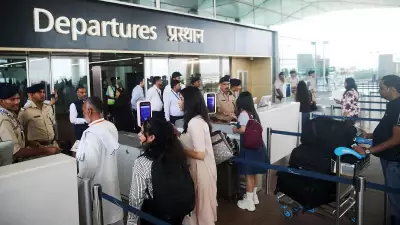
Travel across the region has been severely disrupted. Dubai International Airport, one of the world's busiest hubs, suffered damage from missile strikes, with blasts also reported in Abu Dhabi and Doha. Large sections of Middle Eastern airspace were closed over the weekend, leading to the cancellation of around 1,600 flights by regional carriers like Emirates, Etihad, and Qatar Airways. The Abu Dhabi and Dubai stock markets announced they would remain closed on Monday and Tuesday due to the rising tensions.
International Reactions and Security Incidents
Governments worldwide have reacted with a mix of support and condemnation, deeply concerned about the impact on global stability and the economy. In a notable security incident, Britain's Royal Air Force base at Akrotiri in Cyprus was hit by a suspected drone strike overnight, causing limited damage but no casualties. Cypriot authorities and the UK Ministry of Defence confirmed the attack.
Kuwait's armed forces reported that its air defence units successfully intercepted several hostile aerial targets over the country at dawn on Monday, with no casualties reported. The military spokesperson stated that the armed forces remain on full alert to ensure national security and stability.

Diplomatically, Iran's top national security official, Ali Larijani, firmly stated that Tehran "will not negotiate with the United States," dismissing reports of attempted outreach through intermediaries. In a post on social media platform X, Larijani, who is secretary of the Supreme National Security Council, accused Trump of having "plunged the region into chaos with his 'false hopes.'"
The situation remains highly volatile, with the death toll rising and the conflict spreading to more locations. The international community watches with apprehension as this major geopolitical crisis continues to unfold, threatening to draw in more actors and destabilize the entire region.