

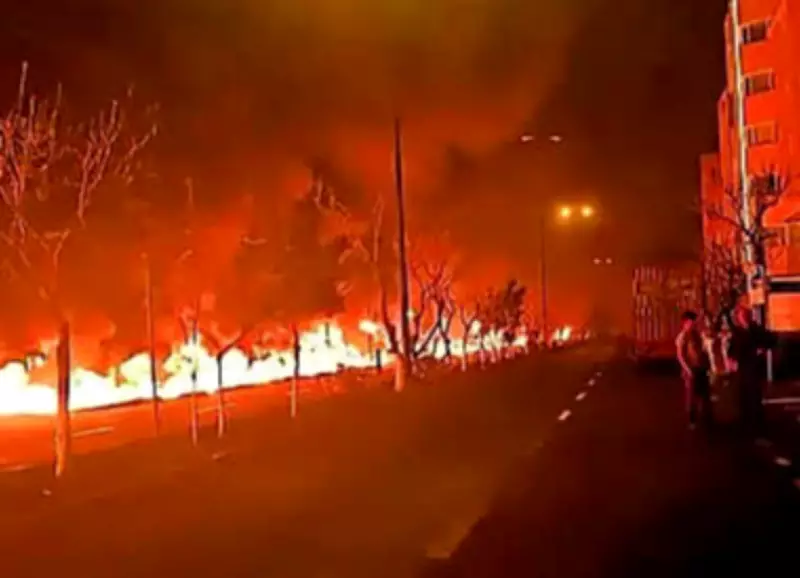
US-Israel-Iran War Intensifies on Day 11 with Embassy Attack and Drone Strikes
The ongoing military conflict in the Middle East, which began with joint US-Israeli strikes in Iran on February 28, has now entered its eleventh day. The United States Central Command (CENTCOM) released an overview stating that more than 5,000 targets have been struck in Iran so far, with over 50 Iranian ships damaged or destroyed. CENTCOM also provided a detailed list of assets deployed by the United States in this escalating war.
Controversy Over Tomahawk Missile Strike on Iranian School
A major point of contention involves an explosion at an elementary school in Minab, southern Iran, on February 28, coinciding with the start of large-scale strikes. Iranian authorities claim the attack killed over 150 people, many children, and blame the United States and Israel. Washington has denied involvement, stating the incident is under investigation.
US President Donald Trump addressed reports that a Tomahawk cruise missile may have hit the school, saying, "I just don’t know enough about it. I think it’s something that I was told is under investigation." He noted that other countries use Tomahawks, adding, "Iran also has some Tomahawks." A New York Times report authenticated video from Iran's Mehr News Agency showing what appeared to be a Tomahawk missile striking near the school, with the newspaper stating the US is the only military using such missiles in the current conflict.

Recent Military Actions and Regional Tensions
In recent developments, Israel announced it struck an Iranian missile launcher after a barrage from Iran triggered air raid warnings in several Israeli areas. No casualties were reported from the Iranian fire. Earlier, Israel conducted a "broad wave" of strikes on Tehran, marking the second such assault on Monday.
The Iran Revolutionary Guard Corps responded to Trump's comments that the war could end soon, vowing to "determine the end of the war." They threatened to halt oil exports from the region if US and Israeli attacks continue, impacting global oil prices amid tensions over the Strait of Hormuz, a crucial waterway for world oil supply.
Economic and Domestic Measures Amid Crisis
The conflict has spurred economic adjustments and domestic policies. India's Ministry of Petroleum and Natural Gas ordered oil refineries to increase LPG production for domestic use, prioritizing household supply and introducing a 25-day inter-booking period to prevent hoarding and black marketing.
President Trump hinted at temporary waivers on specific oil-related sanctions to mitigate rising global energy costs, saying, "We're going to take those sanctions off until this straightens out." He suggested these could become permanent if peace improves.
Financial and Strategic Costs of the War
A Washington Post report revealed the Pentagon used around $5.6 billion worth of weaponry in the first 48 hours of the war, raising concerns about depleting advanced military stocks. The White House is expected to request a supplemental defence budget, potentially tens of billions of dollars, to sustain operations.
Trump claimed the US and Israel are "winning very decisively" in Operation Epic Fury, describing it as one of the most extensive campaigns in recent years. He stated that Iranian naval power has been largely destroyed, with nearly 50 ships sunk, and missile and drone capacities significantly reduced.
As the war continues, regional stability remains precarious, with attacks expanding to include the UAE embassy in Iraq and Hezbollah drone strikes on Israel, highlighting the broadening scope of this conflict.






