

US-Israel War on Iran Reaches Day 15 Amid Widespread Gulf Escalation
The ongoing military confrontation between the United States, Israel, and Iran has now entered its fifteenth consecutive day, with the conflict dramatically expanding beyond its initial borders to engulf multiple nations across the Gulf region. Saturday witnessed a series of severe escalations, including direct attacks on diplomatic compounds, critical oil infrastructure, and urban centers, signaling a dangerous broadening of the hostilities.
Diplomatic Sites Under Fire: US Embassy in Baghdad Targeted
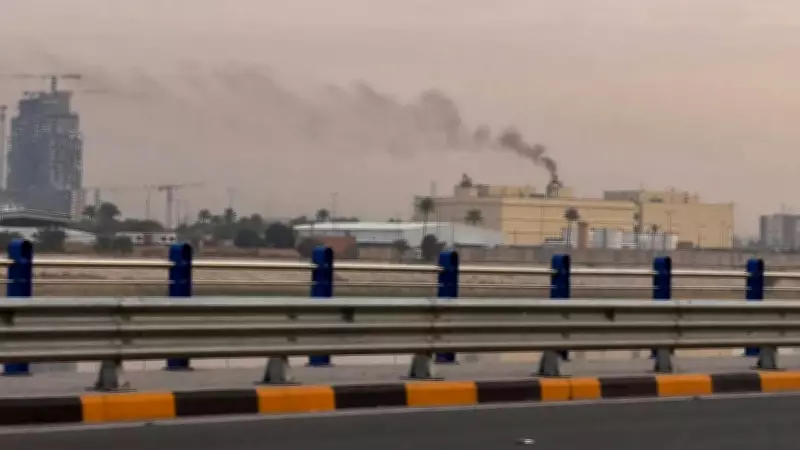
In one of the most alarming developments, the heavily fortified US embassy complex located within Baghdad's Green Zone was struck by a missile or drone attack. Eyewitness reports and news agencies confirmed that smoke was seen billowing from the site, with initial assessments indicating the projectile hit the helipad inside the compound. The US embassy has not issued an immediate official statement regarding the incident.
This assault on diplomatic grounds followed an earlier airstrike in Baghdad's Karrada district, which targeted a residential house, resulting in at least one fatality and two injuries. Reports suggest the attack was aimed at figures associated with Iran-backed armed groups, with news agency AFP noting that strikes on Kataeb Hezbollah led to the deaths of two members, including a key operative.

Gulf Oil Infrastructure and Urban Centers in the Crosshairs
The United Arab Emirates faced significant attacks, with its major oil storage and export hub near Fujairah port being hit. A fire erupted in the area following a drone interception, though no casualties were reported. The UAE defence ministry disclosed that on Saturday alone, the country intercepted nine ballistic missiles and thirty-three drones launched by Iranian forces.
Furthermore, debris from successfully intercepted missiles struck buildings in central Dubai on both Friday and Saturday, including an incident at the Dubai International Financial Centre. The Dubai Media Office assured the public that these events were fully contained, with no fires or injuries resulting. In response, Iran issued warnings for residents to evacuate UAE port areas, declaring ports, docks, and US military locations in the Emirates as legitimate targets.
Since the conflict began on February 28, the UAE has intercepted over 1,500 Iranian drones and nearly 300 missiles, making it the most heavily targeted nation in the Gulf during this war. Authorities in Abu Dhabi detained forty-five individuals, including foreigners, for filming attacks and allegedly spreading misinformation online, following text alerts cautioning against sharing sensitive visuals.
Israel Intensifies Offensive in Lebanon with Civilian Casualties
Israel continued its military operations in Lebanon, with an overnight strike on a healthcare center in Burj Qalawiya resulting in the deaths of twelve medical personnel—doctors, nurses, and paramedics. The broader toll among paramedics since the latest round of fighting commenced on March 2 has now risen to twenty-six dead and fifty-one wounded.
Additional Israeli strikes targeted an apartment building in a northern suburb of Beirut and another location in southern Lebanon's Sidon, killing four people. These actions underscore the severe humanitarian impact of the conflict on civilian infrastructure and aid workers.
Kharg Island Strikes and Regional Fallout
Earlier, US forces conducted strikes on military targets situated on Iran's Kharg Island, which serves as the country's primary crude oil export hub. Former US President Donald Trump stated that the US had obliterated military targets while deliberately sparing oil infrastructure, but warned of potential revisitation if Iran interferes with shipping through the strategic Strait of Hormuz.
Despite these attacks, Iranian officials reported that oil operations on Kharg Island were continuing normally, with no damage to oil facilities. The regional repercussions of the conflict continued to spread, with Saudi Arabia intercepting six drones, Qatar intercepting a missile, and Bahrain reporting fresh drone and missile attacks.

Conclusion: A Conflict Spilling Across Borders
The developments on the fifteenth day of the US-Israel war on Iran vividly illustrate that the conflict is no longer confined to direct engagements between Iran and Israel. It has now escalated to directly impact diplomatic sites, essential oil infrastructure, and urban centers across the wider Gulf region, raising urgent concerns about regional stability and international security.





