Explosions Rock Tehran as US-Israeli Conflict with Iran Intensifies
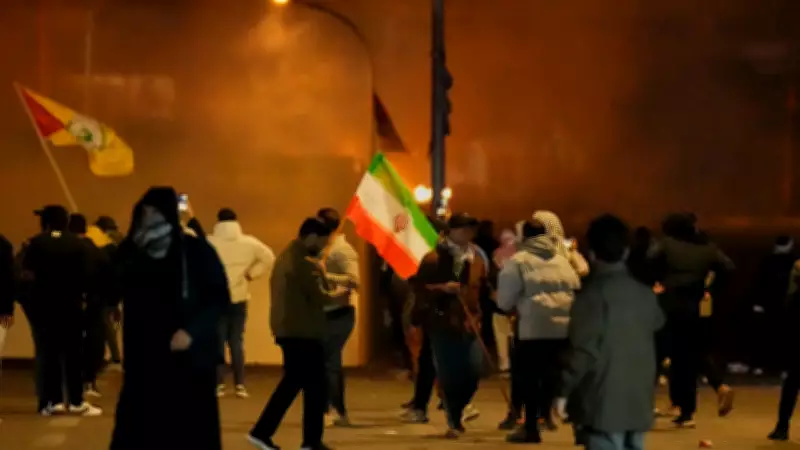
Explosions were heard across Iran’s capital, Tehran, before dawn on Wednesday, marking the fifth day of an escalating conflict between Iran and the United States and Israel. This period represents one of the most intense phases of fighting in the region in decades, with sustained airstrikes and retaliatory attacks unfolding rapidly.
Israeli Strikes Target Iranian Defense and Nuclear Sites
Israel launched what it described as “a broad wave” of fresh strikes, focusing on Iranian defense systems and missile launch sites. This follows a day of earlier airstrikes against Iranian missile launchers and a nuclear research facility. Israeli military spokesman Brig. Gen. Effie Defrin stated that the military targeted a building in the city of Qom where clerics were expected to meet to discuss selecting a new supreme leader, with assessments ongoing regarding casualties.
The Israeli military also conducted airstrikes on sites producing and storing ballistic missiles, claiming to have destroyed Iran’s secret, underground nuclear headquarters. Without providing evidence, Israel alleged the site was used for research “to develop a key component for nuclear weapons.” Iran has maintained that its nuclear program is peaceful and has not enriched uranium since June, though it reserves the right to do so.

Iran Retaliates with Missile Attacks Across the Region
In response, Iran fired dozens of ballistic missiles at Israel, with most intercepted, resulting in 11 fatalities in Israel since the conflict began. Tehran confirmed targeting multiple locations in Bahrain, Kuwait, Qatar, and the United Arab Emirates—countries hosting US military airbases—according to the Fars news agency. The Islamic Revolutionary Guard Corps (IRGC) declared, “This operation will continue relentlessly until the enemy is decisively defeated,” emphasizing that all US assets in the region are legitimate targets.
Incidents included:
- A drone attack on the US Embassy in Riyadh, causing a limited fire, with the embassy closing to the public.
- An Iranian drone strike on a parking lot outside the US consulate in Dubai, sparking a small fire.
- A suspected Iranian drone hit the Central Intelligence Agency’s station at the US Embassy in Saudi Arabia on Monday.
US Military Campaign and Regional Fallout
Admiral Brad Cooper, commander of US Central Command, announced that American forces have struck nearly 2,000 targets in Iran, describing it as the largest firepower buildup in the region in a generation. He stated, “In simple terms, we’re focused on shooting all the things that can shoot at us,” and added that the US has destroyed 17 Iranian ships, including a submarine, effectively halting Iranian naval operations in key waterways.
The US State Department authorized evacuations of non-emergency personnel and families from multiple Middle Eastern countries, including Saudi Arabia, Oman, Kuwait, Bahrain, Iraq, Qatar, Jordan, and the UAE. Many US citizens are stranded due to airspace closures, with the State Department preparing military and charter flights for departures.
Regional reactions include:
- Oman called for a ceasefire after mediating talks between the US and Iran.
- Riyadh condemned Iranian attacks, including the embassy strike.
- India’s Ministry of External Affairs established a Special Control Room and issued helpline numbers for Indian nationals in the Gulf region.
Mounting Casualties and Leadership Uncertainty in Iran
Casualties have risen significantly, with at least 787 people killed in Iran according to the Red Crescent Society. In Lebanon, Israeli strikes against Hezbollah militants resulted in at least 50 deaths, including seven children. The US military confirmed six American service members killed, with additional fatalities in Kuwait, the UAE, and Bahrain.

US President Donald Trump remarked that Iran’s air force and navy had been “knocked out,” and suggested the war could last several weeks or longer. He noted, “the people we had in mind are dead,” referring to potential future leaders, and expressed concern about a successor being as problematic. While initial strikes killed Supreme Leader Ayatollah Ali Khamenei, Trump later indicated that “someone from within” the regime might be the best choice post-conflict.
Israeli media reported that Mojtaba Khamenei, the 56-year-old son of Ali Khamenei, has emerged as the front-runner to succeed the slain Supreme Leader, with the Assembly of Experts expected to formally announce him under pressure from the IRGC. However, there has been no independent confirmation from Iranian state media, adding to the uncertainty surrounding Iran’s leadership amid the ongoing conflict.