Operation Epic Fury: US-Israel Coordinated Strikes Target Iran, Kill Supreme Leader
In a dramatic escalation of Middle East tensions, the United States and Israel executed coordinated military strikes against Iran on Saturday, hitting more than 30 strategic targets across the country. The operation, codenamed "Operation Epic Fury" by Washington and "Lion's Roar" by Israel, reportedly resulted in the death of Iran's Supreme Leader Ayatollah Ali Khamenei. These unprecedented attacks represent the culmination of decades of deteriorating relations between Washington and Tehran, centered primarily on Iran's controversial nuclear program and regional military activities.
Historical Context: Decades of Escalation Lead to Direct Conflict
The US-Iran relationship has been characterized by persistent hostility since the 1979 hostage crisis, evolving through multiple phases of sanctions, nuclear negotiations, and military confrontations. Key flashpoints included the collapse of the nuclear deal, the targeted killing of Iranian General Qasem Soleimani, renewed US military deployments in the Persian Gulf, and finally President Donald Trump's announcement of "major combat operations" preceding these joint strikes. This timeline of escalation demonstrates how diplomatic failures and strategic miscalculations ultimately led to open warfare between the long-standing adversaries.
The Fall of Ayatollah Ali Khamenei: Iran's Supreme Authority
Ayatollah Ali Khamenei, who served as Iran's Supreme Leader from 1989 until his reported death in the 2026 airstrikes, was the nation's highest political, military, and religious authority. A cleric who aligned early with revolutionary leader Ruhollah Khomeini, Khamenei wielded ultimate control over Iran's state institutions, including the powerful Islamic Revolutionary Guard Corps. Throughout his more than three-decade reign, he played a decisive role in shaping Iran's nuclear policy, regional strategy, and confrontational posture toward Western powers, making his elimination a primary objective of the US-Israeli operation.

Geopolitical Flashpoint: The Strategic Strait of Hormuz
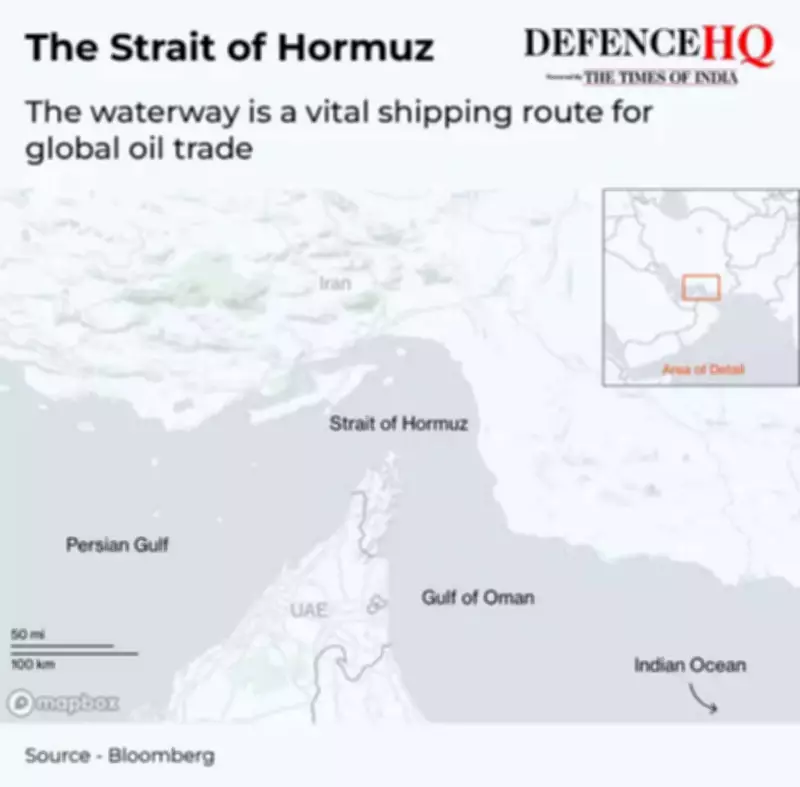
The Strait of Hormuz, a narrow maritime passage between Iran and Oman connecting the Persian Gulf to international waters, immediately emerged as a critical concern following the attacks. As one of the world's most vital oil transit chokepoints, approximately 20% of global petroleum shipments pass through this corridor, which narrows to just 33 kilometers at its tightest point. Iranian officials signaled potential retaliation by threatening to close this strategic waterway, prompting analysts to warn of imminent spikes in global oil prices and broader economic disruption.
Iran's Military Response and Air Defence Network
Tehran responded swiftly to the attacks by targeting American and Israeli assets across the Middle East, while questions arose about the effectiveness of Iran's sophisticated air defence system. This multi-layered network combines Russian, Chinese, and domestically developed technologies structured into three overlapping tiers:
- Long-Range Outer Shield: Systems including the domestically developed Bavar-373, Russia's S-300PMU-2, and China's HQ-9B provide coverage up to 260 kilometers to protect major cities, nuclear facilities, and airbases.
- Medium-Range Gap Fillers: Platforms like the Khordad-15 and Raad systems with 100-120 kilometer ranges counter aircraft and drones while protecting key urban, nuclear, and military sites.
- Short-Range Point Defence: Systems including Tor-M2, Pantsir-S1, indigenous Zolfaqar, and MANPADS form the final defensive ring around critical assets.
Critical Examination: China's HQ-9B System Performance
The extensive destruction across more than 20 Iranian provinces raised serious questions about the performance of Tehran's air defence network, particularly spotlighting the Chinese-origin HQ-9B surface-to-air missile system recently acquired by Iran. This advanced system executes rapid, integrated intercept cycles through sophisticated technology:

- Phased array radar detects and tracks incoming threats, relaying data to command centers for classification.
- Missiles launch from mobile TEL platforms, receiving mid-course radar updates before terminal phase activation.
- Active radar homing with passive infrared seeker backup provides dual-mode guidance resistant to electronic jamming and stealth aircraft.
- Proximity warheads detonate near targets to neutralize threats through sophisticated fire control networks.
China's HQ-9B deployments extend beyond Iran, forming critical protection layers around Beijing, the strategic Tibet Plateau, fortified South China Sea installations, and reportedly exported to Pakistan and select Middle Eastern operators. The system's integrated surveillance, multi-target tracking, and networked interception capabilities represent state-of-the-art air defence technology, making its apparent failure during the US-Israeli strikes particularly noteworthy for military analysts worldwide.
The coordinated attacks and their aftermath have fundamentally altered Middle Eastern geopolitics, creating immediate oil market instability while testing military technologies and alliance structures across the region. With Iran's supreme leadership decapitated and retaliation underway, the conflict's expansion threatens to draw additional regional powers into a broader confrontation with global economic implications.