

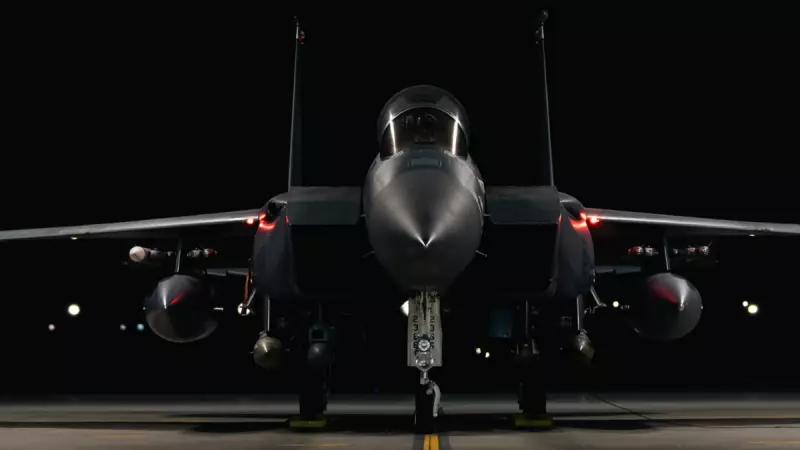
In a decisive move against terrorism, the United States military has executed a large-scale aerial assault on ISIS strongholds within Syria. The operation, codenamed 'Operation Hawkeye,' represents a significant escalation in the ongoing campaign to degrade the militant group's capabilities in the region.
Details of the Military Campaign
The strikes were carried out on Friday, January 10, 2025, targeting multiple facilities used by ISIS operatives. According to the US Central Command (CENTCOM), the operation involved a coordinated series of precision airstrikes aimed at command centers, weapons storage depots, and logistics hubs.
US officials confirmed that the action was a direct response to credible intelligence about an imminent attack planned by ISIS against American personnel and interests. The primary goal was to disrupt these plans and eliminate key infrastructure supporting the terrorist network's operations in eastern Syria.

Scope and Execution of the Strikes
The military action was not limited to ISIS targets alone. Reports indicate that several locations associated with Iran-backed militias were also struck. These groups, operating in the same theater, have been accused of launching repeated attacks on US forces stationed in Iraq and Syria.
While the exact number of aircraft or munitions used has not been fully disclosed, the scale suggests a major commitment of resources. The operation was planned and executed to minimize civilian casualties, focusing on isolated areas where ISIS elements were known to congregate and train.
Regional Repercussions and Strategic Implications
This large-scale military action is set against a complex geopolitical backdrop. The region has seen heightened tensions, particularly following a series of attacks on US bases. Operation Hawkeye sends a clear message about Washington's willingness to use force to protect its troops and counter terrorist threats proactively.
The strikes have several immediate consequences:
- Disruption of ISIS Networks: The operation likely dealt a substantial blow to the group's short-term planning and operational capacity.
- Deterrence Message: It serves as a warning to both ISIS and Iran-aligned factions about the consequences of targeting American forces.
- Regional Stability: The action could lead to increased volatility, with potential for retaliatory strikes from affected militant groups.
Analysts suggest that while such operations degrade physical assets, the long-term challenge remains addressing the ideological roots of extremism and the unstable political conditions that allow groups like ISIS to flourish. The US Central Command has stated that operations against ISIS will continue as part of a sustained effort to ensure the group cannot reconstitute itself.
The international community, including key partners in the Global Coalition to Defeat ISIS, is closely monitoring the aftermath. The success of Operation Hawkeye will be measured not just in destroyed infrastructure, but in the continued safety of forces and the lasting suppression of terrorist activity in Syria and beyond.






