

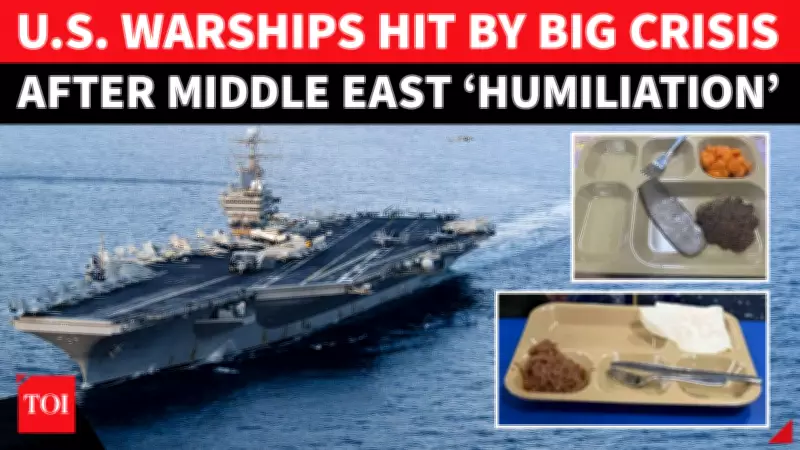
US Navy Warships Implement Food Rationing as Iran Conflict Strains Supply Lines
The ongoing conflict with Iran has placed unprecedented strain on the United States Navy, forcing warships deployed in the Middle East to implement food rationing for their crews. This critical situation exposes deep-seated vulnerabilities in the Navy's ability to sustain long-term operations in a volatile region.
Severe Shortages and Declining Morale Reported
Sailors aboard key vessels, including the aircraft carrier USS Abraham Lincoln, have reported significant food shortages and reduced rations. The combination of extended deployments and logistical disruptions caused by the conflict and the potential for a blockade of the Strait of Hormuz is directly impacting daily life at sea. Morale among the crew is reportedly declining as these operational pressures mount.
"The supply lines are stretched to their absolute limit," an anonymous source within the fleet indicated. "What we are seeing is not a temporary glitch but a systemic failure in sustaining forward-deployed forces under prolonged conflict conditions."

Operational Limits and Strategic Vulnerabilities
The crisis highlights a broader strategic challenge. Multiple U.S. carrier strike groups are being pushed to their operational limits. The pressure on critical supply routes is revealing a fundamental weakness in the Navy's logistical framework, which was not designed for the current scale and duration of regional tensions.
- Extended Deployments: Warships are remaining on station far longer than typical rotations, exhausting onboard supplies.
- Logistical Disruption: The threat to maritime chokepoints like the Strait of Hormuz complicates the delivery of essential goods.
- Sustainability Gap: The incident underscores a gap between combat readiness and the ability to maintain that readiness over months or years of high-tension deployment.
A Warning Sign for Future Readiness
This episode serves as a stark warning. The U.S. Navy's current logistical model is showing significant strain under the real-world pressures of the Iran conflict. Ensuring the welfare of sailors and the operational capability of warships requires not just military might but an unbreakable supply chain. The food rationing on the USS Abraham Lincoln and other vessels is a clear signal that vulnerabilities in sustaining long-term, high-intensity operations must be addressed urgently to maintain global force projection capabilities.






