

US Military Probe Points to Targeting Error in Deadly Iran School Strike
A preliminary investigation by the United States military has concluded that a missile strike on a school in southern Iran, which occurred at the onset of the war, was likely the result of an American targeting error. The incident, which has sparked significant controversy, highlights critical failures in intelligence verification processes.
Outdated Intelligence Leads to Tragic Mistake
According to officials briefed on the probe, the attack on Shajarah Tayyebeh Elementary School in the port city of Minab on February 28 was carried out with a US Tomahawk cruise missile. Military planners reportedly relied on outdated intelligence data from the Defense Intelligence Agency, which incorrectly listed the building as part of an adjacent Iranian Revolutionary Guard naval base. In reality, the structure had been converted into a school years earlier, with satellite imagery showing changes such as a separating wall built between 2013 and 2016, removal of watchtowers, addition of playgrounds, and bright-colored paint typical of educational facilities.
Investigators believe this outdated classification misled planners at US Central Command, who treated the school as a military target. The coordinates for the strike were set based on this erroneous data, without full re-verification using newer satellite imagery or other intelligence sources. Standard military targeting protocols, which usually involve cross-checking by multiple agencies like the National Geospatial-Intelligence Agency, were not adequately followed in this case.

Civilian Casualties and Political Fallout
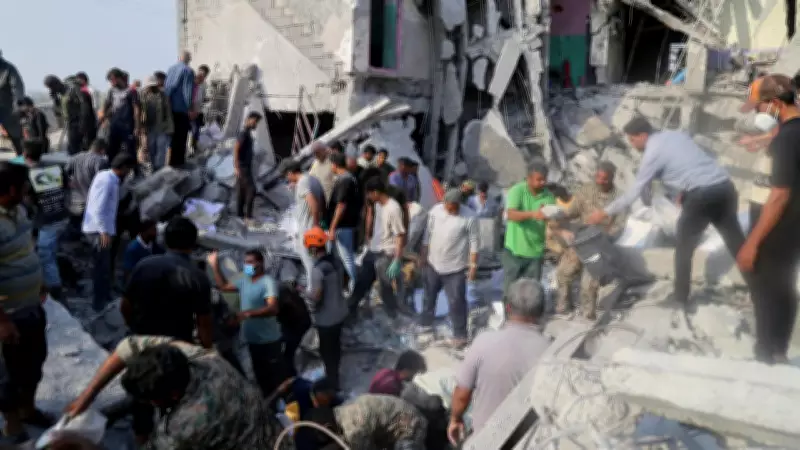
The strike resulted in the deaths of more than 165 people, including many children, according to Iranian media reports, though these figures have not been independently verified. Iranian state media broadcast images of funerals with coffins draped in the Iranian flag, some bearing photographs of young victims. Iranian President Masoud Pezeshkian accused the United States and Israel of responsibility, while Israel denied any involvement, with military spokesman Lieutenant Colonel Nadav Shoshani stating there was no connection to the incident.
The United States has not formally confirmed responsibility, but officials note that the use of a Tomahawk missile strongly points to American forces, as the US is the only country in the conflict deploying such weapons. Former President Donald Trump initially suggested Iran might be responsible, despite Tehran not possessing Tomahawks, and later said he would accept the investigation's conclusions.
Growing Criticism and Questions Over Civilian Protection
The incident has prompted intense scrutiny in Washington, with over 45 Democratic senators demanding answers from Defense Secretary Pete Hegseth regarding the strike's circumstances. Lawmakers have inquired about US responsibility and the assessments conducted prior to targeting. Concerns have also been raised about reductions in Pentagon programs designed to minimize civilian casualties, including cuts at US Central Command and the Civilian Protection Center of Excellence, established by Congress in 2022 to enhance military efforts in preventing harm to non-combatants.
This tragedy underscores ongoing challenges in military operations and intelligence accuracy, with the investigation continuing to examine why outdated information was not properly verified, potentially leading to one of the most devastating incidents of the conflict.






