US Turns to Ukraine-Tested Technology to Counter Iran's Drone Threat in Middle East
In a significant strategic move, the United States will deploy a new anti-drone missile system to the Middle East to bolster defenses against Iran's growing aerial threats. This decision comes after the system, known as Merops, demonstrated its effectiveness in real combat conditions during the ongoing conflict in Ukraine.
Merops: The AI-Powered Solution to Iran's Cheap Drone Swarms
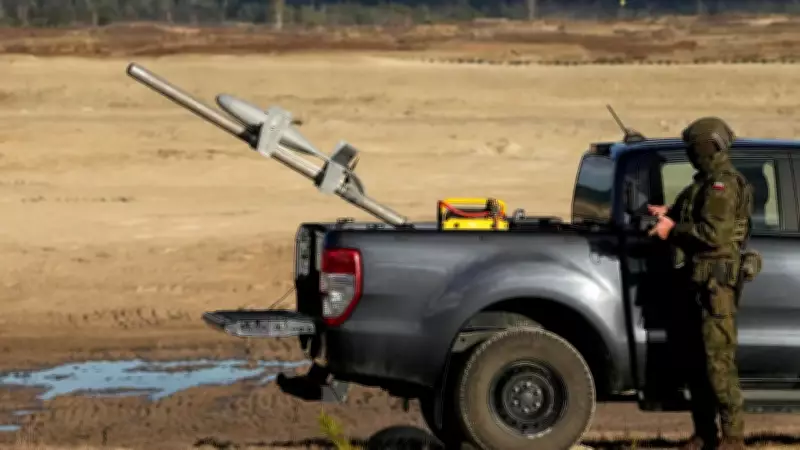
According to US officials who spoke to the Associated Press, the Merops system represents a technological breakthrough in counter-drone warfare. The system operates on a "drone versus drone" principle, using artificial intelligence to navigate and engage targets even when satellite and electronic communications are jammed. Remarkably compact, the entire system can be transported in the back of a midsize pickup truck, offering unprecedented mobility for rapid deployment across diverse Middle Eastern terrains.
The deployment addresses what US officials have described as a critical gap in regional defenses. While the US currently employs sophisticated Patriot and THAAD missile systems to intercept Iranian missiles, these expensive solutions have proven economically unsustainable against Iran's mass-produced, low-cost drones. As one official candidly admitted to AP, the US response to countering Iran's Shahed drones has been "disappointing," particularly because Iran continues to field increasingly sophisticated versions of the same drones that Russia has been refining in Ukraine.

The Economic Imperative: Solving the "Math Problem" of Drone Defense
Jim Himes, the top Democrat on the House Intelligence Committee, recently articulated the core challenge facing US defenses. "We're pretty good at taking missiles down," Himes stated. "What is much more problematic for us is the huge inventory of Iranian drones, which are hard to detect and hard to take down." He characterized the situation as a "math problem" where the US cannot continue relying on million-dollar Patriot missiles to destroy drones costing a fraction of that amount.
"It's really, really expensive to take down a cheap drone," Himes emphasized. "A giant missile going after a tiny little crappy drone." The Merops system offers a financially viable alternative, with officials noting it is significantly cheaper than firing a $500,000 missile at a $50,000 drone.
Ukrainian Collaboration and NATO-Tested Technology
The deployment follows direct collaboration between the US and Ukraine. Ukrainian President Volodymyr Zelenskyy confirmed that the US requested his country's assistance in combating Iran's Shahed drones, which Russia has deployed in massive numbers against Ukrainian targets. While Zelenskyy didn't specify the nature of assistance, US defense officials confirmed the Merops system is part of this cooperative effort.
The Merops system has already proven its capabilities in European theaters. After Russian attack drones repeatedly violated NATO airspace, the system was deployed to Poland and Romania in November. Its success in these deployments provided the confidence needed for Middle Eastern implementation.
Regional Deployment and Manufacturer Details
In the Middle East, Merops systems will be deployed to various strategic locations, including areas where US forces are not physically present. Most systems will be supplied directly by Perennial Autonomy, the manufacturer backed by former Google CEO Eric Schmidt. Officials assured that this deployment will not compromise European defenses, as separate systems are being allocated for Middle Eastern operations.
The deployment comes amid growing regional tensions. Many Gulf countries have complained they received inadequate warning and preparation time for the recent torrent of Iranian drones and missiles targeting their territories. This reflects Iran's broader retaliatory campaign across the Middle East in response to American and Israeli strikes.

Pentagon Acknowledges Defense Challenges
In closed-door briefings with lawmakers earlier this week, Pentagon officials acknowledged ongoing struggles to effectively counter waves of Iranian drones. This admission highlighted vulnerabilities for some US targets in the Gulf region. Defense Secretary Pete Hegseth addressed these concerns, telling reporters, "This does not mean we can stop everything, but we ensured that the maximum possible defense and maximum possible force protection was set up before we went on offense."
The Merops deployment represents a pragmatic shift in US defense strategy, combining battlefield-proven technology with economic reality to address one of the most persistent threats in contemporary Middle Eastern conflict.