

US Military Campaign Against Iran Incurs $11.3 Billion Cost in Opening Week
The United States has expended a staggering $11.3 billion during the initial seven days of its military offensive against Iran, according to a Pentagon estimate disclosed to Congress and reported by The New York Times. This figure represents the most comprehensive financial assessment of the conflict to date, which has now entered its thirteenth day with no apparent resolution in sight.
Initial Costs Exclude Pre-Deployment Expenses, Overall Bill Set to Escalate
The disclosed estimate specifically covers the expenses of the opening phase of American operations. However, it notably excludes several major pre-conflict expenditures, including the deployment of additional troops, aircraft, and naval assets to the region prior to the commencement of strikes. Pentagon officials anticipate the total financial burden will increase significantly as accounting for the full-scale operation is finalized.
Several congressional aides have indicated that the White House is expected to submit a formal request to Congress for supplemental war funding in the near future. Some officials speculate this request could reach approximately $50 billion, highlighting the anticipated steep rise in costs.

Conflict Scope Widens with AI-Driven Strikes and Regional Spillover
The campaign initiated with large-scale coordinated strikes by US and Israeli forces targeting Iranian military infrastructure and leadership. American commanders report that over 5,500 targets within Iran have been struck, with artificial intelligence systems playing a crucial role in identifying and prioritizing these locations.
The conflict has rapidly expanded beyond Iran's borders. Israeli forces have sustained strikes against Hezbollah targets in Lebanon, where regional estimates indicate the fighting has displaced more than 800,000 people. Concurrently, Iran has launched attacks targeting Gulf nations, including Dubai, Kuwait, and Bahrain.
Conflicting reports regarding battlefield developments continue to surface. An Israeli intelligence assessment suggested Iran's new supreme leader, Ayatollah Mojtaba Khamenei, may have sustained injuries during the war's early stages. Iranian authorities have vehemently denied this claim, asserting he remains "safe and sound."
High-Cost Munitions and Missile Defense Systems Drive Initial Expenditure
A substantial portion of the war's financial cost stems from the rapid deployment of high-value precision munitions and advanced missile defense systems. Earlier briefings cited by major US newspapers revealed that the American military expended approximately $5.6 billion worth of munitions in just the first two days of hostilities.
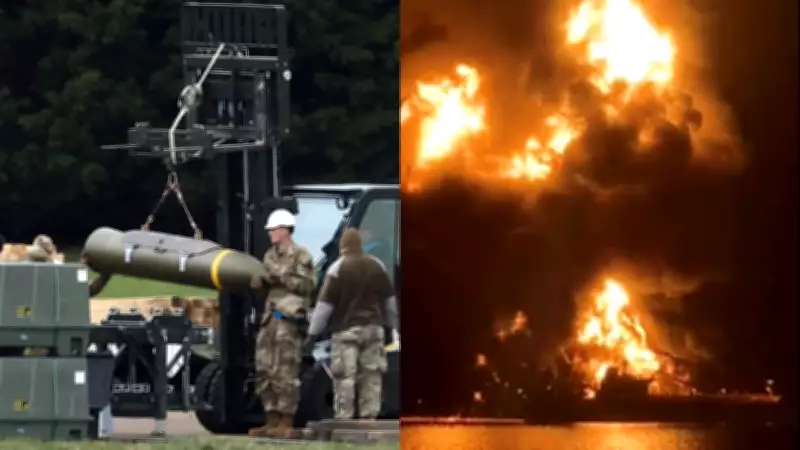
The opening strikes heavily relied on expensive precision weapons like the AGM-154 Joint Standoff Weapon (JSOW), a glide bomb with unit costs ranging from roughly $282,000 to over $700,000 depending on the variant. US forces have also utilized large quantities of interceptors from Patriot and THAAD missile defense systems, each costing millions of dollars, to neutralize incoming Iranian missiles and drones.
Officials have noted that as operations continue, the military intends to transition toward more cost-effective munitions, such as Joint Direct Attack Munition (JDAM) kits. These kits, which convert conventional bombs into precision-guided weapons, typically cost about $38,000, with the warhead itself adding around $1,000.
Cost Imbalance: Cheap Drones Versus Expensive Missile Defenses
A significant strategic challenge has emerged from Iran's deployment of low-cost drones, particularly the Shahed series. These drones, which operate at low altitudes and often produce a distinctive buzzing sound before impact, can be manufactured for tens of thousands of dollars each.
However, they are frequently intercepted using multi-million-dollar missile defense systems, creating what defense analysts describe as a profoundly unfavorable cost exchange ratio for the US military. While American officials report successfully shooting down most incoming drones and missiles, experts warn that relying on such expensive countermeasures against inexpensive drones may prove unsustainable in a prolonged conflict.

Political Divisions Emerge Over War Funding in Washington
The escalating cost of the campaign has already ignited political debates in Washington. Some Republican figures, including Senator Mitch McConnell, have long advocated for increased investment in US munitions production to prepare for large-scale conflicts.
Conversely, other lawmakers from both parties have expressed reservations about approving a supplemental defense funding package for a conflict that risks becoming open-ended. Democratic legislators, in particular, have demanded the administration provide clearer details regarding the war's strategic objectives and proposed endgame before authorizing additional funds.
Mounting Human Toll Adds to the Conflict's Heavy Burden
Beyond the substantial financial expenditure, the conflict has inflicted severe human casualties across the region. The Iranian Red Crescent has reported over 1,332 fatalities in Iran since the US and Israeli strikes commenced.
With airstrikes persisting and missile exchanges showing no signs of abatement, analysts caution that both the human and financial costs of the war could increase dramatically if the conflict continues to drag on without a diplomatic resolution or decisive military conclusion.





