

Operation 'Epic' Rescue: The Multi-Million Dollar Cost to Save a US F-15E Pilot
In a dramatic and costly military operation, the United States executed a high-stakes rescue mission for a downed F-15E Strike Eagle pilot in Iran, resulting in the destruction of its own aircraft and expenses exceeding $200 million. The incident underscores the unwavering commitment of the US military to its personnel, even at immense financial and strategic cost.
The Downing and Immediate Response
On Friday, a United States Air Force F-15E Strike Eagle from the 494th Fighter Squadron was shot down over the arid, mountainous terrain of South Western Iran, near the historic city of Isfahan. As soon as the aircraft crashed, alarm bells reverberated through the US chain of command. The two-man crew ejected over hostile territory, making their rescue an urgent top priority.
A meticulously choreographed plan was swiftly activated, involving hundreds of service personnel and a large fleet of aircraft. This complex operation, part of the Combat Search And Rescue (CSAR) protocol, included both kinetic and non-kinetic missions, along with a CIA-run deception campaign to mislead Iranian forces.

The Rescue and Subsequent Losses
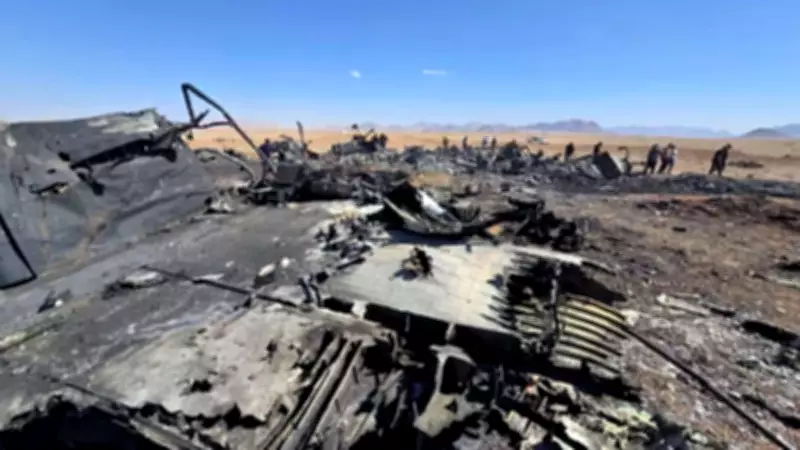
After nearly two days of intense operations, both crew members of the ill-fated Strike Eagle were successfully rescued. However, the victory came at a steep price. Information later revealed that the US had lost several aircraft on the ground during the mission.
American officials stated that these disabled aircraft were deliberately destroyed to prevent them from falling into Iranian hands. In contrast, Iranian authorities claimed they shot down two C-130s and two Blackhawk helicopters. Footage from the site showed wreckage consistent with two C-130 Hercules aircraft, likely MC-130J Commando II models from the Air Force Special Forces Command, each valued at approximately $100 million.
Additionally, debris from a small helicopter, probably an MH-6 Little Bird—affectionately nicknamed "Killer Egg" by its crew—was visible. This helicopter costs around $7.5 million, according to global military web portals. These losses suggest at least three aircraft were destroyed, pushing the total rescue cost to an estimated $210 million.
Total Financial Impact and Historical Context
This figure does not include the cost of the F-15E itself. While initial F-15E Strike Eagles were priced at $31 million in the 1990s, newer models can cost up to $100 million, as reported by the Wall Street Journal. Thus, the overall operation expense ranges between $210 million and $310 million.
Despite the heavy equipment losses, CSAR operations are rooted in the principle of rescuing downed airmen behind enemy lines, a doctrine famously encapsulated by the motto 'No man left behind'. This ethos has historical precedents, such as during the Vietnam War in 1972, when the US lost 11 aircrew killed and 2 captured, along with 5 aircraft, to rescue Lt Col Iceal Hambleton after he ejected over North Vietnam.
Strategic Implications and Message to Forces
The Americans have conducted over 10,000 sorties over Iran during the current conflict, making this successful rescue a critical morale booster. It sends a powerful message to pilots and aircrew risking their lives: come what may, we will come for you. This assurance is vital for maintaining operational confidence and cohesion in high-risk environments.
The operation highlights the lengths to which the US military will go to protect its personnel, even when it means sacrificing valuable assets. As tensions persist, such actions reinforce the strategic and human costs of modern warfare, while affirming the enduring commitment to service members in peril.






