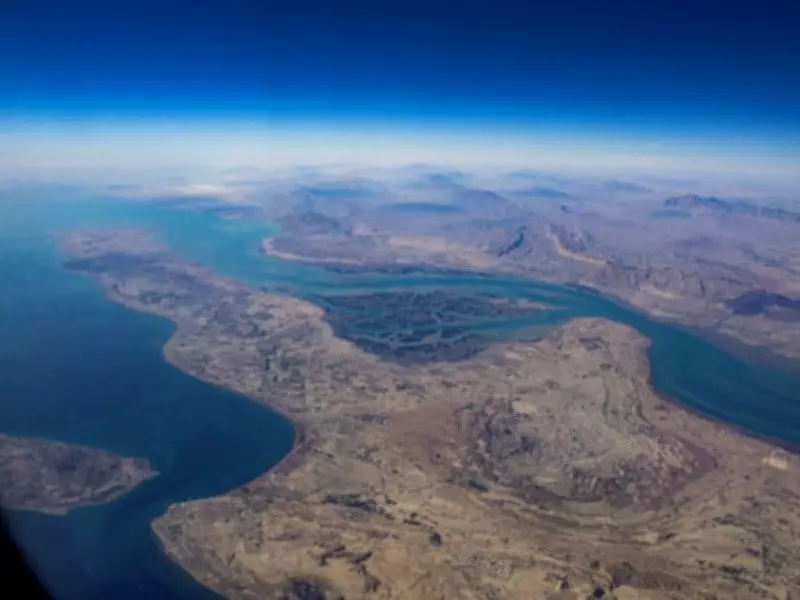
US Strikes Iranian Facility on Qeshm Island After Missile Attacks
The United States military announced that it conducted strikes on an Iranian military ground control station on Qeshm Island, located near the strategic Strait of Hormuz. This action came in response to Iranian missiles fired toward Kuwait and Bahrain, which either failed mid-flight or were intercepted by US and Bahraini forces, according to US Central Command.
Two missiles aimed at Kuwait disintegrated en route, while those targeting Bahrain were shot down by US and Bahraini defense systems. The strikes targeted a facility on Qeshm Island, which also houses a desalination plant.
Ceasefire Talks Hit a Snag
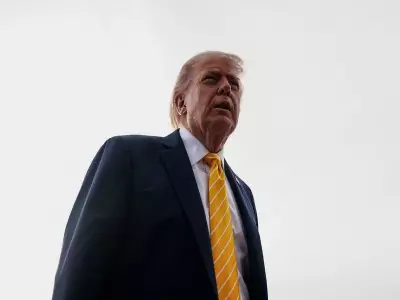
The military escalation followed reports from two semi-official Iranian news agencies, Fars and Tasnim, indicating that Iran had stopped communicating with mediators regarding a potential extension of the ceasefire in the ongoing conflict with the US and Israel. However, President Donald Trump disputed these claims, asserting in a social media post that negotiations were ongoing. He stated, “The conversations between us have been going on continuously, including four days ago, three days ago, two days ago, one day ago and today.”

A regional official involved in the mediation, speaking anonymously to the Associated Press, confirmed that Iran had not communicated on Tuesday, insisting that a ceasefire in Lebanon must first be enforced for broader talks to proceed. This development coincides with heightened tensions in Israel’s separate conflict with the Iranian-backed Hezbollah militia in Lebanon.
US Enforces Blockade on Oil Tankers
In a related development, the US military reported firing a missile to halt an oil tanker attempting to breach the American blockade of Iranian ports. The Botswana-flagged merchant vessel M/T Lexie was stopped after a Hellfire missile struck its engine room, following 24 hours of ignored warnings. This marks the seventh ship intercepted by the US military while trying to run the blockade, as stated by US Central Command.
Economic Strain on Iran
Amid the geopolitical tensions, Iran faces severe economic challenges. Year-on-year inflation reached 77.2% in May, the highest since World War II, according to Iran’s Central Bank. Daily and general needs inflation soared to 113.8%. The Bamdad Institute of Economic Studies described this as “an unprecedented rate since World War II.” The previous record was in 1942, during the Anglo-Soviet invasion of Iran, which disrupted food supplies and led to hyperinflation and famine.
The economic hardship has fueled widespread protests in Iran. In 2017-2018, rising food prices sparked demonstrations that killed over 20 people. In 2019, gasoline price hikes led to protests with over 300 reported deaths. More recently, in January, protests over the collapsing rial resulted in a crackdown that activists estimate killed over 7,000 people.
Diplomatic and Strategic Implications
US Secretary of State Marco Rubio, testifying before Congress, expressed optimism about the nuclear dimension of negotiations but cautioned that a satisfactory deal is not guaranteed. Iran seeks to leverage the Strait of Hormuz, through which a fifth of global oil and gas passes, to increase pressure on Trump. Trump, in turn, could potentially influence Israeli Prime Minister Benjamin Netanyahu to slow military advances in Lebanon, where Israeli forces have moved deeper than in over 25 years.
The situation remains fluid, with both military and economic pressures shaping the conflict. The US blockade aims to weaken Iran’s oil-backed economy, while Iran’s missile attacks and ceasefire stance test American resolve.