

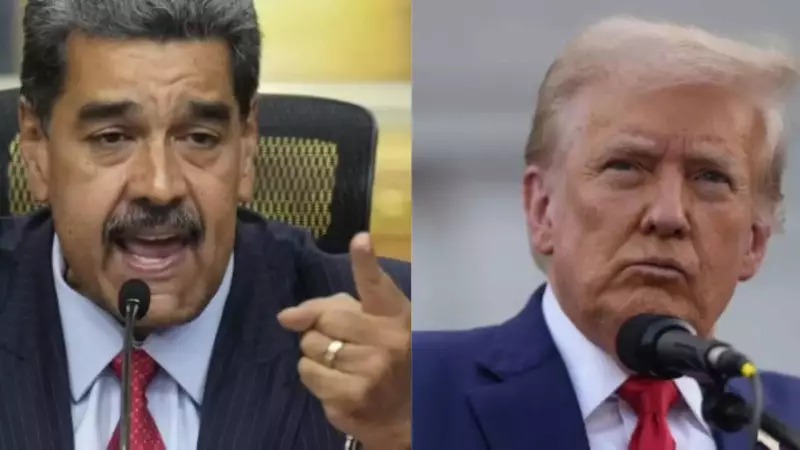
The Venezuelan government has launched a sharp accusation against the United States, alleging it carried out attacks on civilian and military sites within its territory. This dramatic escalation followed reports of loud explosions and the sound of low-flying aircraft in multiple Venezuelan cities in the early hours of Saturday.
Night of Explosions: What Happened in Venezuela?
According to multiple news agencies, residents in several cities across the Caribbean nation were startled by at least seven powerful blasts around 2 AM local time. The explosions were so intense that CNN reported windows shaking from the force. The incidents were followed by power cuts in some areas, plunging parts of the cities into darkness.
Videos that quickly spread on social media captured the alarming scene: plumes of smoke rising against the night sky, illuminated by city lights, alongside flashes of light and the distant, dull booms of explosions. While US government officials, speaking to CBS News, indicated that former President Donald Trump had ordered the strikes, there has been no official statement from the White House confirming the action.

The Backstory: US Military Pressure and the "Drug Cartel" Campaign
Saturday's events did not occur in a vacuum. They come just days after President Trump announced that US forces had hit and destroyed a docking area allegedly used by Venezuelan drug boats. For weeks, Trump had warned that ground strikes against drug cartels in the region were imminent, signaling a more aggressive phase in Washington's long-standing pressure campaign against the government of Nicolás Maduro.
In recent months, the United States has significantly ramped up military and economic pressure on Venezuela. US forces have been actively targeting boats they claim are involved in drug trafficking in the Caribbean Sea and the eastern Pacific. Since September, the US military reports dozens of such strikes, resulting in over 100 fatalities.
Alongside these military actions, the US has tightened the economic vise through new sanctions, informal restrictions on Venezuelan airspace, and the seizure of oil tankers carrying Venezuelan crude. The deployment of powerful US warships, including the massive USS Gerald R. Ford aircraft carrier, near Venezuela's coast has further heightened the sense of a military blockade.
Maduro's Response and Why Venezuela is a Flashpoint
Venezuelan leader Nicolás Maduro has vehemently rejected US accusations that he leads or protects drug cartels. He argues that Washington is using the "war on drugs" as a pretext to destabilize his socialist government and gain control over Venezuela's vast oil reserves. While he did not confirm or deny the strike on the docking area earlier in the week, Maduro notably softened his tone on Friday.
He expressed a sudden openness to cooperate with Washington on combating drug trafficking, telling reporters he was ready for dialogue "wherever they want and whenever they want." This shift highlights the complex and volatile nature of the standoff.
The conflict is rooted in deep geopolitical and economic interests. President Trump has blamed Maduro for the exodus of hundreds of thousands of Venezuelan migrants to the US, a crisis driven by economic collapse. The US also accuses Venezuela of being a key player in cocaine trafficking, though analysts often note the country is primarily a transit route rather than a producer.
Maduro, who has held power since 2013, presides over a nation crippled by international sanctions and political isolation from the West, though he retains support from allies like Russia, China, and Iran. The alleged US strikes on Venezuelan soil mark a dangerous new chapter, moving the long-simmering confrontation between Washington and Caracas into a phase that raises serious fears of a wider conflict.






