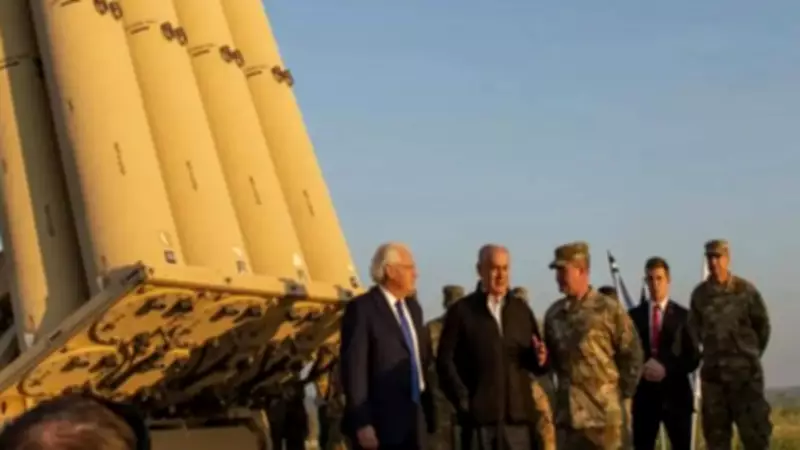
The United States has expended nearly half of its total inventory of advanced ballistic missile defense interceptors in defending Israel during the now-paused war with Iran, according to a report by The Washington Post. The US launched more than 200 Terminal High Altitude Area Defence (THAAD) interceptors—roughly half of the Pentagon's total stock—along with over 100 Standard Missile-3 and Standard Missile-6 fired from naval vessels in the eastern Mediterranean.
Interceptor Deployment and Relocation
Some of these missile launchers were relocated from South Korea at the beginning of the conflict. In contrast, Israel used fewer than 100 Arrow interceptors and nearly 90 David's Sling interceptors to down Iranian ballistic missiles, with some of those interceptors deployed against less sophisticated projectiles launched by Iran-backed groups in Yemen and Lebanon.
“In total, the US fired around 120 more interceptors and engaged twice as many Iranian missiles,” a US administration official said. The imbalance is likely to worsen if hostilities resume, the official added.

Background of the Conflict
The conflict between the US, Israel, and Iran began on February 28, when the US and Israel targeted Iranian military, naval, and air force facilities. The strikes also killed top Iranian leadership, including Supreme Leader Ayatollah Khamenei. The hostilities, which saw Iran target US allies across West Asia, have been paused following a ceasefire that came into effect on April 8. Since then, Washington and Tehran have been engaged in talks aimed at resolving nearly five decades of tensions.
Pentagon and Israeli Defense Statements
The Pentagon defended the balance of military resources used between Israel and the United States. “Ballistic missile interceptors are just one tool in a vast network of systems and capabilities that comprise a layered and integrated air defense network,” said Sean Parnell, the Pentagon's chief spokesman. “Both Israel and the United States carried the defensive burden equitably during Operation Epic Fury, which saw both countries employ fighter aircraft, counter-UAS systems, and various other advanced air and missile defense capabilities with maximal effectiveness.”
The Israeli government also defended the approach. “Operations Roaring Lion and Epic Fury were coordinated at the highest and closest levels, to the benefit of both countries and their allies,” the Israeli Embassy in Washington said in a statement. “The US has no other partner with the military willingness, readiness, shared interests, and capabilities of Israel.”
Potential Resumption of Hostilities
If the US and Israel resume hostilities against Iran in the coming days, as President Donald Trump has threatened, the US military will expend an even greater share of interceptors, as the Israeli military recently decided to take some of its missile defense batteries offline for maintenance, an administration official said.